

During the holidays, I unexpectedly flew to the other side of the world to visit my ailing Ma.
Ma moved back to the Philippines in July. In early December, her myositis autoimmune disease, which attacks and weakens her leg muscles, resurfaced and a few days before Christmas, she had a fall at home.
On Christmas Eve, a few days after being admitted to the hospital, I had a video chat with Ma.
She did not look well – very weak and no fighting spirit, as she has been struggling with grief after my sister’s death. So I decided to go see her in the event this would be a goodbye visit.
2023 was a year of many losses, so with this latest incident, Christmas Day was very stressful.
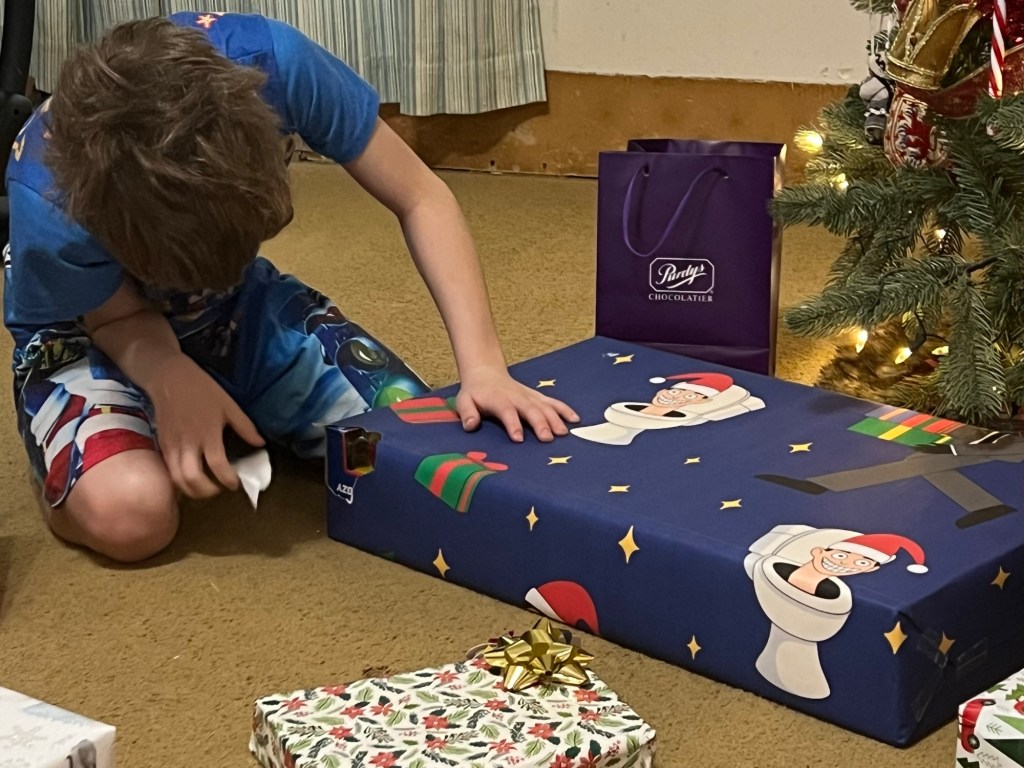
I worked hard to muster enthusiasm to open presents. I then kept to myself as I processed Ma’s situation and the idea of leaving the hubby and T for nearly two weeks, the longest we’ve been apart.
The hubby was so supportive and let me have Christmas Day to myself and he helped book my flight and pack.
Stress makes the mind play awful tricks and I thought of every worst case scenario.
Then I took very deep breaths, had a good sleep, and got up on Boxing Day with a game plan.
I prepped for my trip – which included creating an away and return plan for my unplanned time off work, doing long-term groceries and prepping dinners (e.g. marinated meats) for the hubby to minimize his work while I was away.
Parenting a child with FASD is hard work, much less doing it on your own while in the midst of a very busy period at work.
I flew out the following evening and T was in a super foul mood that day – screaming, swearing and disregulated.
In the afternoon, I suggested we go for a walk in the rain and stomp on puddles to calm down.
During our long walk, T stopped and started his sad whimper. His eyes watered and his pouting lips quivered. That was when it hit me: he was sad and upset that I was leaving.
I felt awful because this trip came together very last minute and T got no warning. He’d already had a year of many losses and I could imagine what my departure must’ve seemed like to him.
I reassured him it would be a short visit – and it was important I see and help care for Ama.

When we got home, we played a bit more together then I got him fed and showered before we left for the airport.
When we arrived at the airport, T gave me the longest hug and I did not want to let him go.
The hubby told me by text, after they got home, that T cried in the car as they drove off and kept watching a 2-second video he filmed of me saying bye as they drove off.
You can only imagine how my heart ached!

As I waited for three hours to board my flight, it sank in how long I was going to be away from my family.
As we started to board, it sunk in how little I was mentally prepared for the 17-hour flight.
As our plane departed shortly past midnight, I looked down at the city. Little did I realize at the time the journey that lied ahead.































































 My Life With T