Using Medication for a Child with FASD

The cereal box T created for his media literacy class is called “Growing Stronger.”

I like that they teach Grade 3 students media literary, as well as nutrition, in a hands on way.

Just as diet influences health of kids with fetal alcohol spectrum disorder, our parenting journey has demonstrated that medication can be an effective part of our toolkit to help our son.

It was four summers ago, when T was 5, that we started T on methylphenidate to help with his ADHD symptoms.

As with any medication, one’s tolerance changes over time and we’ve made adjustments, one to two times a year, in close consultation with his developmental pediatrician.

In the last four years, we’ve also tried Biphentin and Guanfacine in different doses and combinations.

Most recently, we added Citolapram, an SSRI drug commonly used to treat depression, to help with T’s mood, and it has greatly helped with his anger, irritability and anxiety.

This is on top of Adderall and Guanfacine, now a total of three daily medications.

If you’re reading and thinking, “Oh my God!” Yes, it is so very heavy.

The hubby has always been all-in with medication and always the first to say, “We need to talk to the doctor about adjusting his meds.”

I was very hesitant to start T on medication, because I worry about adverse side effects and the stigma that comes with it.

The decision to start your neurodiverse child on medication is a very personal one and there are several things a caregiver should consider:

  • Always consult with a pediatrician, ideally one with expertise on your child’s diagnosis. They can consult with other resources, such as the FASD medication algorithm (think of it like a decision tree), which was helpful with our recent change.
  • Monitor and adjust, because your child’s symptoms may change over time and their tolerance to the type of medication and/or dosage will change as they grow.
  • Have an open conversation with your child about why they are taking the medication.
  • Plan for a transition period to start medication or change. We start T on any new med or change on weekends or an extended break, like summer, in a calmer environment in case there are any transition effects.
  • Be transparent with your child’s community, including family, school and child care staff.
  • You are the expert on your child and will make the best decision for them based on the information you have. Be informed. Read up. Ask questions. Ask for second, third, fourth… opinions, until you feel best informed.

Four years in, despite my initial hesitation, I think starting T on medication has been a good decision for him and our family.

We see more benefits than added challenges – and we feel it on those rare and comically disregulated days when we forget to give him his meds.

But it’s not a magic bullet. It’s doesn’t fix everything.

To me, medication is a part of a larger toolkit to help improve outcomes. Other tools include advocacy, accommodations, therapy services and most importantly, fundamentally adjusting your approach to and expectations of parenting.

The FASD parenting journey is hard, but being T’s Papa is the most rewarding job in the world.

You can say that thanks to my child, I, too, am growing stronger each day.

Check out the fat content! 😂😭

Boomerang

On special days when stars align, the energy we send out come flying back at us.

T recently completed the EQAO standardized Grade 3 test earlier this month.

T’s school was so supportive. He had his CYW’s support to complete the test, as he gets distracted on the computer.

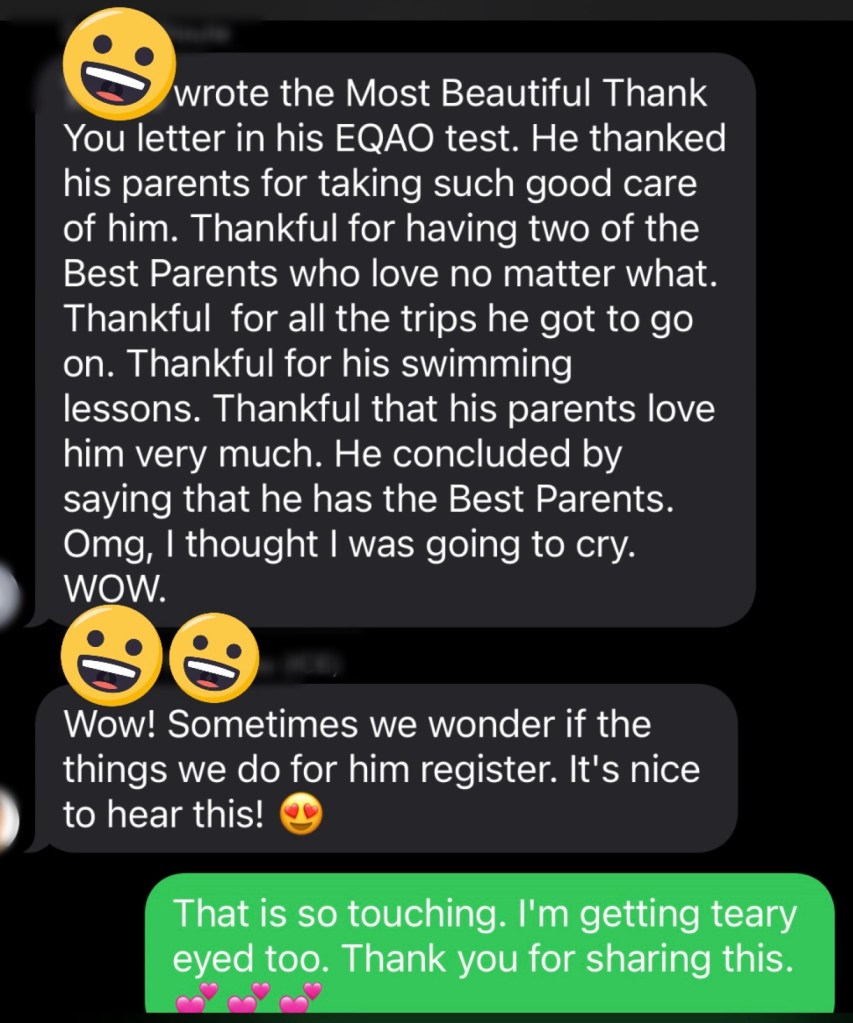
On the first day of the test, T’s CYW sent the hubby and I a lovely text message.

T had to write a short passage on a topic of his choice and his CYW said “T wrote the most beautiful thank you letter in his EQAO test.

“He thanked his parents for taking such good care of him. Thankful for having two of the best parents who love no matter what. Thankful for all the trips he got to go on. Thankful for his swimming lessons. Thankful that his parents love him very much. He concluded by saying that he has the best parents. Omg, I thought I was going to cry.”

It was gratifying to hear this, because parents also need positive reinforcement.

Raising a child is hard, even more so with a disability added on.

During T’s disregulated moments, he can say very rude and hurtful things. No matter how thick my armour has become, his words sting.

I’ve learned through the years to not take things personally and to separate the FASD disability from who T is at his core: a deeply caring loving boy.

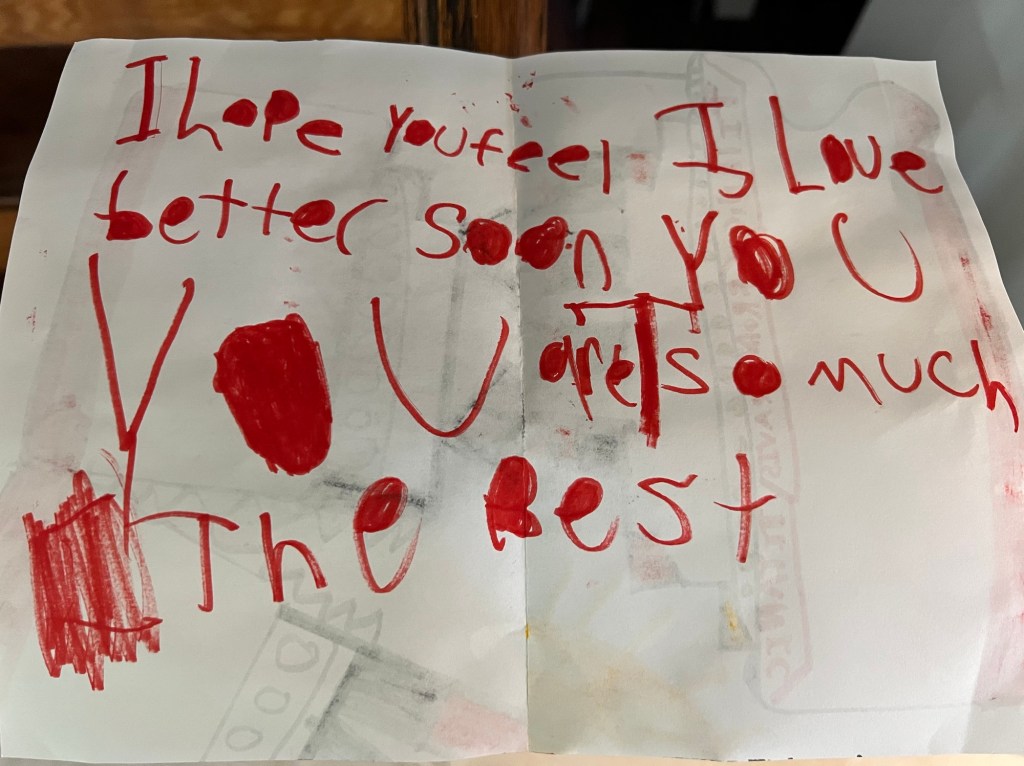
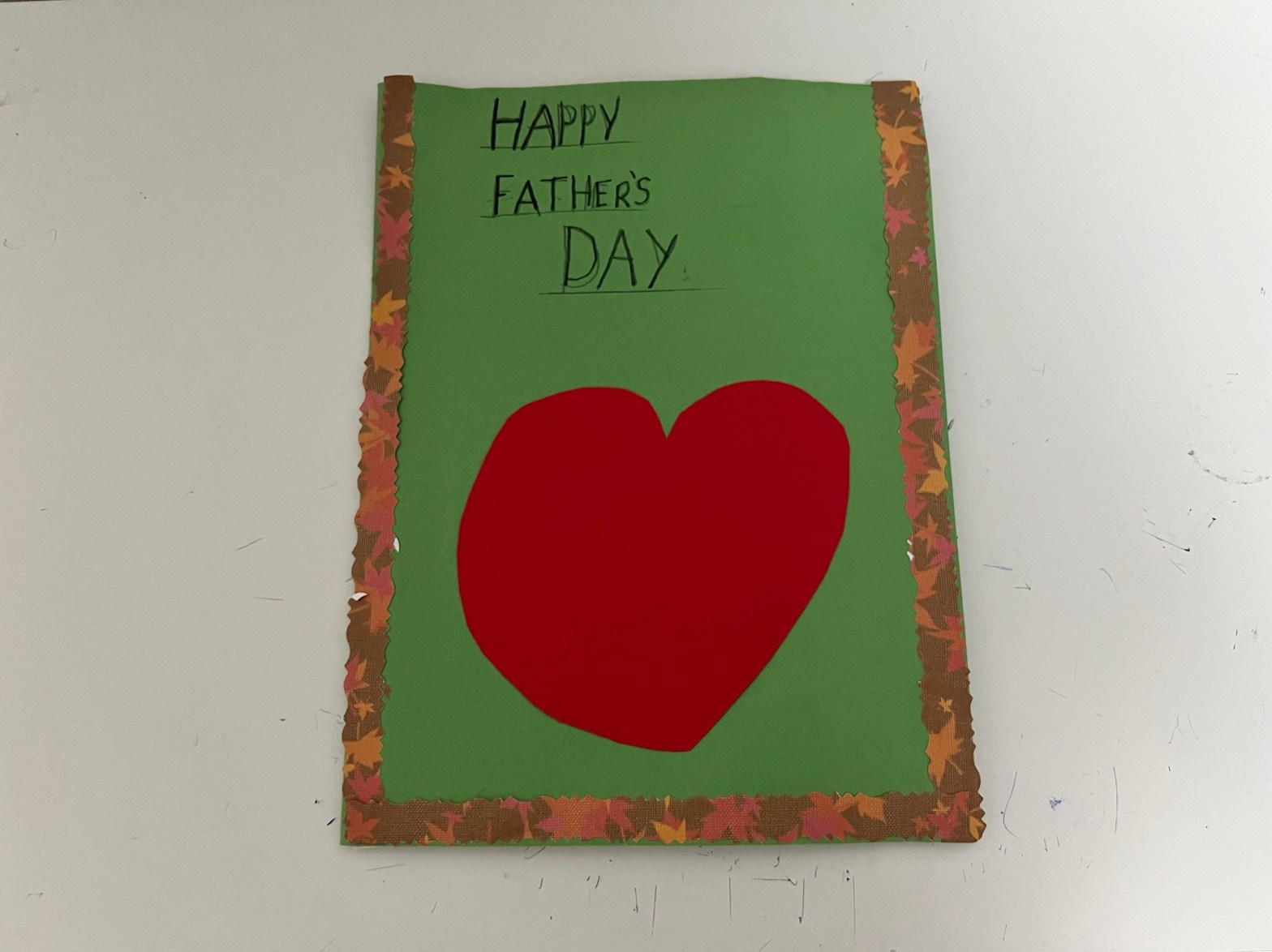
On Fathers Day, T made us a beautiful homemade card, the front is pictured at the top.

The message inside – I’m sure it was transcribed by his CYW because there’s no way his writing is that neat! – was so heartfelt:

“I am thankful for my dads, they take good care of me. They bring me to lots of other places, which I’m thankful for. I’m thankful for all the memories and pictures that I got with my dad and papa. I am thankful for going bike riding with my dads and sometimes we go to a Tim Hortons to get drinks. I’m even thankful for going swimming my parents. Love, T.”

We had a relaxing Fathers Day.

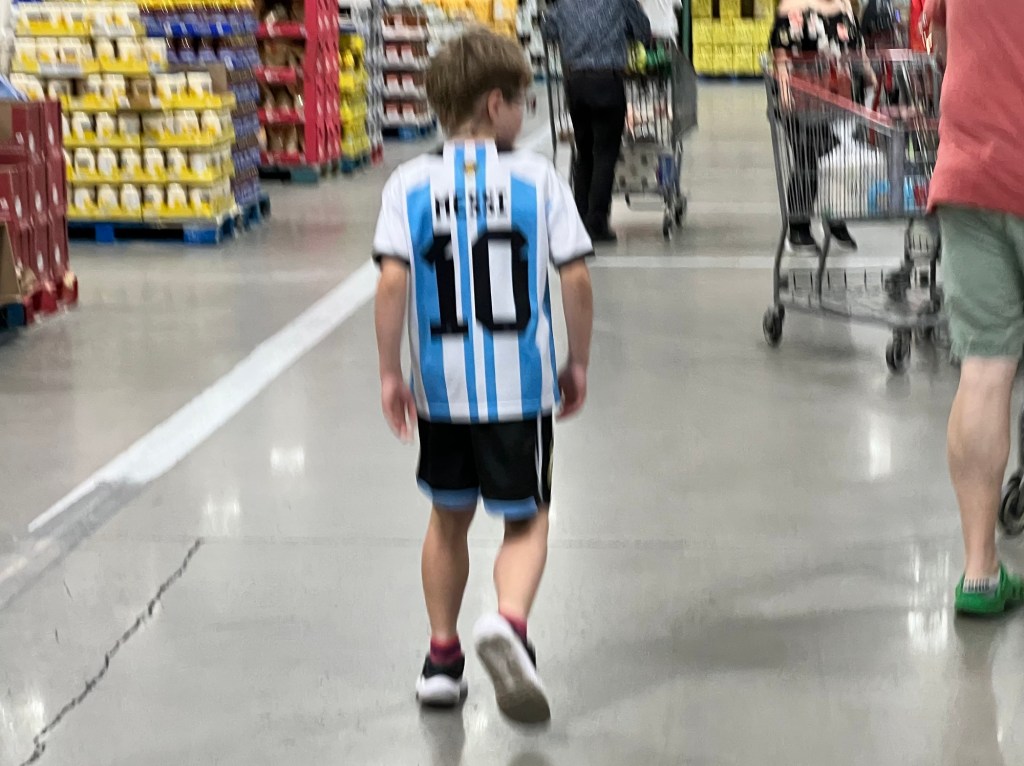
T accompanied me to do groceries in the morning then I took the hubby and him for buffet lunch at Dragon Legend.

We then visited my Pa, Ma and sister at the cemetery. They finally put up the new memorial plaque with both my parents info and it felt bittersweet to see this completed and feel final.

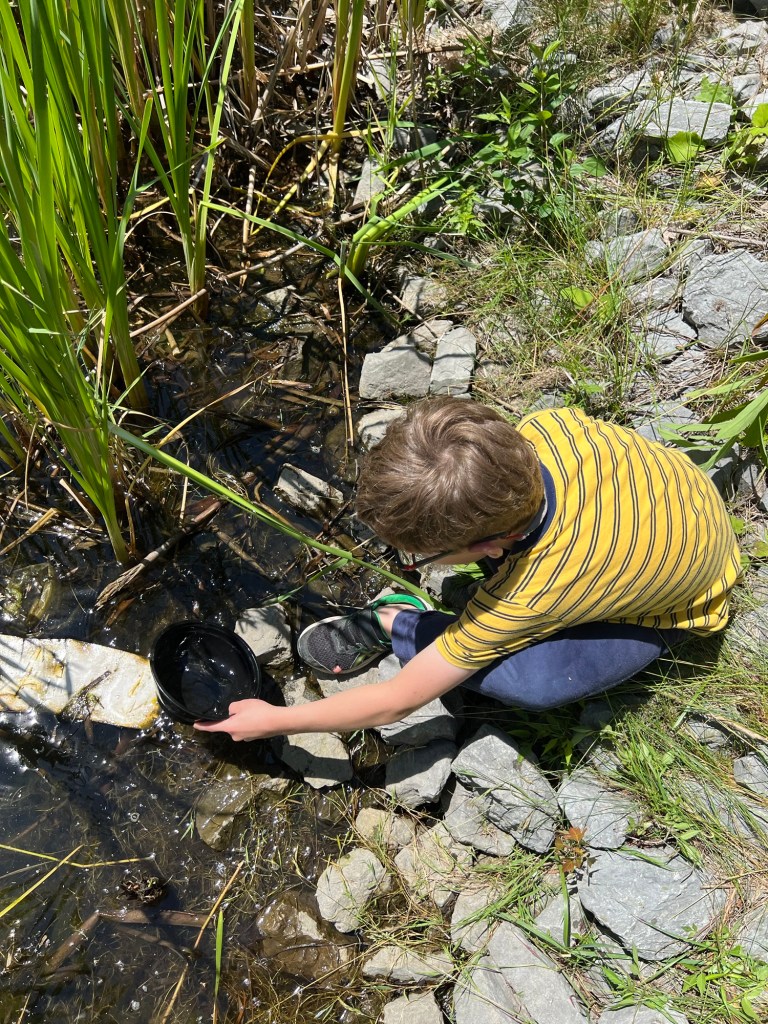
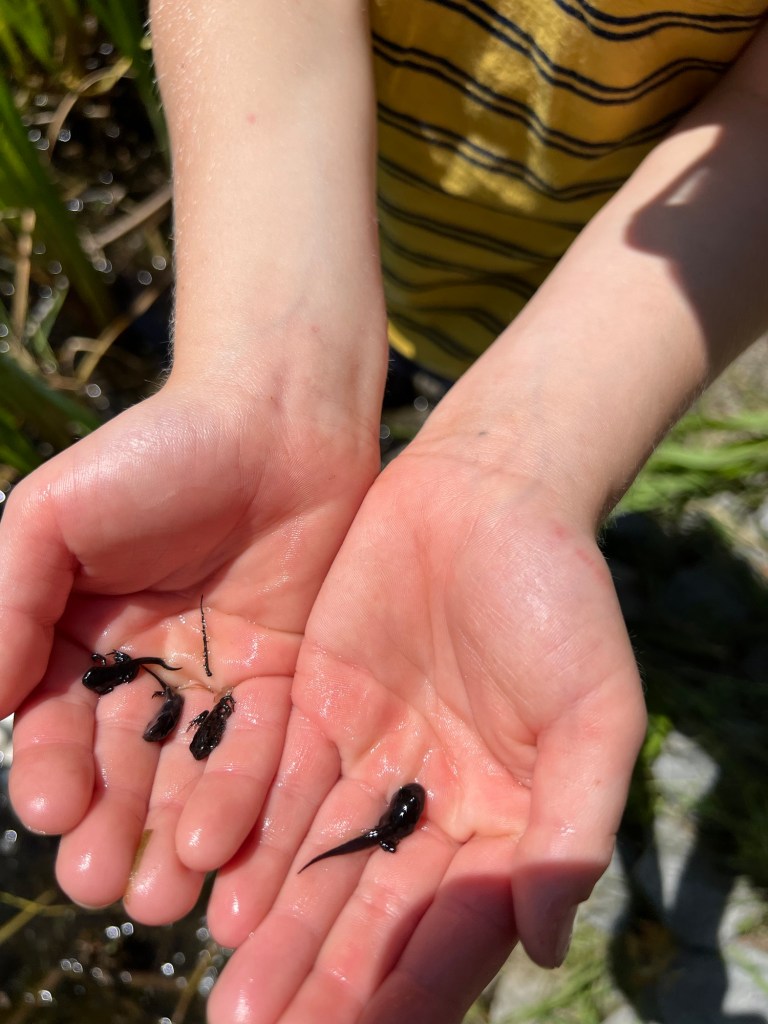
It was a beautiful day and the hubby watched T play in the pond at the cemetery where he scooped up four tadpoles and put them back after.

I stood in the shade under my favourite willow tree on the cemetery grounds and soaked in the calm.

On many days when parenting is hard, it feels thankless and one sided.

But on days when our energy and love for T come back like a boomerang, it feels absolutely awesome.

Then the hubby took T to the movies and I took a glorious three hour afternoon nap. 😊

But Is It Art?

After years of being on the receiving end of mischief, our cat got back at her 9-year-old nemesis.

“OH MY GOD!” T screamed Friday morning.

It was a PA Day and he stayed home instead of going to daycare, as we were going to a FASD caregiver group meetup at lunch.

“What is it?” I asked as I saw T in our living room.

“Lanaya pooped on my art work!” He shrieked.

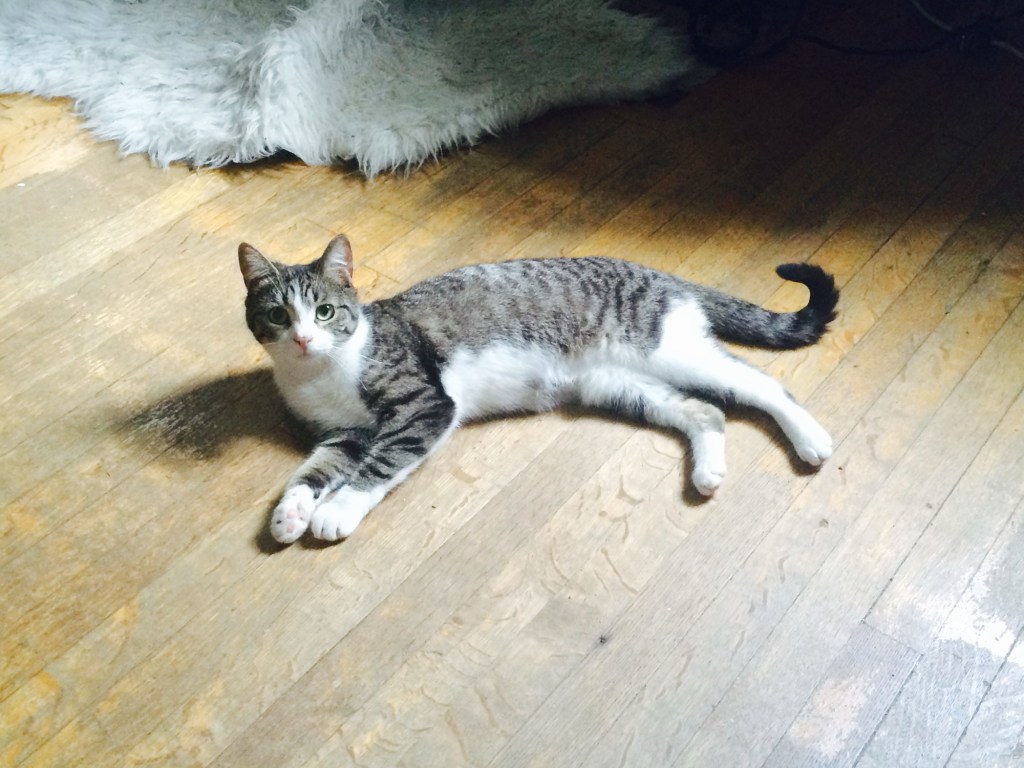
Lanaya is our female cat, who was once the centre of the universe until T came along.

T’s hyperactivity, loud boisterous nature and disregulated moments are hard on our poor cat, who has over the years withdrew and spends time under the bed when T is home and awake.

T wants to be friends, but his impulsive nature means he often likes to chase her, because he’s trying to be playful rather than malicious, despite our repeated reminders that she does not like it.

Thanks to his FASD brain, he just can’t help himself sometimes!

So it’s a fraught relationship, but thankfully, T and our other cat, Kyrie, have learned to co-exist and he’s even warmed up to T.

Our very first photo of Lanaya when we picked her up at her foster home 9 years ago. She’s much fatter now!

When T pointed out Lanaya’s handiwork, I couldn’t help but burst out laughing.

Of all the places to lay two turds, she was quite intentionally specific.

“I think she’s sending you a message,” I told him with a chuckle. “It’s karma for all those times you bothered her.”

Instead of getting testy, T laughed along with me.

We laughed for quite a bit that morning about it.

There is absolutely nothing profound about this post, other than poop never gets old in making people laugh together.

For families that need ongoing positive social connections, laughter is so healing.

So yah, when timed well, poop is art in itself.

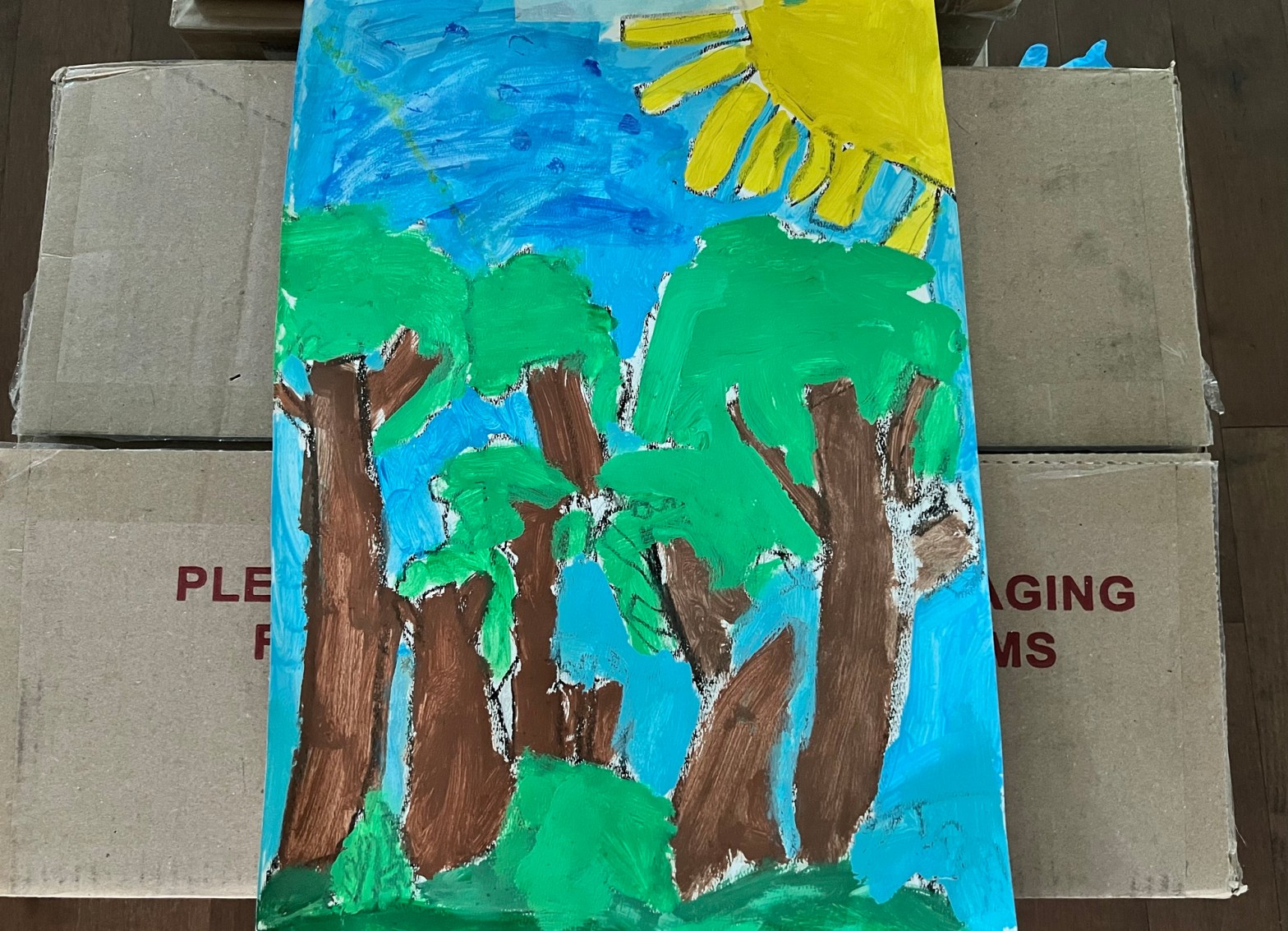
Thankfully, she pooped on the back side of the artwork. The artwork is pictured at the top of this post.

The rest of the day was less poopy.

The meetup organized by the Surrey Place FASD caregiver’s group was fun!

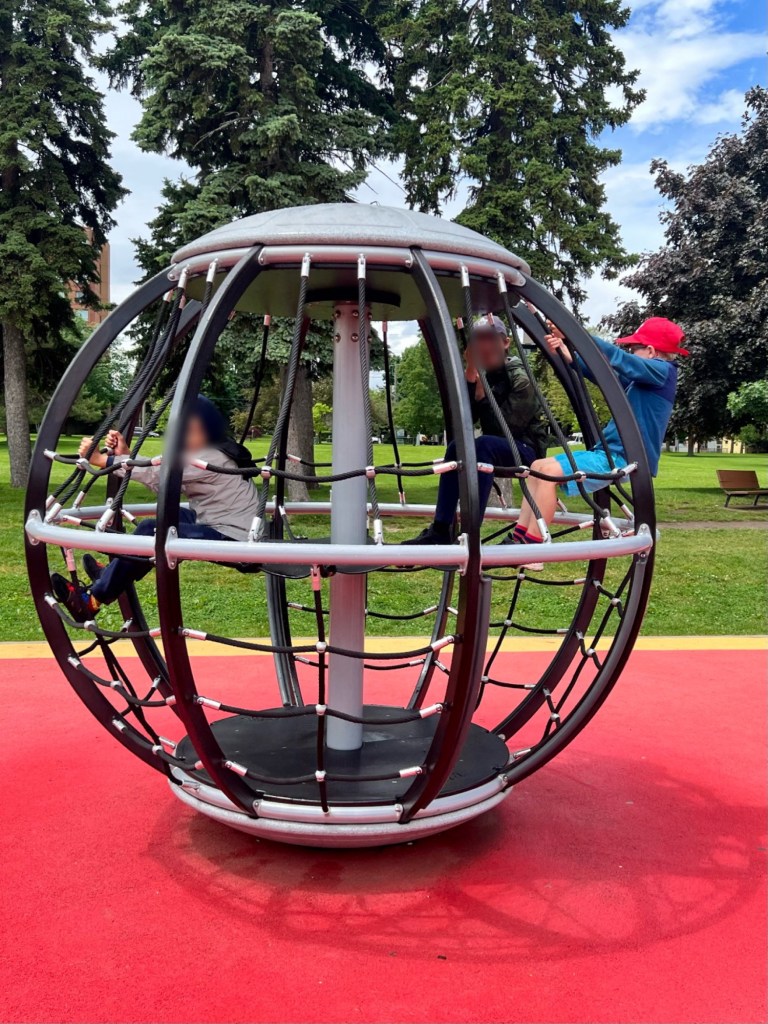
We joined two families we’ve met on three previous occasions and it was heartwarming to see T have fun with the two older boys, 11 and 16.

This is what childhood is all about.

T is the kid with the red cap.

Futures Planning for the Neurodiverse Child

One thing that keeps me up as a special needs parent is thinking about our child’s future.

My workplace is developing its next multi-year strategic plan. Participating in the process made me think about T’s next few years.

Any special needs parent will tell you we just want to make it to the end of the week, so where do we find time to think years into the future.

Organizations that invest the time to executive effective strategic plans thrive and withstand whatever lies ahead.

I believe that special needs families can thrive and weather storms with advanced planning, as exhausting as it seems.

I’m not an expert in strategic planning, but there are common steps that include research, SWOT analysis and scenario planning.

The hubby and I are honest about the strengths, weaknesses, opportunities and threats (SWOT) within T and surrounding him.

We find ways to stay informed about FASD and connected with communities of caregivers, experts and service providers.

Our pragmatic nature guide us to hope for the best and to plan for worst case scenarios.

I’ve been thinking about the priorities in a strategic plan for our family in the next five years.

T will enter his teen years during this period and I am nervous of these years from the experiences I’ve read from other FASD caregivers.

Instead of letting myself be paralyzed with worry, I try to channel it into something productive.

These are what I consider our family’s five priorities for the next few years, along with expected actions to bring this plan to life.

Build Skills, Connections and Wellbeing

  • Advocate and identify school supports to maximize T’s academic outcomes.
  • Identify positive social connections for T within at school and in the community.
  • Build pragmatic skills – e.g. print, digital and financial literacies, self-care, chores – to support independence.

Navigate Adolescene

  • Have conversations with T about bullying, online safety, drugs, sexual health and consent.
  • Identify positive mentor relationships.
  • Find productive activities – e.g. sports, part-time work, internships, etc. – to keep him out of trouble.

Maintain and Increase Personal Capacity

  • Prioritize our self care through exercise, diet and alone time.
  • Identify respite services to give ourselves regular ongoing breaks.
  • Protect and maintain work life balance.

Raise awareness and advocacy

  • Support T in his continued exploration and understanding of his FASD diagnoses.
  • Participate in activities – e.g. blogging, caregiver groups, political activities – that raise awareness of FASD.
  • Explore starting a podcast with T as both an advocacy tool and Papa-and-T bonding time.

Enjoy life to the fullest as a family

  • Maximize family time on weekends.
  • Save for and enjoy family vacations.
  • Always focus on the big picture: FASD is part of our family but it does not define us.

T is also thinking about the future, specifically the planet’s future.

During a recent bike ride around the neighbourhood, we noticed an unusually large amount of water bottles littered at the park.

T got quite angry and said people are destroying the planet. His exact words, “People are assholes!” 😆

So T took it upon himself to do a park clean up and I helped him. We picked up nearly 30 bottles.

During a recent morning at the office, I received a lovely photo from T’s drive to school, along with a sweet text message: “I love the world. But I love you more papa. You are the best papa in the world.”

We don’t always have great days and some moments are so hard. But I always believe in staying hopeful for T’s future.

Having a high-level plan will guide our family over the next few years and allow us to embrace the opportunities that emerge, while feeling better prepared for the storms that lie ahead.

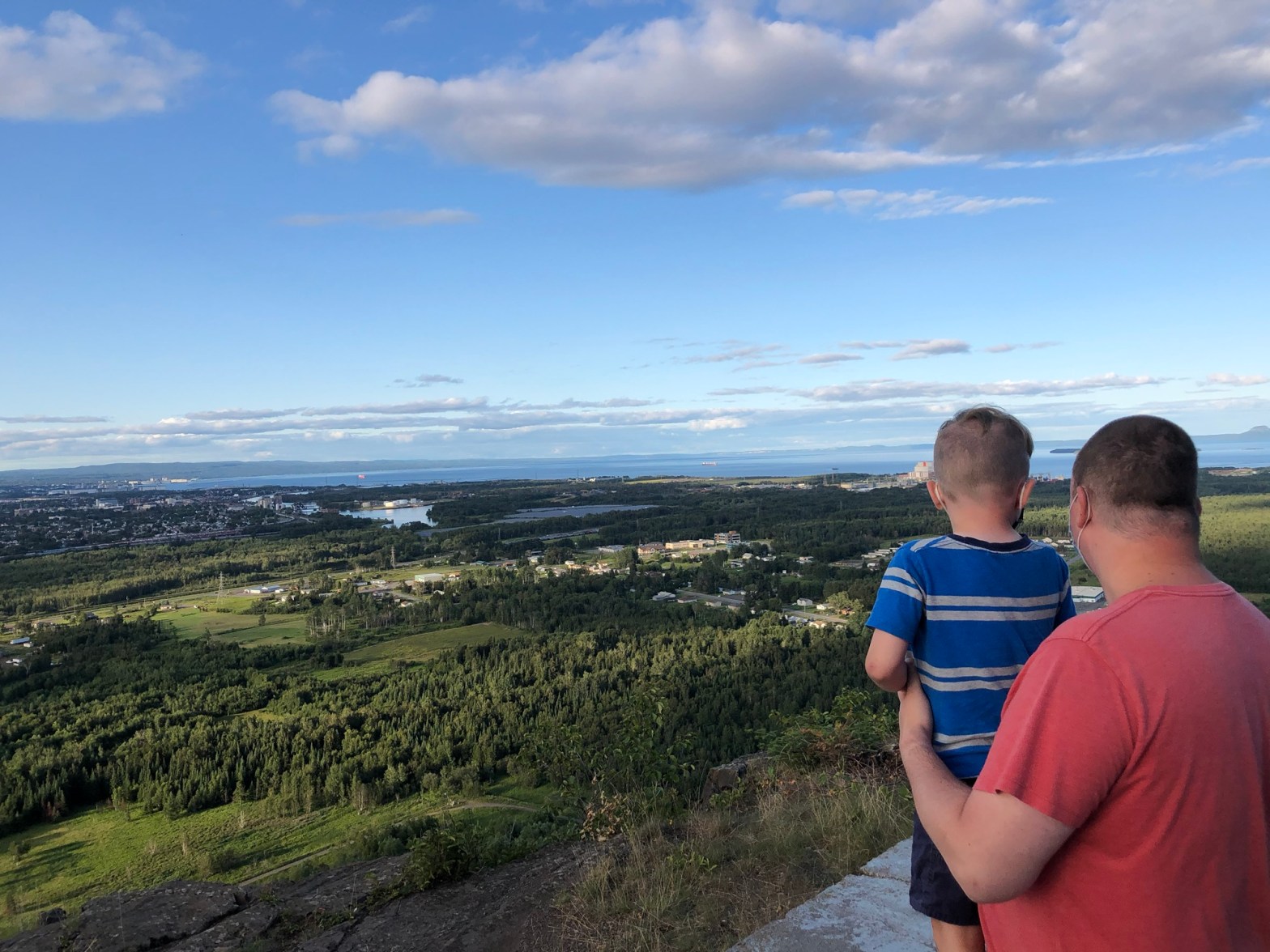
Image at top: Enjoying the view of Thunder Bay during a family roadtrip in summer 2020.

The Joy in the Meander

Slow down, take the detours, be open to the unexpected, stay present, soak in the moment.

We all end up at a finish line, so what’s the rush?

It’s a valuable lesson I’ve learned as T’s parent.

Our family recently helped celebrate the 18th birthday of a friend’s son.

It seemed like yesterday that he was born, then our ring bearer at 3, then countless games of hide and go seek, then suddenly he is taller than me and going to university this fall.

A colleague once told me to enjoy T’s childhood, because it flies by.

I thought about this when I was lying down exhausted one recent weekend morning and T whined for me to play with him.

As tired as I was, I played with him and had a blast play fighting as Skidibi Toilet villain G Man to his hero the Titan Camera Man.

Playing with him keeps me young and I am aware there will be a day when he no longer seeks me out to play with him.

We went for a bike ride after. It was meant to be a short ride but T wanted to explore a new playground he spotted (pictured at top).

So we parked our bikes under the shade of a tree and took an hour-long detour for T to play while I soaked in the beautiful sunshine.

Later, we stopped by Tim’s to get T a cold sugary drink, a perfect end to our weekend.

My experience with parenting a child with a complex disability (FASD) means I am always on guard, have a to-do list that rarely gets done, and rigidly following routines to keep us on track.

But there’s a grace in the meander. It tells us to take deep breaths, it’s ok to get off track, and that we’ll end up where we need to be; the beauty is in the things we experience along the way, often through the moments that are unplanned.

This Saturday morning, I was lying down on the bed, seeking quiet time on my phone when T came in with a bowl of popcorn he just made.

He plopped himself next to me and said he wanted to watch YouTube videos with me. He even offered me popcorn, which he notoriously never shares.

My annoyance at my quiet time being interrupted vanished. He rested his head on my shoulders as I nibbled on a big handful of popcorn.

Step with the Best Foot Forward

A painful truth about being a parent of a child with FASD is the world often sees them at their worst.

A parent shared this, between tears, during a recent weekly virtual FASD caregivers group and I wanted to hug her because I felt her heartache.

I then thought about Mothers Day lunch with family a few days prior.

T was very excited then became disregulated, hyperactive and his impulsivity kicked in – and then said and did things without thinking through the effect, as is often the case with FASD.

One of my aunt told him that he is very rude.

On the drive home, T was still disregulated and mouthy with colourful language with us and another aunt.

So yes, I can relate to the mother who wishes the world saw the bigger picture.

We see T at his disregulated and challenging moments, but we also see him at his kindest, sweetest, caring, charming, thoughtful and brightest best.

It pains, annoys and irks me when people see him having a hard time, because negative impressions stick and it takes a special person to understand the unseen disability is what often drives the observed behaviour.

But I can also say that I’m learning to care less about what others think about T, because I know him for who he truly is.

This long weekend, T got invited to not one but two birthday parties; the first was for a friend’s son’s 18th birthday and the second was for T’s classmate.

I was nervous about a repeat Mothers Day outing.

So we spoke with T before each outing about our expectations and you know what, we had a wonderful fun weekend.

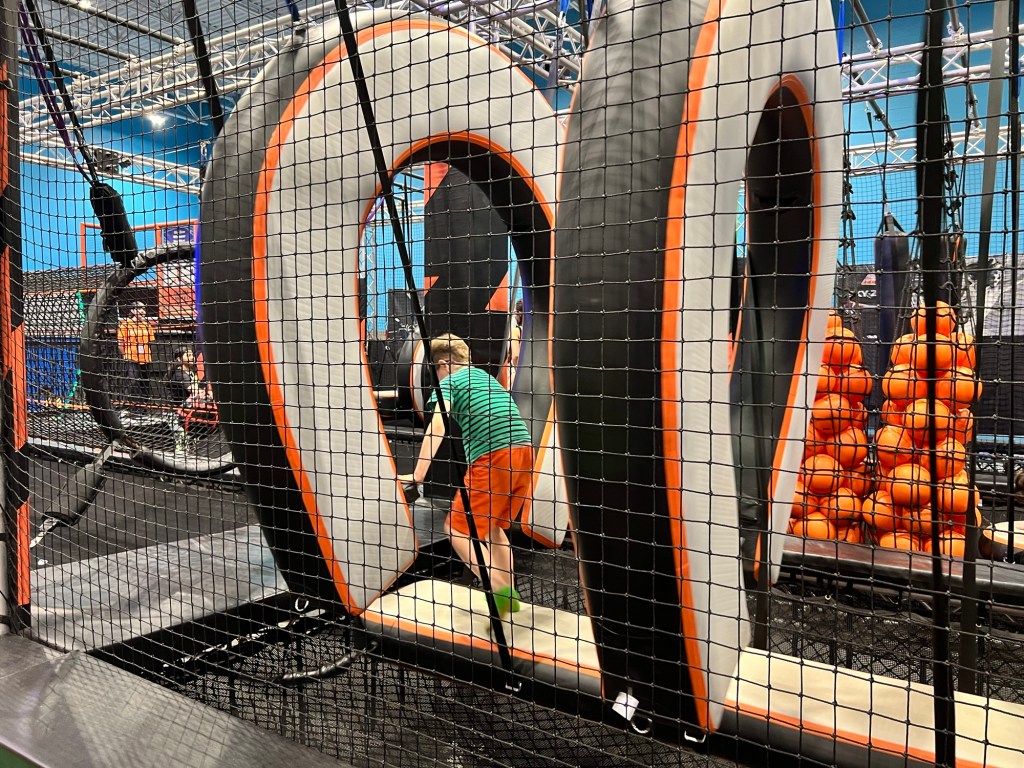
T’s classmate’s party was held at Sky Zone Trampoline Park and it could not have been a more perfect venue for an energetic child like T.

I loved watching him explore this truly awesome indoor adventure park for two hours and I enjoyed watching him just have fun.

FASD can come into the calm of your day like a wrecking ball.

But you gotta focus on the prize in front of you: an amazing kid that is simply trying to make positive connections with the world around him.

Keep the faith that you’ll find your way through the obstacles together – and it means sometimes letting him lead the way too.

That your beloved child will have moments to shine – and who the hell cares whether it’s just you or the entire world that sees them.

Postcards from the Edge

The first text message simply and sweetly said, “I love you.”

I was en route on my early hour-long commute to work and it was a welcomed surprise.

On in-office days, I often leave before T is up and when I do see him before I leave, I get sweet long hugs, which energize me for the day.

T has an old phone of ours, which runs on wifi. We only let him use it as home, not at school; only with us, no social media.

When he discovered emojis. 😆

I smiled when I received T’s text.

We kept each other company during my commute, as our subway system now has cell access.

We even did a video call, so he could see my commute, including the subway ride, which was a foreign world to him until then.

We said goodbye after a tour of my office.

Finding time for connection every day is important, especially in our busy lives.

For a child with FASD, it is important to help them regulate and feel good about themselves, because they spend so much of their day overloaded with demands, which often lead to crash and burns at the end of the day.

So our new routine is a welcomed change – and these small moments add up to a larger whole.

And let’s be real, not all moments with T during the day are pleasant, so I welcome these sweet moments with our little guy when I get them.

Many people tell us that this kid has a lovely sense of humour and I agree.

Keep the Faith

In 2015, the hubby and I finished our South America trip at Rio de Janeiro. It was our last solo trip before T unexpectedly came into our lives.

I revisited this special city last night when Madonna completed her Celebration Tour on Copacabana Beach to a record 2 million people.

We watched her show in January after Ma passed. It was cathartic, as motherhood was a central theme – opening with the never-performed “Nothing Really Matters,” a song about being a mother, and the show beautifully included her four youngest kids.

The most memorable moment during our visit to Rio was seeing Christ the Redeemer atop Corcovado Mountain.

It was raining hard. Half the tour group stayed in dry shelter and we ventured up.

The trip up Corcovado Mountain felt dreamy with fog.

At first, all we saw was fog. Then He emerged and the rain stopped. It was surreal and magical, a moment that reminds me about having faith.

Last summer, M had a near-death medical scare. She could’ve cancelled her tour but, after a 3-month delay, she set off to complete an 81-show tour that’s among my Top 3 of her tours.

When I think about the heavy rain that falls, I can stay in shelter or keep venturing to my destination.

Either approaches, to be clear, are ok.

There have been several moments during the last while when all I could do was stay in bed.

But there’s also something affirming about staying the course and having faith that things will work out, even if it’s not quite – and often rarely is – how you expect it to.

Beautiful Rio de Janeiro from atop Sugarloaf Mountain.

Family is Forever

Eight years ago today, we got a call from Children’s Aid Society. We were matched with a child!

It was a Thursday evening and the hubby and I were shocked, because it had been seven years since we had started the adoption journey. We had given up hope we would be parents.

They shared T’s history and we learned he was prenatally exposed to alcohol and it was one of the things we said we would not take on.

But when we met his foster mother the next day and saw T’s photo, at age 1, we fell in love.

From that day on, it was like boarding a bullet train and our lives have been a roller coaster ride since.

Caring for a child with FASD is relentless. The speed, the chaos – they never slow down, even though you feel the wheels of the train falling off.

Most days come with challenges that most people could not understand nor bear.

But thanks to T, we’ve experienced the joys of parenting, many incredible memories, and love and grace.

So it was fitting that on this day today that T would be reunited with his foster family, who took amazing care of him for his first year of life.

It was his foster brother’s birthday and he invited T to his party.

The last time we saw them was four years ago, for T’s 5th birthday, a month before the world shut down for the pandemic.

T was very excited to see them, including during the hour-long drive to their town.

The party was held at a Brazilian Jiu Jitsu studio and there were parkour activities, nerf gun shootouts, pizza and cake.

I loved watching T reunite with his foster parents and brother, as if time had not passed. The bond was still there.

T’s foster brother is also neurodivergent and while his parents never quite said it, I expect it might also be FASD. But it’s not my place to ask and they will share when they want to.

His mother shared with us about their struggles and I wish we lived closer, so T and his foster brother could be companions.

But alas, the sweetness of life is to be savoured, and the party flew by and it was time to say bye.

T gave his foster parents and brother big hugs and off we went, driving home in the heavy rain.

There was a nice message on the wall of the Jiu Jitsu venue. It read, “Today’s challenges become tomorrow’s strengths.”

Just like T was meant to be in our lives, I was meant to see that message today – to remind me that the hardships we face today will bear sweet fruit for T tomorrow.

Sinking Ships, Rising Hearts

The heart does go on and on.

T’s latest obsession is the Titanic, quite the step up from Paw Patrol!

This was likely inspired from YouTube, as he spends lots of time watching videos about the Titanic and other famous shipwrecks.

He loves to draw pictures and pretend play with great imagination about the doomed voyage.

I’m amused at his growing knowledge and how he snapped at me for daring to confuse the Carpathia, the ship that rescued Titanic survivors, with the Britannic, a vessel that sank four years after the Titanic after hitting a mine.

So we leveraged his interest to get chapter books to practice his reading.

He recently read Mary Pope Osborne’s “Tonight on the Titanic,” and did a good job with building his stamina and comprehension.

Raising a child with FASD feels like you’re on board a perpetual sinking ship.

FASD is truly an iceberg. What you see of the child at the tip masks much of what’s hidden below the dark surface.

You see the sharp edges at the top but you don’t see the reasons beneath the visible – sensory issues, emotional regulation challenges, impulsivity, trauma and so on.

As T’s caregivers steering the ship, we hit the FASD iceberg often and it can truly be as devastating as rising waters threatening to submerge us.

The impulse is to emulate the musicians on the deck of the Titanic, nobly playing until the end.

But honestly, sometimes the best way to respond is to board the rescue boat and try again.

One of the gifts of caring for a child with FASD is that every day is a new day, new ship, new beginning.

And yes, same fucking iceberg.

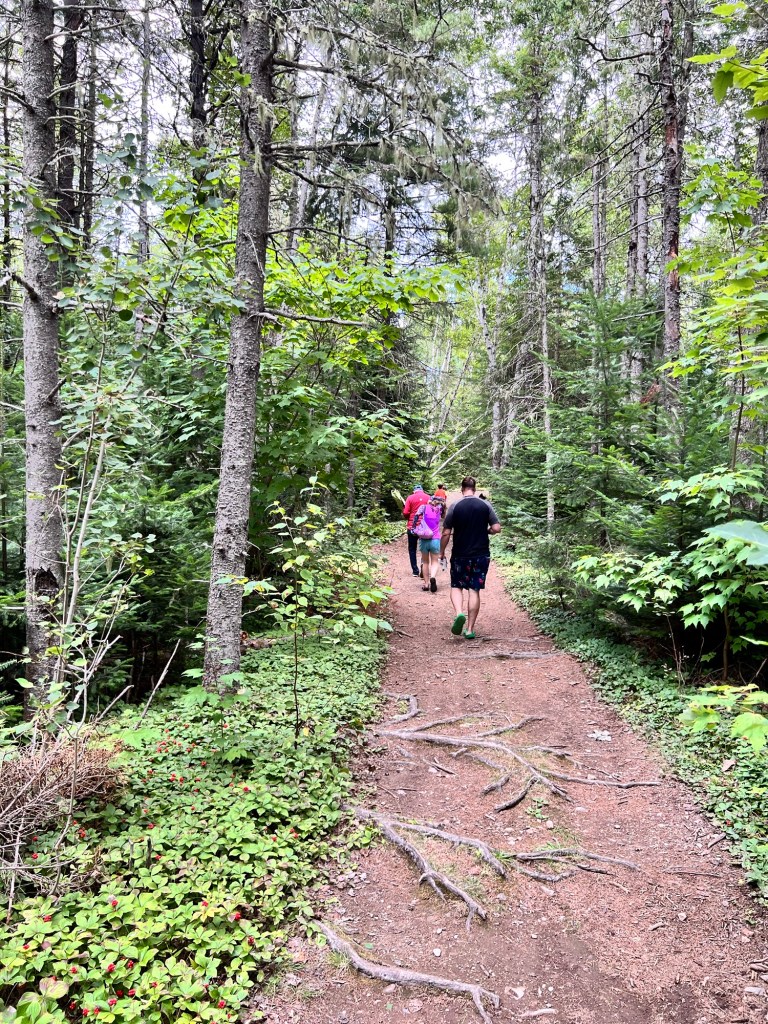
We went on a hike at the Bluffs last Sunday, a beautiful Spring Day; a way to recharge and lift our spirits.

If there’s a lesson I can share with other caregivers going through the struggle of caring for someone with FASD, it’s to try to focus on the big picture and wins along the way.

There are moments that cause our hearts to rise from the bottom of the ocean where we often feel we’ve sunk down to.

Last Friday, after a particularly hard week with T, we received a lovely email from T’s music teacher.

She wrote: “T is beyond talented with composing music. He can always explore song maker on Chrome music lab. He focused on his music for 30 minutes straight.”

She shared with us a video, see below, of the song he composed.

The hubby thought it was neat but I screamed with excitement on what he did not pick up on, “It’s the Titanic theme song!”

I was blown away and shared my excitement back with his teacher who then wrote back.

“He is beyond talented. This was done all by him humming to the song and recognizing the beat. He was able to focus on this for so long. He got frustrated at points but we both laughed it off and he kept plugging away. He absolutely loves composing music. I love how he made it his own version at the end. Just brilliant 😊”

This was joy and sunshine that lifted my spirits and provided us with a great start to our weekend.

It reminded me that despite the icebergs and wreckage, the heart will go on and on.

Photo at top: Shipwreck tour at Tobermory in summer 2022.

Nature is Healing for Neurodiverse Kids

A beautiful sunny t-shirt weather Spring Sunday gave T and I the recharge we needed.

After breakfast, we practiced reading two chapters in his latest book then headed to one of our favourite nature spots: Rouge Park.

I feel blessed for this urban oasis near our home. I appreciate the government recently adding a boardwalk and bridge that makes accessing the trails from the parking lot much more convenient.

Nature is healing.

Fresh air is refreshing.

The sound of water is calming.

Sunshine is reinvigorating.

For neurodiverse kids like T, who has diagnoses of FASD and ADHD, nature supports mental, emotional and physical wellbeing.

The outdoors provide endless space to burn off his fuel in a productive healthy way.

Look at him go!

Trees, branches, sticks and twigs. Sand, mud, water, rocks and pebbles.

Nature provides active learning opportunities to feed his imagination and wonderful textures to satisfy his sensory needs.

Fallen logs several feet up in the air create a balancing game to provide proprioceptive inputs.

For the exhausted frazzled caregiver (that’s me, in case you’re wondering), nature calms the mood and thoughts – a respite away from home life with a loud, unregulated, oppositional child.

If a child swears or has a meltdown in the forest and no one sees or hears it, did it happen?

It brings me joy to watch T be carefree in the wild, zipping down seemingly endless trails then circling back to see if I’m ok then dashing off again.

He is at his surest and most confident in nature – and that surely must feel good for him.

We enjoyed unexpected sights and sounds, like a fort made with branches, or the calming rhythm of chirping birds and woodpeckers.

Nature is not a miracle worker though.

There were moments during our outing when T tested my patience… a lot.

Our often oppositional child wouldn’t follow my instructions to stay on the trail – away from the direction of the bear warning sign.

“Ok that’s fine. If you get eaten by a bear, I’ll finally get my peace and quiet,” I said and kept walking, refusing to wait for him any longer.

Then of course, our walking birth control ad decided to turn around.

“You don’t want me to have peace and quiet, do you?” I said, trying to suppress a smile.

He grinned like a little shit as he ran past me on the trail.

Open to Feedback

Being able to receive and apply feedback, as hard as it can be to hear sometimes, is key to growth.

In February, halfway past the Grade 3 school year, the hubby and I had our teacher conference with T’s teacher, CYW and the school’s special education coordinator.

We discussed T’s areas for improvement: reading, writing and social skills.

He’s reading at a grade 2 level. He does ok with decoding but needs to work on comprehension, reading stamina and to move away from picture books to chapter books.

I was a bit bummed, because we work hard on reading and I thought he was doing ok. But I’m also not surprised they’ve noticed his poor working memory, which supports reading comprehension, as it’s common for individuals with FASD.

A special needs parent needs to collaborate with teachers and service providers, and their child, to maximize their child’s success.

That includes keeping it real and being open to feedback that may seem critical, because often the intentions are to help.

We focus on the big picture, because it can be so worth it.

Like with T’s first term report card, received prior to the meeting. Bs and B+s – based on his Individualized Education Plan – and we’re proud of his progress!

An A on his recent math test! 🥰

During the meeting, his teacher said they will send home beginner chapter books to practice with T.

Reading practice with T can feel quite painful, because it is not a preferred activity.

We persevere because we know it’s a foundational skill and we believe in him.

During our recent March Break trip, we packed a beginner chapter book – “Tornado” by Betsy Byars – and read one chapter a day, using play and pool time as incentives.

I paused on every page to ask comprehension questions.

Some days were hard to get T to focus, but he finished the book on our vacation and read and answered questions well!

T’s first-ever completed chapter book! An appropriate title for our hyperactive kid!

We shared the happy news with his teacher and CYW when he got home.

We’re now working through his second chapter book, slowly building a routine to read one chapter during bedtime.

Like with everything else in life with T, it’s a work in progress.

T does steadily well on weekly spelling tests and once got a perfect score. I try to focus on these positives when we stumble.

On Easter Monday, T and I visited Pa, Ma and my sister at the cemetery and T read the latest chapter of his book to his Ama, while we both sat on the ground in front of her memorial site.

Just my luck, it was the longest fucking chapter in the book! He got unfocused at some points, but he finished and I told him Ama was proud.

His audience understandably didn’t offer much feedback. 🤣 But in life, you also do things because the feedback of your inner voice tells you it’s the right thing to do.

Turbulence

An overzealous adult crossed the line with our neurodiverse son and awoke the Papa Bear in me.

While waiting at the airport for our early morning flight home after our March Break trip a few weeks ago, T was disregulated.

He didn’t get a lot of sleep and he was short tempered, hyperactive and mouthy.

During these situations, the hubby and I try our best to ignore the behaviour, while fully aware all eyes and ears are on us.

We gave T fair warning that if he didn’t stop with the colourful language, which he would say out of frustration with the game he was playing, we would take his phone away.

And so we did. He got mad and started swearing loudly and smacked the hubby.

A woman sitting in front of us then yelled loudly at him, “Hey kid, this is not a playground!”

The hubby got up with T and they walked away to try to deescalate somewhere less crowded and noisy. As the hubby walked away, he told the woman, “Your comments are not helpful.”

The woman then looked at me in disbelief but instead of backing her, I said to her, “He has a disability and he is escalated right now.”

Then she snapped back, “I’ve fostered kids before so I know all about kids like this.”

I didn’t back down, because she should’ve known better then.

“His brain is on fire,” I said. “He is in fight or flight mode. I know these situations are hard for everyone – believe me, this is hardest for him. Comments like yours only add fuel to the fire.”

She saw I was not backing down, so she swiftly ended the conversation grumpily, “Well, you’re very tolerant.”

She then turned her body away from me and towards her travel companion next to her. She typed messages on her phone that she silently showed to her companion.

So I squared my shoulders and body towards her for the duration of the wait for the flight. Two can play the let’s-make-things-awkward game.

I was livid, because she crossed a line.

People can think what they want about T, judge silently or even speak to the hubby and I and tell us he’s being a brat or we’re being bad parents.

But to directly yell at him, when she was not part of the situation, was inappropriate.

I would never yell at someone else’s child when that child was not doing anything to me.

Reflecting on this situation a few weeks later reinforced to me that being a special needs parent is about taking a different path, one that is often counter to the path I took growing up.

As T grows up, he will face misunderstandings, intolerance and I know it will get harder, because people only see outwardly behaviour without understanding the underlying reasons.

It makes me sad and angry. But I am doing my best to redirect these feelings into something productive – awareness raising, advocacy and most importantly, standing up for my child.

The plane ride home had a few bumpy moments with T, but I didn’t care.

During a particular rough patch of turbulence, the pilot reminded us to fasten our seatbelts.

And that’s what life with T, a child with FASD, is about sometimes.

Fastening your seatbelt and landing on solid ground eventually – small patches of turbulence in a journey filled with wonder.

One last photo, at sunrise, on our last morning at the resort shortly before heading to the airport.

Down into the Depths

In your lowest moments, you find yourself again.

We enjoyed a cave exploration excursion during our March Break family trip to Mexico.

Our first activity was to rappel down 7 storeys into a small cave.

T went first. As he was lowered by the guide, down a small hole that quickly opened widely, he said to us with a smirk, “Bye bye, stinky daddies.” 😆

T was such a trooper. Look at him. No fear. 🤗

We were lowered to a shallow wet cave.

Wearing headlights, we looked around and illuminated the beauty of the mineral formations.

We took a short hike out of the cave then enjoyed a bike ride to the next activity.

It was heartwarming to see T zip through the forest with confidence, as it was only last summer that he decided to take off his training wheels.

The guide called him “Rocketman” as he was the leader of our pack.

The second activity was the showstopper, an hour-long hike through a wet cave with a 1km long underground river.

We put on wetsuits and lifejackets.

T had the sweetest excited smile as we entered the caves through wooden stairs.

The caves were pitch dark, only illuminated by our headlights.

The underground river was a treat to explore; in many moments, the water went up to my shoulders. T had to swim for a chunk of the hike.

When we were deep inside the caves, the guide asked us – we were with a family of 6 from Utah and a local couple – to turn off our headlights.

We sat in the dark, water up to our chests, and enjoyed the silence for several minutes.

What an unforgettable experience.

T got cranky near the end of the river tour, as he complained of being cold.

The guide helped turn his frown upside down at the third and last activity.

After changing into dry clothes, we did a short hike through a dry cave (above).

T got his wish and saw a small colony of bats the guide intentionally searched for to cheer him up.

What a sweet moment. 🙏🦇

This experience inspired reflections about how we navigate our lowest moments.

As a parent of a wonderful boy with FASD, I often find myself feeling low – often shortlived.

As someone who lost three significant people in the last year – my sister then a close friend then my mom – I know I’m still navigating grief.

But here’s what I know to be true:

You have to reach the bottom to find your footing.

Shine light into darkness to find life and beauty.

Sit in dark stillness and find restoration.

Life can harden us. But like mineral deposits in a cave, they are a beautiful reminder of growth.

In darkness, keep moving through the caverns and you will find your way back to surface again.

Surga

After a cloudy few months, we’re spending March Break at a place of happiness.

We booked this family getaway last October, before I knew one of my closest friends would lose her brave battle with cancer in November. Never would I have guessed Ma would pass away a few weeks later.

For better or worse, life goes on. I feel the urgency, the fleetingness, more so than ever.

We returned to the same resort in Cancun, Mexico, that we stayed at last year; it’s a beautiful resort with fantastic amenities for kids.

In the days leading up to departure, T excitedly counted down the days then hours.

For the most part, we are having a good time. The warm weather, sun, pools, beach and restaurants have provided rest and comfort.

The challenging parts of the trip has been T’s behaviour.

Maybe it’s the change in routine, but he was disregulated the first few days – his foul behaviour at the restaurants were embarrassing.

But such is life with a child with FASD – you take the good with the hard.

You remind yourself it’s the FASD you detest, not the child, and every day is a chance for a redo.

We’re now halfway into our trip and the last two days have been great.

With T, there’s nothing that ice cream, waterslides or cotton candy can’t mend.

I’ve carved time for myself – to let the weight of the past few weeks go.

That means eating well (plates full of fresh papaya), sleeping lots, and hitting the gym with Ferry Corsten’s uplifting trance music on rotation.

I discovered a recent work of his that I hadn’t heard before, Surga, which has his trademark joyful melody all over the hypnotic production.

Surga is an Indonesian word for heaven or paradise; a place or state of great happiness.

I saw a deeper message in this seemingly random musical discovery.

As our plane descended towards Mexico a few days earlier, there was a moment when we sank through the clouds.

“Are we in heaven?” T asked.

“No, why do you ask?”

“Because we’re in the clouds,” he said. A moment later, he said, “I think this is where Ama is.”

Celebration of Life

On Saturday, surrounded by family and friends, near and far, we said goodbye to Ma.

It was celebration and catharsis.

I am thankful for the last few weeks to reflect and to remember what an inspiring life Ma lived, full of love and accomplishments.

Loved ones from afar, including Philippines and Guam, joined the service virtually.

I compiled a slideshow that highlighted Ma’s important relationships, as a daughter, wife, mother, grandmother, great grandmother, beloved family and friend, and respected colleague.

It felt wonderful to find photos of memories long forgotten, including photos of Ma with former Philippines President Corazon Aquino, whom she once followed on her US press tour.

Press corps with Corazon Aquino at the Presidential Palace.

I was touched by the support of those who joined, including my dear friends, and faces I have not seen in a long time, including Ma’s teacher colleagues from Manila, one of whom was my kindergarten teacher!

I’m seated in front of my kindergarten teacher in this kindergarten graduation photo. She attended Ma’s service with her son, one of Ma’s students. Ma, our principal, is seated in the middle.

T was calm and regulated during the service and interment. He always show up for us when it matters most.

We spoke with T in the days leading up to the service about what to expect and we arrived to the funeral home early so T could have alone time with his Ama before guests arrived.

Unlike my sister’s funeral a year ago, there was no body. It was an urn and so it was a new experience for T that we briefed him about beforehand.

T had a few cries, including during the moments right before the interment.

At T’s request, we let him lower Ma’s urn into her memorial bench, where she will be buried with Pa.

We wanted to include Ma’s glasses with her.

T, in his very creative and thoughtful way, placed her glasses right on her urn.

I can only imagine Ma chuckling at what her grandson had done in her honour.

As the pastor who delivered Ma’s service said, death is not defeat. It is merely a chapter in our journey. I wholeheartedly believe we will all see each other one day in another life.

For now, I intend to honour Ma’s life by living my own to the fullest and to help our T do the same.

Angels in the Infield

During school lunch a few weeks ago, T proclaimed to his class he was refunding his parents.

His CYW recounted to us with amusement, via text message, that T ranted out loud that he had told Daddy (the hubby) many times that he didn’t want meatballs for lunch and still got them.

Due to this unforgivable offense, T said he was going to Walmart to put his parents back on the shelf and get new parents.

After his soliloquy, the class laughed out loud.

His CYW, who’s working with T for the second consecutive year, is a godsend.

She sees the potential in him and his many strengths.

Like us, she thinks T has a great sense of humour – and we look forward to her text messages updating us on whether lunch was 👍 or 👎.

She works as T’s external brain – now on a part time basis, rather than full time, as there are other kids with needs in his school too.

We could tell how much she cares for T and we are so grateful for the difference she makes.

Most recently, the class had to complete a project about Canada – to create a display then present it to the class.

His CYW was determined to help T do well and gathered dollar store supplies over the weekend.

She then coached him on his presentation.

On the big day, she texted us enthusiastic updates and photos, letting us know T did excellent.

At a teacher-parent conference last week, T’s teacher and CYW gave us great feedback on how T is doing – his strengths and areas for improvement.

T’s CYW said she considers herself very lucky to work with T.

I replied that we are the lucky ones to have her.

The day after was another PA Day and T attended another wonderful meetup event hosted by Surrey Place for kids with FASD and their caregivers.

Instead of horses and dogs, the activity was a cooking class! The hubby took T this time and it looks like they had fun!

Raising a kid with special needs is hard. What makes a big difference are the community supports – and we’re so lucky to have the ones in our lives.

They are the angels in the infield.

Finding Connections

As social creatures, we yearn for connection and we thrive when we have psychological safety.

This was the key takeaway from a virtual talk by FASD expert Nate Sheets I attended during a recent caregivers group get-together.

I’ve followed Nate’s work for a while but it was my first time attending a live talk and I’m thankful to Surrey Place for organizing it.

Kids with FASD struggle with emotional regulation and quickly escalate into fight or flight mode – their brain set on fire.

In these moments, traditional parenting teaches us to discipline. But it’s the equivalent of throwing gasoline into fire and views the behaviour as disobedience rather than an overwhelmed child struggling to cope.

The point Nate made that resonated with me is that when we create psychological safety for our kids, it minimizes moments when they get disregulated. To do this, we must find moments each day for connection.

When it’s spelled out like that, it’s suddenly bloody obvious, isn’t it? After all, success in life, personal or professional, is about relationships.

One of several informative talks by Nate Sheets that you can find on YouTube.

To our family, we find simple ways to connect:

  • Making time for play, like Everest time; even a few minutes before T gets ready for school.
  • Hobbies like swim lessons with the hubby and leisure swims at the community pool with me.
  • Treasured routines like hugs before T walks out the door or standing on the steps and waving goodbye as T drives off with one of us.

It’s about trying to make challenging tasks fun.

Homework is often triggering for T but he’s come a long way with sitting down each night to complete his work.

Lately, I’ve taken to roleplaying as his favourite stuffed toy Moo Moo to practice for his end-of-week spelling test and to do his other work.

He now insists Moo Moo does homework with him and not me – often pausing to give the cow hugs and kisses before carrying on.

It’s so absurd and cute – but hey, it works! 🤣

T has come a long way with school work. We are so proud of him. 🐮

Connection is more important now than ever as T grieves a significant loss: his Ama.

He sometimes bursts into tears at night about how much he misses his Ama.

During these moments, we sit and silently comfort him as he lets out his tears and thoughts.

We once worried T would fall behind in reading. Look at his print recognition skills now! 😂

Walks and hikes are other simple but effective ways to build connection. T thrives in the outdoors and it helps regulate him.

During a walk this Saturday morning with the hubby, they explored graffiti under bridge tunnels and encountered a furry pal.

T loves and is so caring with animals.

Kids with FASD exhibit challenging behaviours. But they are also often very empathetic and caring.

We see this every day in T, who tries hard to find connection with other kids.

My heart aches when I see or hear about his struggle with friendships – and it soars when I see him succeed.

Setbacks build character and resilience and we will never give up in helping T build connections.

Today is Valentine’s and T has homemade cards for his classmates, teacher and CYW.

He worked hard over three nights on them, spending probably more time than needed on each card, thoughtfully drawing a nice photo in each.

We even took him out of daycare early yesterday so he could have more time to finish them. 🤣

Moo Moo was on hand for moral support.

T put a lot of time (3 evenings!), thought and heart into his Valentine’s cards for his class.

The Darkest Dark

We remind our little guy that he is stronger and braver than the monsters in his head.

During a recent Sunday morning, around 1:30, I was woken up by the hubby having a fit.

T had turned on all the lights in the house, downstairs included, and was up playing with his toys – because he was too scared to sleep.

The next morning, around 1:30 Monday, it was my turn to be flustered, because he was up again; this time, on a school night.

While T has always feared the dark, this was the first time it affected him to the point of getting up, turning on lights and staying up.

Sleep is especially important for those whose brains are on overdrive. We’ve been lucky T is usually a good sleeper, so this was concerning.

“The Darkest Dark” by Canadian astronaut Chris Hadfield is a treasured picture book we often read with T, a great story about overcoming fears.

Fear of the dark is normal. Heck, I was 16 when I slept with lights on after watching The Exorcist.

But as Freddy Krueger in Nightmare on Elm Street taught us, the monsters in our mind feed on our fear. Facing our fear overcomes these monsters.

The monsters that adults fear are different; real monsters that cause harm to others or situations that render us helpless, be they health, relationship or finance related.

As a FASD parent, I’ve found myself in dark places.

The fears, real or perceived, can feel paralyzing. Fears that T would never thrive, be bullied or struggle with friendships, become a delinquent, or that FASD would destroy my family.

These fears are fed by reading and hearing about other caregivers experiences and encountering challenges myself.

Monsters often seem smaller when you face them – by learning more about FASD, building skills, finding supports, making time for self care and connection, adjusting expectations, and finding gratitude in our many wins.

During a recent counseling session, I received great advice.

Special needs parents often find ourselves like deers caught in the headlights. We focus on that blinding light that we forget to look around at all the good stuff around us.

Going for night walks during warmer seasons is a favourite pastime for T and I.

As parents, we know fear of the dark is normal.

It can feel silly to us but for our young ones, their fears are very real.

So we try to validate T’s feelings and let him process them while helping him build coping skills.

It includes letting him talk and to understand what’s contributing to his fear. Is it a bad dream, a scary video, an incident at school, a symptom of grieving from recent events?

We installed night lights in his room and hallway, recognizing that getting him comfortable with the dark will require a transition.

Thankfully, the evening wake ups were shortlived, for now, and night lights are helping. It’s our goal to wean him off them.

I also gave T a second pillow and told him to hug it when he gets scared at night.

Then he asked, “Is this why you sleep with two pillows, Papa?”

Hey now. 😆
Life is a Gift

Live and love as if it’s your first and last day on Earth.

Our caring, curious, funny and not-so-little guy turned 9 this weekend. How is that possible?!

The past year brought adventures and hard losses and through it all, he steps forward with his fun-seeking, resilient and endlessly energetic spirit.

Our consecutive hard losses have profoundly shifted my mindset of how I want to step forward with life.

Life is a blessing and the gift to enjoy it with loved ones is something I will never take for granted.

We kept T’s birthday celebration low key, as we did not have time to organize a party, because of the events of the past weeks.

We stayed home and got the traditional golden balloon ready for when he woke up.

This year’s theme is Skidibi Toilet, an obnoxious web cartoon he’s currently obsessed with, so the colour scheme is red and black, traditionally associated with celebration and mourning.

An appropriate theme, I might add!

T’s Uncle J dropped by in the morning for a surprise visit and they played together. As my cousin left, I hugged him and jokingly pleaded to not leave us alone with our endlessly hyperactive child.

T then went to swim lessons with the hubby then we just relaxed at home in the afternoon.

We took T for dinner and play at Chucky Cheese then enjoyed a chocolate cake with buttercream icing at home well past his bedtime.

T is great at basketball.

The simple pleasures of life are deeply meaningful when spent with those we love.

Wishing our sweet T a year ahead of continued happiness, good health, growth and adventure.