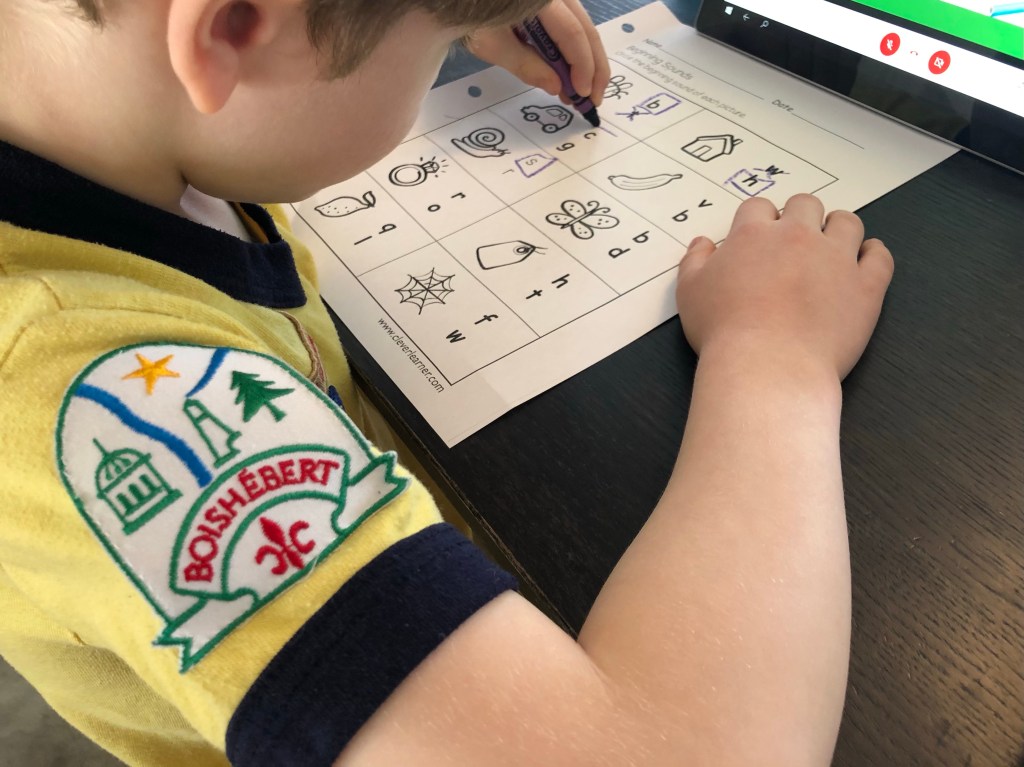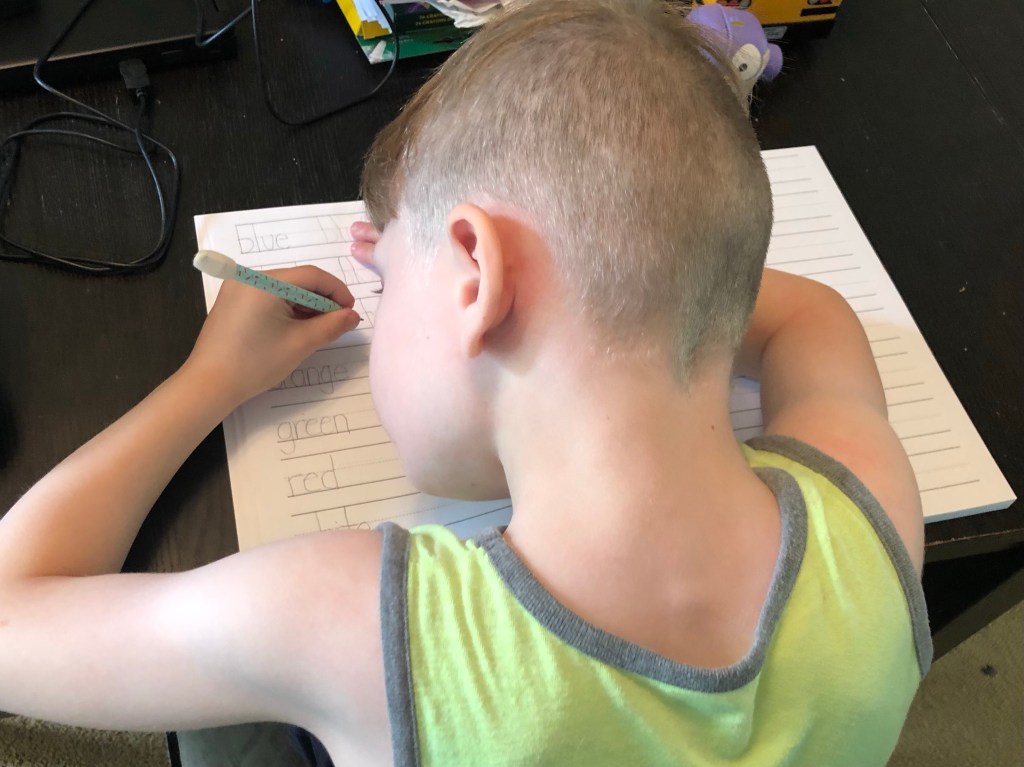

What does your self talk sound like? How do you silence your negative internal dialogue?
“Silenzio, Bruno,” is a line from the animated film, Luca. It translates from Italian to “Be quiet, Bruno” or “Shut up.” We’re gonna go with the PG translation, thank you very much!
The two boy characters, who are a wee bit older than T, say the phrase to silence the fear and doubt in their minds during key moments.
The hubby was pleased T finally watched the film on Disney+ two weeks ago after trying to get his attention all summer.
I watched it with T, who now watches it almost daily, as he does with any movie he likes. I’m glad he’s moved on from Frozen 2 and Moana – and that characters in Luca don’t launch into annoyingly catchy songs!
What I love about Luca’s story – no spoilers – is it’s literally and figuratively about a fish out of water and provides a wise metaphor about accepting others that may be different and loving the things that make yourself unique.
The theme is universal. 2SLGBTQ+ individuals see a metaphor about coming out. Immigrants see the newcomer experience. I see a metaphor for individuals with additional needs.
I often think about helping T build resilience and a growth mindset.
I think part of that includes helping T foster a positive inner dialogue – or self talk.
This HealthLine article describes self talk as one’s internal dialogue that is influenced by one’s subconscious mind; it reveals one’s thoughts, beliefs, questions, and ideas.
Positive self talk contributes to better health, reduced stress and greater life satisfaction.
I wish to help T develop a positive inner dialogue and the skills to combat negative self talk – especially when studies show that 9 in 10 individuals with FASD will face a mental health issue in their lifetime.
Think about that: 9 in 10. How sobering.

I recently wrote about how it is imperative to try differently not harder.
I think part of that includes being very mindful about the things that we say and do in reaction to T’s behaviors.
I often feel guilty afterwards for how I sometimes unintentionally react to his challenging moments.
In those moments, I would wish right away that I did not say certain things – because I should know better that when a child hears negative words enough, these are the things they internalize and form as their self talk.
So the hubby and I do our darn best – most days are successful, some days less so – to sandwich T’s days with a positive start when he wakes up to a positive moment before bed.
We’re aware that the most challenging parts for him are when he is out in the world, navigating new routines, relationships and increased expectations at school and daycare.
Kids’ confidence soars when they feel good about themselves and that confidence is like rocket fuel that propels them through rough terrain.
We’re like that as adults too. When we feel good about ourselves, our confidence soars. Negative interactions cloudy our day with anxious self talk that distract from the bigger picture.
And that’s why I love “Silenzio, Bruno!” 2 words, 5 syllables. None of this long drawn out Shakespearean soliloquy you engage yourself in. I like efficiency.
Try it!
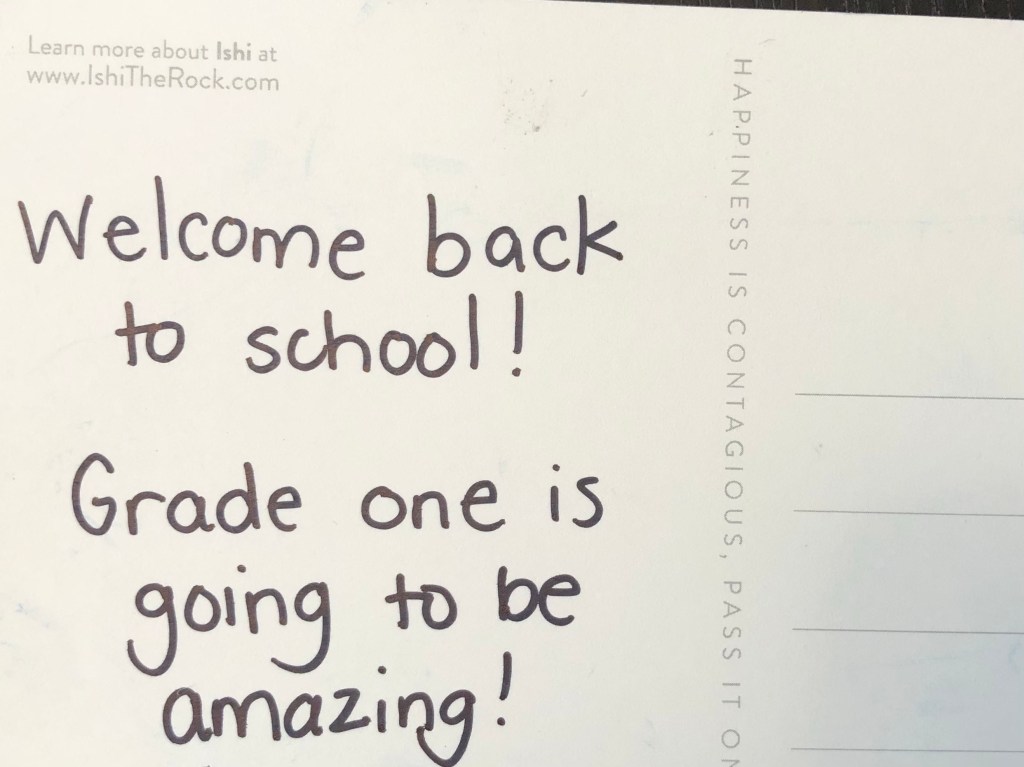
The first week of school is in the can!
T’s teacher said he had a good first day – and the lovely postcard (above) given to each student was a wonderful gesture.
The daycare staff, on the other hand, said he had a rough start. We expected it, given he went from a group of 5 peers his age to a group of 14 kids up to twice his age.
He had challenges with respecting personal space and said some questionable words when he got frustrated with other kids that were overheard by a parent, who was not pleased.
We’re grateful for daycare staff that get it. They don’t let T get away with these moments but they are open and supportive to working with T and us. What more could we ask for?
As I drove T home that day, I was tempted to get into lecture mode. But I reminded myself quietly, “Silenzio, Bruno!”
Instead, that evening, T and I read one of our frequently-read books, Giraffe and Bird, a book about friendship.
Afterwards, I had a brief talk with T – because I only ever have a few moments of his attention – about friendship and about what he thinks contribute to good friendships, such as respecting space and using kind words.
During Friday’s daycare pickup, the staff said T had a good day. It was a really lovely way to end the week.
We went to play in the park and I showered him with praise and congratulated him on having a good end to the first week of school.
T zipped through the monkey bars, even doing an unexpectedly awesome 180 degrees-reverse turn move while dangling in the air, like an American Ninja Warrior powered by rocket fuel.