“The ghostly winter silence had given way to the great spring murmur of awakening life.”
– Jack London, The Call of the Wild.
This Canadian winter feels forever. It’s now the time when registration for summer camp sites opens and it makes me long for hiking through forests, swimming in lakes, and eating campfire food.
Camping is an annual tradition that my hubby and I started nearly 20 years ago with another couple. Aside from missing two summers, we’ve gone every year and discovered many beautiful Ontario provincial parks, including Algonquin, Awenda, Bon Echo, Killbear, Pinery and Sandbanks.
Camping was something we were so excited to experience through a child’s eyes; that sense of adventure, snuggling together in a tent, and jumping off rocks into refreshing lakes.
We took T camping right away, 3 months after we adopted him when he was 17 months old.
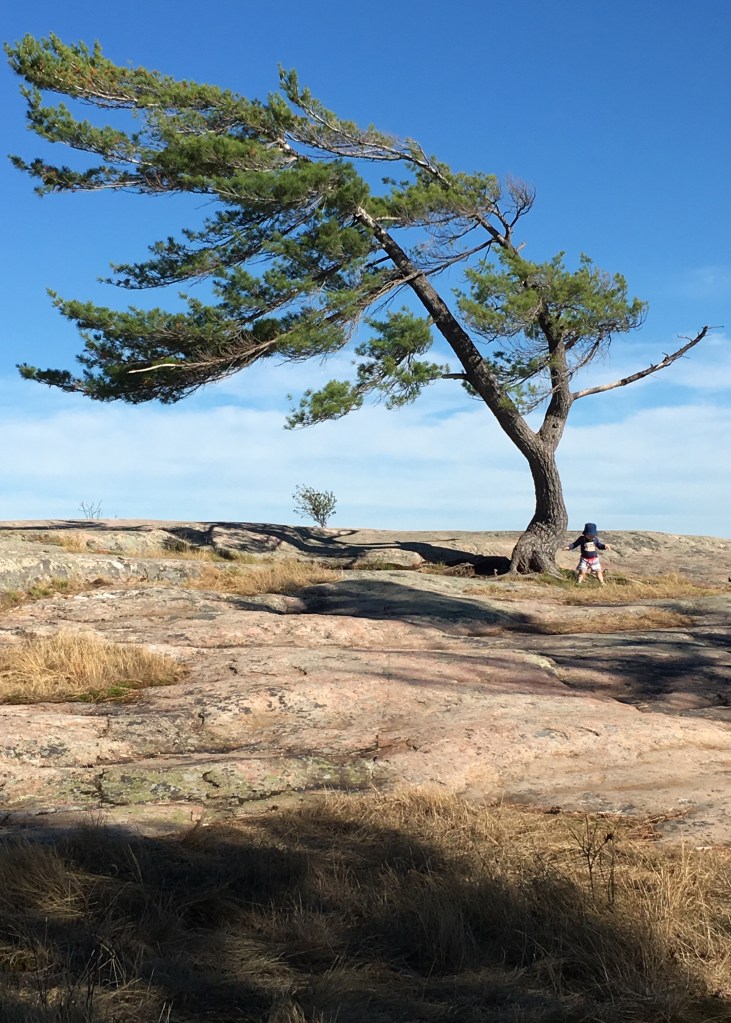
We took him first to beautiful Killbear in scenic Georgian Bay (pictured above). We bought a large new tent and brought a portable crib and plopped it inside. T slept with his pacifier at that time and was such a trooper and loved roasted marshmallows.
We tried swimming that weekend but the water was too cold and he started to cry.
Later that summer, we went camping over Labour Day weekend at beautiful Algonquin. The weather dropped to 8 degrees at night. We all thought we were going to freeze to death but it sure made us bond as a family, as we huddled close together under layers of blankets.
What I love most about the outdoors is the healing and calming quality of fresh country air, being surrounded by greenery, hearing the soothing sound of the lake and animals, being away from the frenetic pace of the city life, not being connected to technology (although that’s less true today!), and having vast amounts of space to run wild in.
It is these therapeutic qualities that I hope will bring periodic calm to the whirlwind frenzy inside T’s head.
I love when we used to be able to carry him on our backs with a toddler backpack when we’d go hiking. Now he can walk on his own, although whines about it when he gets tired and begs to be carried. Nope, sorry, you got legs!
Now that he’s old enough, I can’t wait to go back to Killbear and take him jumping off its well-known rock ledges into the cool lake – with a lifejacket on, of course!
Camping has not been without challenges. We have to watch T like a hawk, especially around the campfire or when cars drive through the campgrounds. When he had night terrors, it was anxiety inducing, because everyone would hear it in the quiet woods. He has high sensory seeking behaviors, so he’s usually covered in sand and dirt by the end of the day.
But it is during these moments that I remind myself that he is only going to be a kid for a short while and to just let him be. We are, after all, out in the wild.
“Don’t judge each day by the harvest you reap, but by the seeds that you plant.”
– Robert Louis Stevenson
February marks the 3rd anniversary that our adoption was finalized and when our sweet little boy turns 5. Where did the time go?!
There was a time when T enjoyed hearing stories after our bedtime books. I’d tell the same three stories in the same order: Snow White, Three Little Pigs and the T story.
The T story, whether he realizes it or not, is a simplified story about his adoption.
It goes something like this:
“Once upon a time, there was a little baby named T. He had blond hair, blue eyes and a beautiful smile and laugh that made everyone happy.
Elsewhere in the same city, Papa and Daddy had no children. One magical day, T came into their lives. It was the happiest day of their life.
Every day, they played together, sang songs and danced, went to the playground and park, and ate snacks. They loved to go swimming, camping, flying on an airplane to the beach. And in winter, they went sledding and visited Santa.
Papa and Daddy loved T very much and T loved them too. Papa, Daddy and T were a family and now that they found each other, their lives are complete.”
I have zero doubt in my heart that T thinks of us as his family. Thanks to a great start with a fantastic foster family, we never experienced some of the trauma or attachment issues that adopted children often experience.
I often wonder when he’ll ask or wonder about his birth family. We are ready to share that story honestly with him when he’s ready and in an age appropriate way.
The great thing about kids and their innocence is that they just don’t care and love and accept others as they are.
I remember when both my hubby and I picked him up together from daycare a year ago. One of the kids looked at the hubby and then at me and said, “Another daddy? Two daddies?!” And T said loudly and proudly, “Yah!”
A few years ago, when T first came into our lives, a colleague told me to enjoy it, because it just flies. And it’s so true!
T is the best thing that’s ever happened to my hubby and I. We may have some challenging days and moments, but the joy, love, fun, rewards and gratitude in our hearts far outweigh the hardships.
Happy birthday and adoption anniversary to our lovable little pest!
“Learn from yesterday, live for today, look to tomorrow, rest this afternoon.”
– Charles Schulz
After the first two weeks that T arrived into our home at 15 months old, I told my hubby, “This is a piece of cake.” By the third week, I told my hubby I wanted to give him back.
Parenting, as I’ve since been greatly humbled to learn, is a lifelong marathon, not a sprint. My hubby and I never expected it to be easy, but we never planned for the mental, emotional and physical challenges of raising a child with special needs.
I was halfway through my 30-week adoption leave when we received T’s prognosis of at-risk FASD. The news hit us very hard and it impacted me on a heavy emotional level in the beginning.
I read up as much as I could about FASD. On the positive side, I became super informed very quickly. On the bad side, I started to obsess about every detail. T had a big meltdown… oh no, he’s going to end up in prison like many FASD kids do. T hit a child in the park… oh no, he’s never going to make friends, because FASD kids have difficulty making and maintaining friendships.
My mind played these endless games and I had a hard time containing or escaping my thoughts, worries, anxieties and fears.
They say that when you receive a prognosis – or diagnosis – you go through stages of denial, grief, and eventually acceptance.
I remember a few afternoons during my leave when I’d prepare dinner and T would be playing in the living room and I‘d randomly burst into tears. I felt so helpless for our sweet, beautiful little boy.
It’s enlightening to look back at our four-year and counting journey and to chart my hubby and my through those cycles. I’d say we were lucky to get through the denial stage quickly, because of what we knew about T’s history and we tend to be pragmatic in nature.
The grief I felt in the first year was very hard. I started to look for positive success stories and found very little through online videos and groups. Then on these groups, I’d read about the hardships these children encounter in life, as they enter adolescence and adults, and that it never really goes away. And that part was so hard to process.
And then, we’d have a regular check in with our developmental pediatrician and T would do so well at these check ins. So we’d be injected with renewed hope. And then something shitty would happen to bring us crashing back down.
The lowest emotional low I’ve experienced so far was dealing with T being booted out of the Montessori last year and then his specialized kindergarten program being cancelled a few months later. I truly felt like the world was against our little boy and that his future was cemented towards a dark and futile path. But somehow my hubby and I got through it.
I don’t remember exactly when or what allowed us to move from grief to acceptance, but it was around the time I went back to work. It felt a heaviness had lifted. We stopped talking about the “what if” and started talking and acting in terms of “what now” when shit, big or small, happened. Although T has yet to receive a formal diagnosis, we know we are facing – and he is facing – a lifetime of challenges. It’s not a matter of if, it’s a matter of what.
It’s this acceptance that allows us to persevere each day to be focused, driven, positive and optimistic in dealing with whatever is thrown our way. Most days are good; others, not so much. And when hard things come our way, we eventually get through them and that’s what I remind myself of when I’m having a trying moment.
I wish I had a magic formula to offer other parents going through their grief cycle and who are struggling with day to day challenges. One thing that has helped me move forward in a positive way is to acknowledge that it’s ok to not be ok and to realize the hard truth that I am of zero value and no help to T if I also don’t take care of myself.
Self care is so important. Here are a few strategies that have been helpful for me.
Talking and writing about things. Thank you for listening and for reading along, whoever and wherever you are!
Work life balance and compartmentalizing. When I’m at work, I am laser focused on my work. When I’m at home, my focus is T and I rarely do work on evenings and weekends. This is one of the biggest philosophical changes I’ve made for T.
I say “No”. No to invitations for volunteer or extra-curricular activities. No often times to special events. And yes to more unstructured and free time on evenings and weekends.
I take “mental health” days off once a quarter as alone time to recharge. And because T loves to torture me, he usually gets sick during these exact moments!!!
I tune out noise. I don’t look at parenting articles or listen to unsolicited parenting advice or feedback from people who think they know better. Sorry, I don’t have time!
I ask for help. My hubby and I are so blessed to have many amazing services for T. Surrey Place offers family counseling services and I gladly added myself to the waitlist. For the past 2 years, I’ve had super helpful monthly chats with a fantastic child psychologist. She helps me articulate my thoughts – positive and not – and helps me focus on pragmatic and positive ways forward.
I exercise. I go during my lunch break to the gym next to my work. Gotta love endorphin rushes!
I laugh and try to have a perspective about things. Yes, we have challenges. But in our case – and I know it’s not the same for other parents in similar situations – they really are 20% of the big picture. They just seem to suck all the attention, focus and energy away from the good 80%!
I celebrate the victories.Practicing gratitude helps a lot. When I’m able to take a moment to itemize the incremental gains and successes from the past 24 hours, it really puts into perspective that the hard and annoying stuff are not that bad in the grand scheme.
My hubby and I are part of an online support group. This group provides a great way to connect with other families and help us feel less alone when we see others going through similar experiences.
It really helps to pay it forward. Just as others have paved the way for my hubby, T and I, we want to do our part to raise awareness and to advocate. Part of that includes helping reduce stigma about special needs and to normalize the experiences that these families go through, whether it’s denial, grief, or just trying to get through the day-to-day grind.
My hubby and I are fortunate and blessed. T continues to make many positive gains. Hard stuff don’t feel less painful but they feel easier to process and to recover from – and I hope it stays that way! We do our best to focus on that. But we are also better now at cutting ourselves some slack when things go awry. At the end of the day, it’s ok to not be ok and acknowledging that is part of the process of finding your way through it.
“The more that you read, the more things you’ll know. The more that you learn, the more places you’ll go.”
– Dr. Seuss
On a recent Friday evening, we got home late from McDonald’s PlaySpace. After a long day at work, I was just done. We put T straight to bed and skipped our routine of reading books. I laid on my bed and started to catch up on brainless entertainment sites, when he shouted from his room, “Papa, you forgot to read me stories!” As tired as I was, I begrudgingly yet happily obliged.
Research consistently shows the importance of early literacy and for caregivers to read to children at home. As noted by the American Library Association, a study of 3 to 5 year olds who had been read to at least three times per week found the children were two times more likely to recognize all letters, have word-sight recognition, and understand words in context.
Bedtime stories was a routine my hubby and I felt was important to introduce to T, especially when he learned he was behind in his speech and language development.
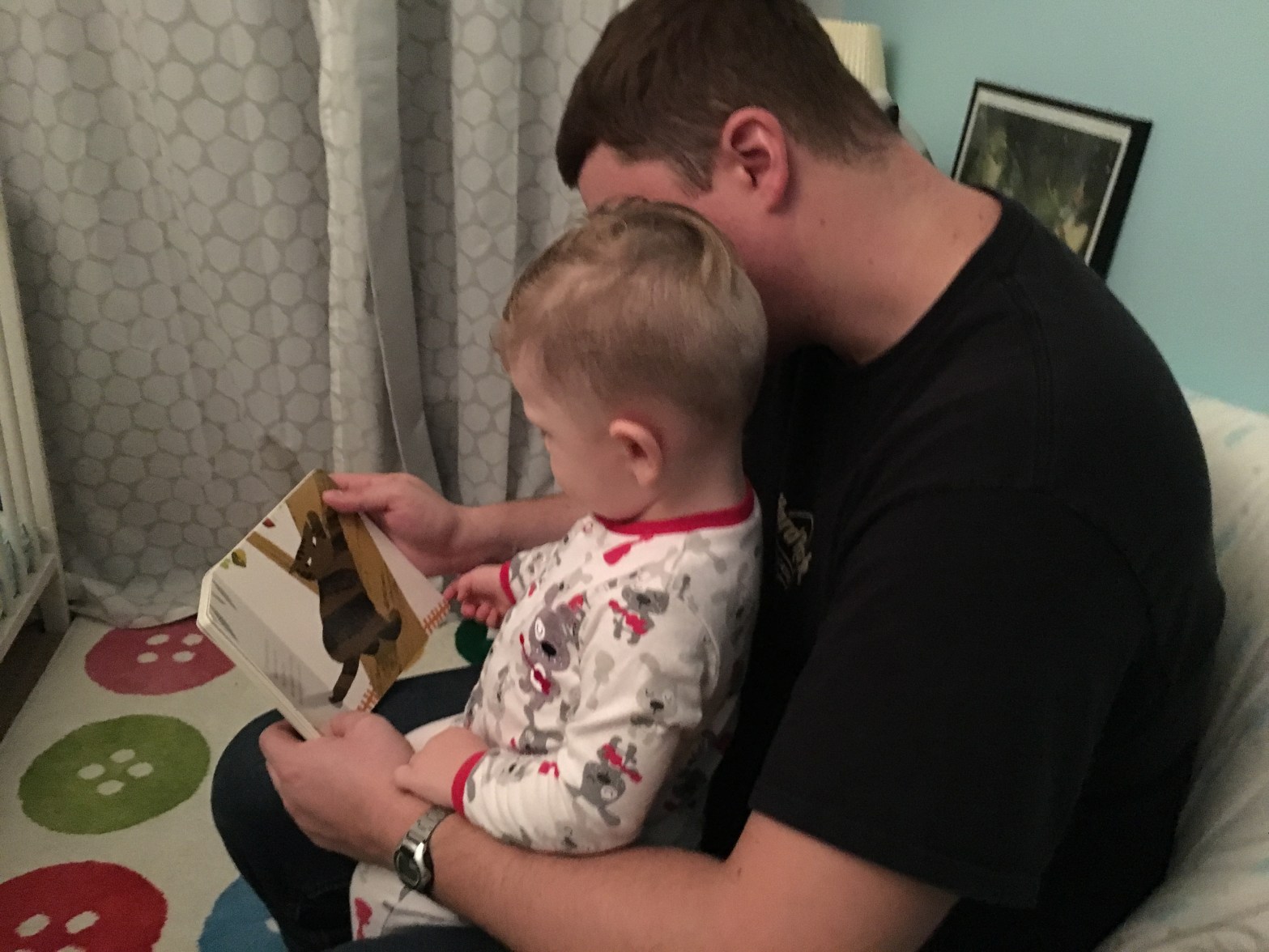
Reading to T is now one of my favourite parts of the day. I have fond memories of the early days when he’d sit on my lap, my arms wrapped around his tiny frame and book in hand. These days, he sits next to me on his bed, sometimes with rapt attention; other times, restless and fidgety.
It’s been such a joy watching his speech and language, vocabulary, print recognition, and imagination grow through books. I love when he now asks questions or makes connections about the stories or to watch in silent amusement as he incorporates the characters into his pretend play, like a recent time when he wrapped himself in a blanket pretending he’s a caterpillar spinning into a cocoon.
We’re lucky to have lots of book-loving family and friends – and I’m also a librarian, so I’m surrounded by books. We’ve been gifted or have borrowed many books over the years and here are a few books that T has particularly loved reading over and over again or that hold a sentimental value for me.
First 100 Words (Bright Baby) by Roger Priddy
This board book, gifted to us by the Surrey Place, holds a special place in my heart, because T and I spent time every day in his toddler years going through every word on each page, trying to build his vocabulary. It was such a joy the first time he correctly pointed to every word on the page and when the finger pointing became vocalized words, such as “ball,” “cat,” and “dog.”
Daddy, Papa and Me by Lesléa Newman
Good children’s books help drive inclusion by showing the diverse realities of today’s families. Two friends separately gifted us a copy each of this wonderful board book about a day in the busy life of a toddler and his two fathers. Amusingly, the two illustrated dads could kinda pass for my hubby and I.
Tickle by Leslie Patricelli
A short but fun board book about a baby that loved to be tickled by his parents. My hubby and I had a lot of fun reading this and we made it very interactive with lots of tickles. T has long outgrown this book but he is still always in the mood and desire to be tickled by his two tickle monster daddies.
The Very Hungry Caterpillar by Eric Carle
This lovely board book was one of the first stories that had a real beginning, middle and end that T and I read, telling the story of an egg that hatched into a caterpillar that ate, ate and ate until he spun into a cocoon and emerged as a beautiful butterfly. T loved the tactile elements, such as putting his finger on the holes of the hard pages that represented the hungry caterpillars’ ravenous path.
Grumpy Cat by Britta Teckentrup
Not to be confused with the now deceased Internet sensation, this board book tells the story of a curmudgeonly cat who meets an orange kitten one night that would not leave him alone. A wonderful story about friendship and it was nice for T to draw the parallels between the two fictional cats with his two real-life feline siblings at home.
Toronto ABC by Paul Covello
This board book was one of the first ABC books that T and I read and helped him to start learning about his alphabets. Major bonus points that it incorporated the landmarks of our city. It’s been fun over the years for our family to take T to these landmarks, such as Toronto Island (I), Niagara Falls (N), and CN Tower (T) and for him to make those connections from early reading memories.
Chicka Chicka Boom Boom by Bill Martin, Jr. and John Archambault
This bestselling classic also helped introduce T to his alphabets – upper and lower case. It’s a silly book, written so you can read it with a lyrical and upbeat rhythm and rhyme. I remember laughing out loud one night when T said, “I want Chicka Chicka Boom Boom!” The combination of those four words and his bratty demanding voice still makes me chuckle when I think about it.
Five Little Monkeys Jumping on the Bed by Eileen Christelow
This nursery rhyme classic was a favourite, because of its silly nature and it was also one of the first picture books that introduced T to the idea of a predictive and repetitive narrative structure, as the story repeated itself until five monkeys were whittled down to one monkey. I remember fondly when I’d let him scream out the last time the doctor said, “NO MORE MONKEYS JUMPING ON THE BED!”
Zoomberry by Dennis Lee
Dennis Lee’s poetry has a lyrical whimsy to them. This story of a boy who drifts off into a magical land during bedtime is also beautifully illustrated by Dusan Petricic, whose work I love. It was one of the first books that made T aware of rhyming structures. I miss his sweet toddler voice reciting along with me, “Zoomberry, zoomberry, zoomberry pie.”
Even Firefighters Go to the Potty by Naomi Wax and Wendy Wax
This silly flap book was recommended to us by the special needs resource consultant from Community Living Toronto that was working with T in the Montessori. Potty training was excruciatingly painful for my hubby and I and this book provided a humorous encouragement to drive the point home to T. It didn’t quite do the trick, but this was still quite fun to read together. I’m glad to say that potty training is now a distant memory!
The Darkest Dark by Chris Hadfield
A young Chris dreams of being an astronaut but is afraid of monsters in the dark. He is inspired to overcome his fear the evening he watches the first landing on the moon. Life was imitating art for us, because we started to read this story when we were having difficulties with sleep training and T not being able to fall asleep without one of us sitting with him. Thankfully, those days are behind us!
And Tango Makes Three by Justin Richardson and Peter Parnell
I bought this picture book for my hubby in 2005, when it was first published. It tells the real-life story of two male penguins who helped hatch an egg and raise the penguin. It was a nice full circle moment to share this story with T; friends unknowingly bought T his second copy. During a recent reading, T pointed to the penguins and said, “That’s daddy, papa and (T).” Heart-melting, I tell ya!
The Very Impatient Caterpillar by Ross Burach
This hilarious book is one of the many many gems we borrowed from the library and tells the story of an impatient caterpillar who learns self control and impulse control through a journey to becoming a butterfly. It was also the first book that T and I read that uses a comic book – word bubbles – format. I’m a huge comic book and graphic novel reader, so it makes me happy to see him enjoy this format.
Where’s Waldo? by Martin Handford
It’s hard for me to articulate what a big deal it is for a hyperactive child like T to sit down and want to look through a dizzying page to find Waldo. He hasn’t found him on his own yet, but I chuckle when I think about the time I found and pointed out Waldo to T and he asked to try it. He didn’t find Waldo and asked me to point him out again. Then he asked to try again. As he skimmed the page, I said quite sarcastically that Waldo has not moved. Then he screams loudly, “FOUND HIM!”
Green Eggs and Ham by Dr. Seuss
Getting T to sit for a prolonged period is always a challenge, so it speaks to the enduring and special magic of Dr. Seuss when a lengthy, silly and non-sensical poem could capture T’s attention from start to end. There were nights when I’d be so tired that I would rather poke my eyes out than read a Dr. Seuss book, so I had to hide these books at one point. But I have to admit that when I’m in the mood, this book – with its insane, silly, staccato, rhyming rhythm – is a lot of fun to read out loud. When I have my act together one day, I want to actually make green eggs for T’s breakfast just for fun.
When we first received T’s prognosis of at-risk FASD, one of the things I obsessed over was how many blocks he could stack, because it was a question asked during his assessment. We practiced every day as if his life depended on creating a tower with a minimum of three blocks. In hindsight, it was so silly to worry about this, but when you’re processing hard news in real time, like your child’s potential outlook, emotions often overcome logic.
But the great thing about getting T’s prognosis was that it connected us with early intervention services that were – and continue to be – so valuable for his development. Much like the blocks T learned to stack, I think of a child’s development like stacking building blocks. You try to create a solid foundation and then stack new skills, knowledge and experiences on top.
But for kids with special needs, obstacles get in the way that are comparable to the child having missing or broken stacking blocks, a damaged or deficient foundation to stack on, or the child requiring additional temporary or permanent scaffolding to support their building.
One of the most valuable lessons we’ve learned in our parenting journey is that early intervention is incredibly important in a child’s development.
Research from The Center on the Developing Child at Harvard University has shown that the brain and the foundation for a child’s learning, behaviour and health are most flexible and malleable during the first three years of life and they form the foundation upon which cognitive and language skills develop. High quality early intervention supports can alter and influence a child’s trajectory and improve their outcome. The early years are crucial and intervention is less effective in adolescence.
A short video about Surrey Place, an amazing organization that has made a huge impact on T.
Here’s an overview of early intervention supports T received and how they made an impact:
Speech and Language Therapy
The American Speech-Language-Hearing Association defines speech-language pathology as work that includes the prevention, assessment, diagnosis and treatment of speech, language, social communication, cognition-communication and swallowing disorders in children and adults.
Immediately after we received T’s prognosis, we were connected with speech and language therapy services from Surrey Place. A speech pathologist worked with my hubby and I to develop the skills and knowledge to work with T to develop, encourage and grow his speech and language skills. They also recommended additional resources – such as books, toys, or online resources – to supplement our learning and a set of tools, such as The Hanen Centre’s It Takes Two to Talk program.
T received a review assessment every few months from the speech pathologist to monitor his progress and to then provide recommendations to continue his growth.
Some of my favourite memories on our parenting journey include taking T to Surrey Place on Friday afternoons when he did an eight-week intensive intervention block. They had a huge indoor playground and because it was a Friday afternoon, we had the playground to ourselves. The speech pathologist used the space as an incentive for T to finish his “work.” Those were such fun times.
T is a chatterbox these days. Although we are currently dealing with some challenges around a potty mouth – picked up from older kids on the school bus – we are so thankful for the progress he’s made, largely thanks to the early intervention support.
Occupational Therapy
The Canadian Association of Occupational Therapists defines occupational therapy as a type of health care that helps to solve problems that interfere with a person’s ability to do everyday things like self-care (e.g. getting dressed, eating), being productive participants at school or in the community, or leisure activities (e.g. sports, social activities).
We’ve been pretty fortunate that T’s gross motor (e.g. walking, running) and fine motor skills (e.g. feeding himself) have been developing well and that needs in this area are minimal. Thus, OT services we’ve received have been infrequent – and include check ins at home or school.
Children, especially those with special needs, are visual learners. This was one of the best lessons my hubby and I were taught by our supports. They created and provided tools for us that have included visual aids for self help skills that have included washing hands and getting dressed.
Through OT services, we learned that T seeks proprioceptive inputs, such as chewing objects, running around, walking on tiptoes (which he continues to do), and throwing himself onto the ground, as a way of self soothing and calming himself in an over stimulating environment. This insight has helped us provide recommendations to his school and daycare – to varying degrees of efficacy – on how to respond to his behaviours.
Behavioural Therapy
Healthline describes behavioural therapy as an umbrella term of types of therapy that seek to identify and help change potentially self-destructive or unhealthy behaviours. It functions on the idea that all behaviors are learned and that unhealthy behaviours can be changed and focuses on treating and changing current problems.
Of all the things that my hubby and I have read about FASD, it is the behavioural challenges that give us the most pause. In worst case scenarios, we’ve read about adolescent children having run ins with the justice system or whom manifest secondary challenges, such as mental health issues. We anticipate that behaviour – or responses by others to how they perceive T’s behaviours – will be one of the biggest challenges T will face in life.
So when we learned Surrey Place had behavioural therapy services, we inquired about them, even though we knew the wait list to access services often spanned years.
After two years, we were taken off the waitlist and received a behavioural assessment. The timing was perfect, because we were having some challenges around compliance, defiant behaviour, and hair-raising tantrums and meltdowns. The behavioural therapist was incredible and provided pragmatic recommendations on how to deal with our pressing concerns around T’s behaviour.
The behavioural therapist has also pointed us towards fantastic positive parenting resources, including registering us for a three-part positive parenting course – for free! – which I found incredibly helpful and eye-opening.
We were put on a further waitlist for another year and have just started ongoing behavioural therapy consultations with Surrey Place – and she’s also observed T in his school and daycare environments and have provided some great suggestions.
This is still a new and ongoing process for our family and one we have ongoing struggles with. But we are seeing positive results and are hopeful we are curbing T’s trajectory towards the right direction.
Educational Supports
T started junior kindergarten last Fall and we are still learning about the different types of educational supports and programs available in the public school system. And the lessons learned and challenges faced will be shared on a separate post.
In T’s preschool/daycare days, we placed him in a Montessori environment, starting with the toddler program. We learned early on about Community Living Toronto, an organization that provides Special Needs Resource Consultants to work one-on-one with children in a daycare environment on a regular basis. We requested and received these services, on the basis that T needed supports around speech and language. We had not disclosed his prognosis with the Montessori – but did with the resource consultant – in the beginning.
T worked with two resource consultants in the Montessori and they were both so wonderful. They visited him once every two weeks, observed him, gave us detailed reports and provided recommendations to T’s teachers and to us to address issues such as turn taking/sharing, sitting still, and potty training. We were very diligent about following them, as they made a difference.
Two of our favourite resources in T’s toolkit came through our resource consultants: a book called “Even Firefighters Go to the Potty” to help encourage and motivate him to use the potty and a game called “Don’t Break the Ice” to help teach him about turn taking in a fun play-based way.
A video about Community Living Toronto, an amazing organization that has provide impactful supports for T.
How to Find Supports
Prior to adopting T, the only thing I associated the word “intervention” with was the television show about substance addiction. The past three and a half years have been an eye-opening, humbling and rewarding journey for my hubby and I to learn, in a hands-on way, about early intervention.
We have the following individuals and organizations below to thank for educating us and connecting us with the supports that have made a hugely positive impact on T’s trajectory.
For parents and caregivers starting on their special needs journey, these are the individuals you want to speak to. There are no stupid questions. Take advantage of every service that they provide:
Family Doctor
Our family doctor connected us to Surrey Place based on what we knew about T’s medical history – prenatal exposure to alcohol and drugs. Through Surrey Place, we also receive support from a developmental pediatrician who specializes in children with special needs. Both have been wonderful pools of knowledge and conduits to additional resources for T.
School Administrator
The Montessori School’s administrator let us know about Community Living Toronto when we disclosed that T was receiving speech and language services from Surrey Place. When we were starting to plan for T’s transition into public school for kindergarten, we were forthcoming about his prognosis and a principal helped connect us with a specialized kindergarten intervention program. We are now working with T’s principal to advocate for educational supports as he transitions into senior kindergarten. In short, principals and teachers – in general – can be great allies to connect your child with the educational supports they need to thrive in the classroom.
Work Benefits
I am fortunate to receive health benefits through my employer – and I realize this is a privilege and not a reality for everyone – and was able to get a few private speech therapy sessions covered before we were referred to Surrey Place. Other types of services that employment benefits plan may cover include wellness programs, such as family counselling, that may be of great help for parents and caregivers in their special needs journey.
Online Groups
My hubby and I are a part of a few private online groups. While we are mostly lurkers rather than active posters, it has been so helpful to be immersed in an environment with people who are facing the same challenges as you. You feel less alone, helpless, and crazy and in many cases, it’s been helpful to read about other people’s shared experiences and to then know about other types of services and supports to advocate for on T’s behalf.
It’s a Big Team Effort!
If it’s one thing that my hubby and I have learned about parenting, it’s that it is one big team effort.
We have so many incredible individuals on “Team T” – family, friends, school and daycare staff, medical professionals, social services staff – who are working hard and rooting for him to succeed.
Thanks to early intervention supports, T has made tremendous gains. I remember during our Age 3 check in with the developmental pediatrician at Surrey Place, T was on top form. Among the many tasks he was asked to complete was to stack blocks. I watched with anticipation to see how high he could stack his tower. 12 blocks high! Everyone in the room, including the speech pathologist and family psychologist, cheered him on.
I realize that T will need to learn a lot more than just stacking blocks to thrive in life and that there will always be a new curve ball waiting around the corner for T. But knowing that we live in a community that has such amazing services for the most vulnerable members of our society makes me feel optimistic, confident and less apprehensive about what lies ahead.
“If you want to change the world, go home and love your family.”
– Mother Teresa
On the first Saturday afternoon of January, my hubby, T and I were huddled in the family room. I saw the car pull up and I loudly announced, “Grammy and Dad Dad are here.” Our little one charged excitedly to the door and opened it. He bounced excitedly when he saw them coming up the stairs. T threw himself onto them for a big hug.
We had just spent a week out East with my hubby’s parents to celebrate Christmas. It hadn’t been a week since we returned home when his parents were making their way down South for the winter and they made a stop by our home and unexpectedly asked if they could stay the night. We couldn’t hang out with them as we had plans with friends, so they asked, “Did you want us to babysit and give you the night off?”
My hubby and I tried hard to respond with a serious face. “Are you sure you don’t mind?” I could not contain my giddy smile. “We really appreciate it!” An hour later, we were in such a rush to leave that I don’t think I gave T a proper hug, in case his grandparents changed their minds!
Kidding aside, my hubby and I are blessed to have strong supports from our family. Parenting in itself is already hard and when you layer on additional challenging needs, it takes on another level of difficulty. Although we don’t take advantage of our family and only receive babysitting offers on a very limited basis, that rare night off goes a long way towards recharging and self care!
My hubby’s parents are now in their late 60s and live two provinces away. We spend Christmas with them every other year and visit them every summer. My mom turns 80 in the coming year and my father passed away in 2008 and would’ve been 97 this year. I often wish he got to meet his grandson, because he would’ve been so amused by his exuberance.
When we first adopted T, we invited our parents to attend a Children’s Aid Society workshop that talked about children with FASD. We had not yet received T’s prognosis at this time, but we felt it was important for the family to understand the possibility, given what we knew about his history. The concept of FASD – and its consequences – did not really land with our parents nor did it with my hubby and I. But over the years, as some of the anticipated behaviours manifested, it provided teachable moments for all of us and with our larger family.
Just as we struggled to understand and learned to adjust our expectations and approach to parenting T, it’s been interesting – and inspiring – to see our parents adapt. When T has a tantrum or a full blown meltdown, our parents don’t put up with it. When T recently picked up bad language from the older kids on the school bus, our parents were also not amused. They tried in their own way to talk to and discipline T.
And often, my hubby and I try to explain to them that traditional forms of discipline do not work with T and that it requires a different approach. We are all learning together. But what my hubby and I appreciate is that despite the challenges, our parents have unconditional love for T and a willingness to learn, to support and to work together.
And likewise, T loves his Grammy and “Dad Dad” as he calls my hubby’s father – and his “Ama,” my mom. When they call, he rushes to our sides to say hello and chat with them.
So really, what more could we ask for in the grand scheme?
Despite how it sounds, we actually love spending time with our little one! When we were in Mexico last year, our resort had daycare services and despite saying we’d drop him off for half a day or an evening, we did not once take advantage of it! Not because we were worried or being helicopter parents, but we genuinely love hanging out and experiencing new things – like his first resort experience – with him. And we had so much fun, he still talks and asks about when we’re going back.
But sometimes, as a parent – special needs child or not – you can easily let it consume your identity. While we wouldn’t just leave T with anyone, we have to remember to enjoy the opportunities that we get to have child free time. Because sadly, not all parents in similar situations that we are in are as fortunate to have these supports for respite.
And on this Saturday evening, we did have fun! It was a joy getting together with my grade school friends. 2020 marks the 20th anniversary of when we graduated from high school; 25 years since junior high graduation. And it was nice to be able to fully be present and to sit, eat and chat with friends – without taking turns running around after T.
Our in laws got up and left the next morning before 8. My hubby, T and I were still in bed and we woke T up to say goodbye. He’s often hard to wake up, but got up instantly when we told him his grandparents were leaving and he wanted to give them the biggest hugs.
“Can you come back next week?” he asked them. And they told him they’ll be back in the Spring to see and to play with him again.
T stood at the window and waved at them as their car backed out of our driveway and drove off; a bittersweet smile on his face.
On the first morning of the new decade, our four-year-old entered our room bright and early. I pretended to play dead and hoped he’d go to the hubby. No luck. “Papa, I want you to play in the fort with me,” he said. I suggested he go see what his daddy was doing on the other side. His daddy quickly sent him back to me. And the ping pong game continued until one of us – the hubby – got up.
If you were to ask me to describe our T, one of the consistent answers I’d give is that he is in constant motion. From the second he gets up to the minutes before he goes to bed, he is in perpetual motion. To put it matter of factly, the kid does not fucking stop moving.
People used to tell me that being hyperactive is normal for boys T’s age. And I’d tell them: Spend a day alone with T and you’ll change your mind quickly! Getting him to sit is a challenge, because his brain is moving so fast. It continues to create challenges for him at school or when we’re out.
Hyperactivity is a common characteristic with kids with fetal alcohol spectrum disorder (FASD), of which T has a prognosis of being at-risk for. Many FASD kids exhibit similar behaviours as children with Attention Deficit Hyperactivity Disorder (ADHD) – and it wouldn’t surprise me if T gets such a diagnosis in the near future – but the cause and the treatment for each are different.
And this is one of the most challenging aspects of parenting T. My hubby and I had no illusions that parenting was going to be a walk in the park. In the big picture, it is so incredibly rewarding. But dealing with some of T’s behaviours – intentional or unintentional – is a next level of physical, mental and emotional exhaustion.
But we find and have a lot of fun in the chaos!
Parenting truly is a humbling process of trial and error. In the almost four years since we’ve adopted T, we’ve tried different ways to harness his endless energy. Some have worked better than others, but we always have fun and laughs – with tears and hair-pulling frustration mixed in.
We tried parent and tot gymnastics for a year. T had a lot of fun and he was so good at it when he could focus. Other parents would often praise him. However, my hubby and I would spend half the class chasing after him around the warehouse, because he’d easily get distracted and run off. I’d get more workout than T did and was a sweaty angry mess by the end of the class! Continuing gymnastics was not an option, because T would not be able to follow along without parental support, which was not an option for older kids. We’ve considered programs for kids with special needs, such as Kidnastics, but it’s something we’re not pursuing at the moment. We’re content with T trampolining and doing front rolls, back rolls and bum drops on his bed in the meantime.
We go for a lot of walks. When the weather is warmer, we go for walks after dinner. These simple moments of connection are ones I treasure the most and I look so forward to them, especially after a long day at work. Our walks help us come down from the day and help T transition to bedtime faster.
Our favourite hobby is to go swimming. We have amazing city-run facilities and there’s an indoor pool that we like to go to on Saturdays. He’s become so comfortable and awesome in the water and this summer, we will start him with private swimming lessons. Group lessons are likely not an option with this slippery dolphin – and I’ll probably drown and die by the end of the class from having to constantly swim after him – so I know one-on-one classes will be a good investment!
Unstructured and independent play is also important – for him and to give us downtime. And screen time warnings be damned, we use TV and Netflix mobile as a sanity saver for ourselves!
Let’s Build A Fort!
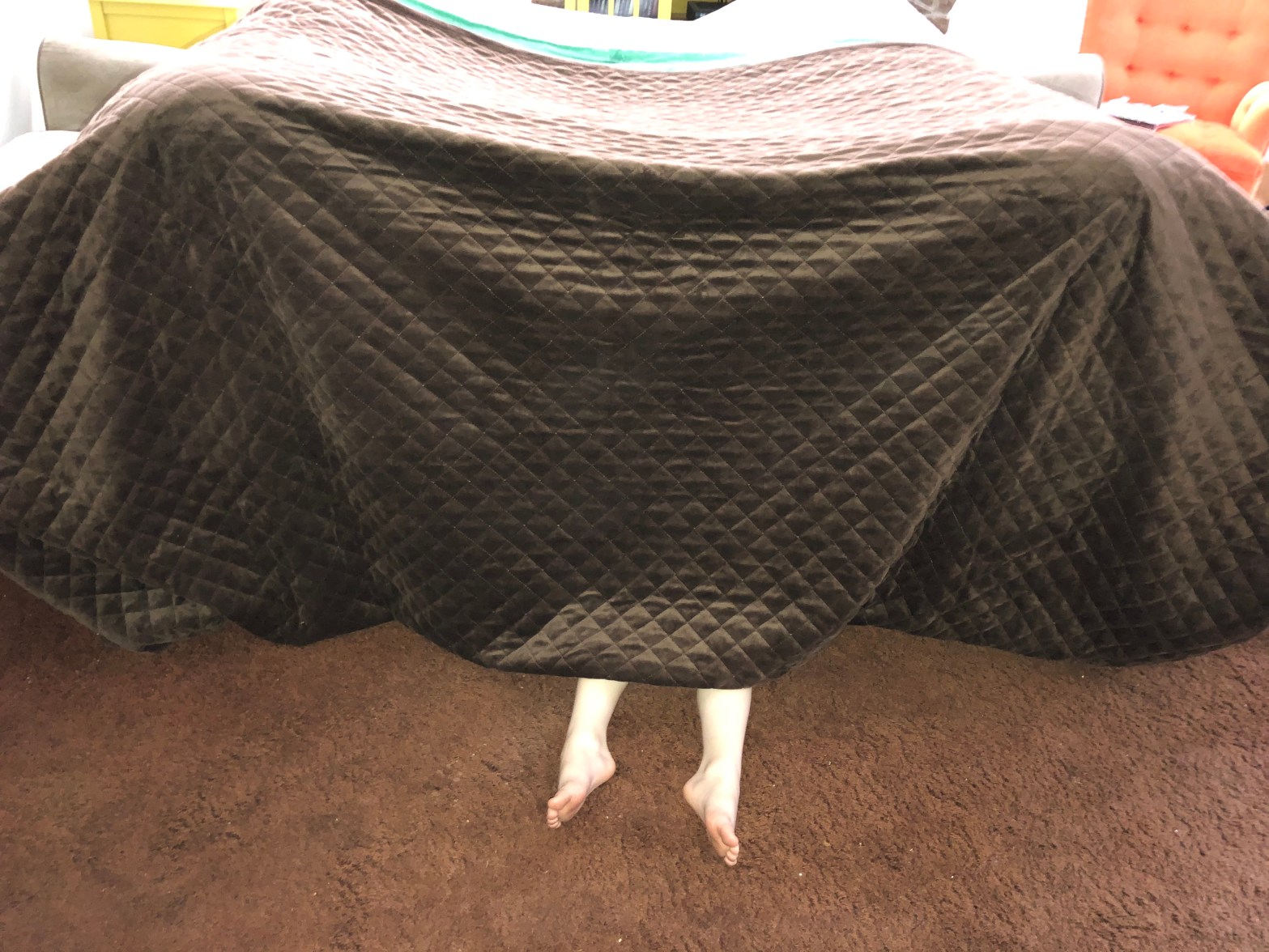
On New Year’s Eve, we built a fort, the first one T and I built together. It was one of those magical moments of desperate boredom and looking at the clock and realizing it was not even Noon when my body felt more like the midnight countdown.
T had received a foldable firetruck fabric toy from his grandparents for Christmas. It folds open into a boy-size firetruck that T could get into, complete with a pretend ladder and water hose. I joined him inside for a little picnic and then suggested that we put blankets over it to make a fort. Inside our hideout, we played board games, had a pretend picnic and played firemen with his myriad of toys.
Building forts was something I enjoyed doing as a kid. It was a great way to kill time, unleash my imagination, and create a private oasis for myself. It was one of the things I looked forward to doing with T and to experiencing through the eyes of a parent.
I thought for sure T would not sit still for long and would move on to the next shiny distraction. But something wonderful happened. T embraced the concept. He got very excited. He really got into the pretend play and went to get more of his toys to join in on the fun.
After a short lunch break, we tore down the fort and discussed plans to build Version 2.0, a larger fort held up on two sides by our family room couches. We used the same two blankets from Fort 1.0 – my hubby’s worn-down green blanket from university and my faded blue childhood blanket – and then T and I found a third blanket, as we had more space to cover. We then put in the Ikea mattress from T’s toddler bed that he no longer uses. Fort 2.0 was done and it was gloriously roomy and comfy.
T then brought out his Paw Patrol fire truck and jet toys and his 7 character toys – 6 pups and 1 Ryder – and we held a party inside the fort. He wanted me to be Skye and would communicate to me through Skye. Throughout the course of the afternoon, the family room became a water park, a forest, a mountain, the snowy landscape from Frozen 2, and various settings for rescue missions. We truly ventured… into the unknown!
And we also had chilled moments when we just sat and talked. Seeing T’s expressive language and imagination grow is one of the things I most enjoy on this journey with him and he was particularly descriptive and creative inside the quiet intimate calmness of our fort and as he engaged with his toys and with me through my Paw Patrol avatar.
We left the fort up until nighttime and returned to it after dinner. We turned off all the lights in the house and went inside the fort. He held my hand inside and we turned on the flashlight and pretended there were monsters and wolves outside. I could tell from his wide smile that although he was scared of the dark, he was also in on the pretend play with me, as I tried to scare him.
The little moments are always the biggest moments for me. And seeing him so engaged, imaginative, creative, expressive, and having fun … and focused! … was so wonderful and heart filling. He was having so much fun that he did not want to watch TV, when I tried to suggest it so I could catch a break!
And it turns out that my hubby also likes the fort. When I finally pulled myself out of bed on New Year’s Day, about an hour after my hubby got up with T, I found T playing in the living room. I walked around the house looking for my hubby – who had gone to bed at 2 a.m. – and I eventually found him passed out… inside the fort.
“Acknowledging the good that you already have in your life is the foundation for all abundance.”
– Eckhart Tolle
I spent the last morning of this decade building a fort with T and then playing Snakes and Ladders, a Christmas gift from his grandparents, inside our tiny hideout, slightly hunched over. My back was going to be sore after, but I wouldn’t have it any other way.
It was poetic that we were playing this game, because if there was one way to describe this past year with our little guy, it was that it was filled with ups and downs; some moments were sweeping highs and some were what seemed like a win that became a downhill slide.
Three particularly shitty slithering moments still reek in my mind:
In late winter, I was in my Director’s office, on a call with partners, when I received a text from my hubby. He sent a picture of a letter we received from T’s Montessori, where he was completing his preschool year. The school notified us – on the day that registration forms were being sent home for the 2019-2020 school year – that T was not invited back. Several parents had complained about his disruptive behaviour. “Our recommendation is for you to seek an alternative program for (T) that will better meet his needs,” it read. I was devastated but held it together until the meeting ended and went for a walk and screamed in the silence of my head.
A few weeks later, while picking T up from school, I stood on the doorway of the classroom. I loved to watch him play. Most of the time, things were positive. But on this day, T was in one of his moods and annoyed one of the kids by taking his toy. The kid started to complain and one of the older kids said to this kid, “Don’t worry. He’s not here much longer.” I’ve never wished ill will upon a child in my life, but I was tempted to at that moment. I was particularly bothered, because I wondered how this kid would know about T’s situation. But I kept quiet and was thankful T didn’t seem to notice the comment. His face lit up when he saw me and he ran towards me and I gave him the biggest hug I could muster.
On a Wednesday morning in late November, at 6 in the morning, I was having breakfast while everyone was still in bed. It was dark outside and I stumbled across a Global News article reporting that the specialized kindergarten program that T was enrolled in was being cancelled after the current 2019-2020 school year. It was particularly heartbreaking, because the news came out of nowhere; to find out about it through the news, rather than the school board, was in poor form. My hubby and I were particularly upset, because in just three months of being in the program, we’ve noticed a lot of positive growth and changes in T.
I’ve never been one to be afraid of a challenge or shitty situations and people. I’ve had – and will continue to have – my fair share of them. But as a parent, adversity takes on a different meaning when it is happening to your little one, who does not yet have the life experience or skills to understand and to face them. These three aforementioned moments stand out from a gallery of good and bad ones this year, because of the anger, awfulness, and helplessness that I felt.
When my hubby and I found out about T’s prognosis of at-risk FASD in late 2016, I thought a lot about resiliency and the importance to help T develop the skills and ability to understand and to overcome the challenges that he will face as a result of his medical condition. It is something we think and talk a lot about.
One habit that I began to practice in recent years is to start my day with a gratitude reflection. During my seven-minute walk from our house to the bus stop to transit to work, I meditate and give thanks for three things from the past 24 hours that I’m grateful for and think about three related goals for the next 24 hours.
This is an easy exercise when I’m feeling awake and high with positivity. This is challenging and a chore when I’ve had a stressful start to the day – usually because T was in one of his challenging moods. But I force myself through this exercise, because it helps reframe things in my mind.
And so as I look back at 2019, I acknowledge it was a particularly challenging turd-filled year with T. But they are far outweighed by the many bright moments. And I’d like to spend part of the final hours of this year and this decade expressing my thanks for three of many awesome things from 2019:
Our Supports – We’ve been very blessed since the early days of when T came into our lives to have had amazing support from family and friends. We’ve also had invaluable life-enhancing supports from a variety of social and medical services, including Surrey Place, Community Living Toronto, and the school board’s amazing and soon-to-be-defunct Kindergarten Intervention Program. T’s academic, personal and social growth have all been possible because of them. One moment that resonated with me this year was after T’s final meeting with the Special Needs Resource Consultant from Community Living Toronto that worked with T in the Montessori classroom every two weeks. As we said our goodbyes, I thanked her for the difference she’s made and she started to cry and said how much she was going to miss T.
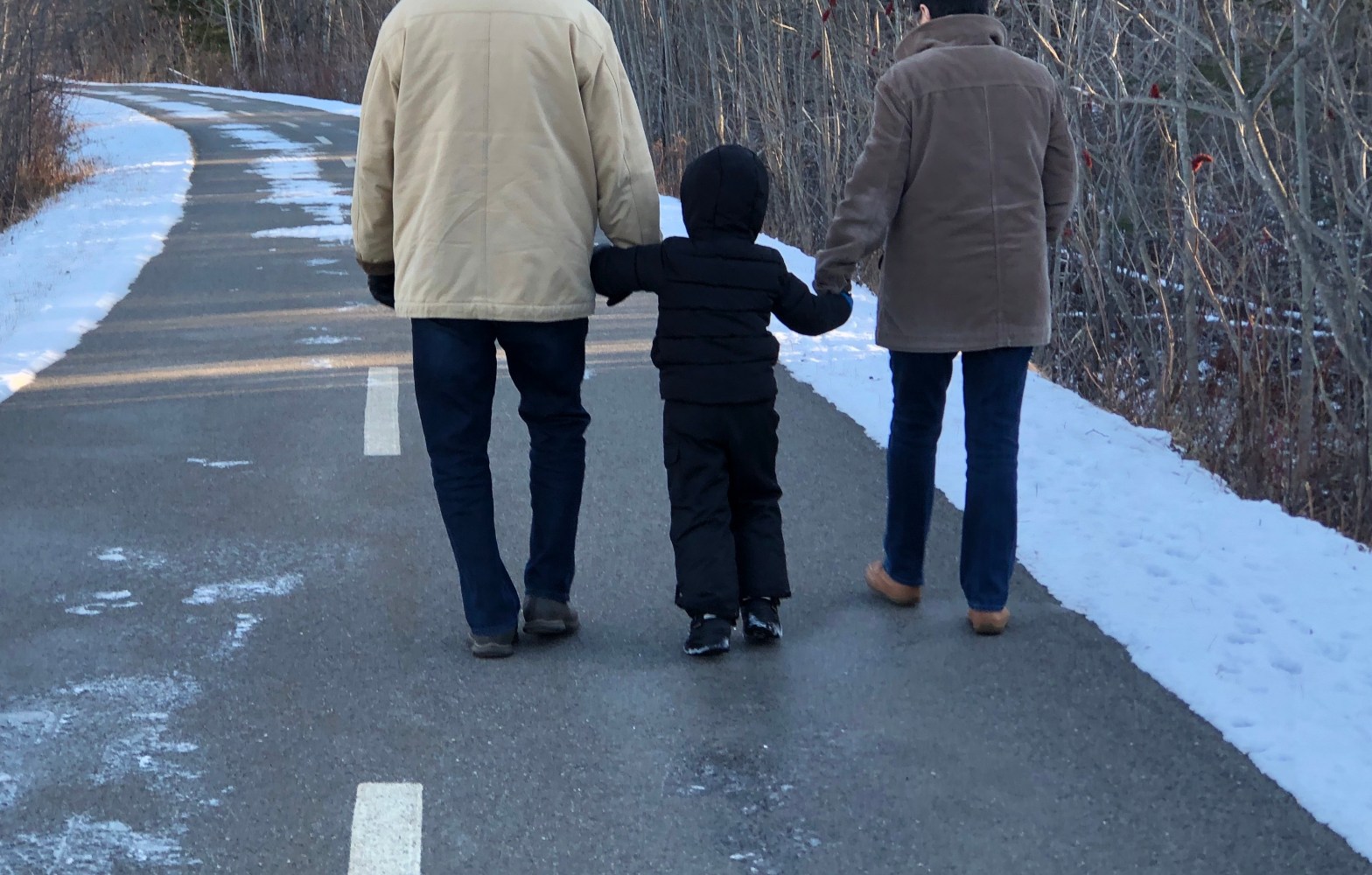
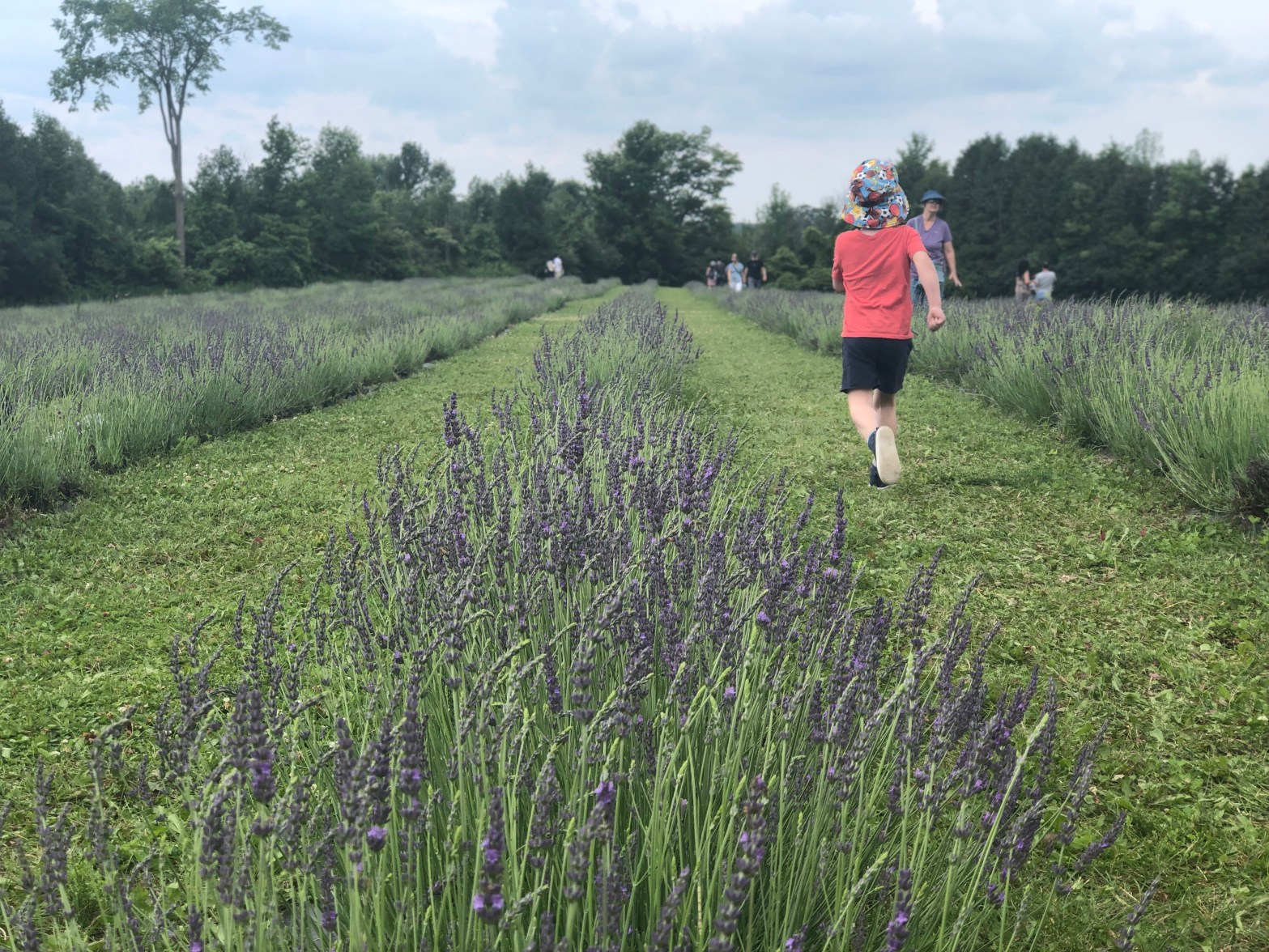
Our Adventures – We’ve had so many fun adventures this year, whether it was going to Mexico in March (pictured above), doing day trips to a lavender farm (pictured at the top) or the Toronto Island, or doing a fall hike in the nearby national park (pictured below). T is now at the age where he can express his excited recollection of a happy memory or his anticipation for an upcoming event. He’s easier to travel with – and his public meltdowns are less frequent, although not less unpredictable or unnerving to experience. I always tell people that one of my favourite things about being a parent is to experience the world through the innocent and wonder-filled eyes of a child and this year brought us so many joyful moments!
Our Little Big Moments – It is the little moments that always feel the biggest in hindsight. This rang true when I was looking at pictures on my phone from the past year this morning. A selfie of T fast asleep next to me, a candid photo of T on my hubby’s back while he was working from home and the two of them laughing, or a photo of a smiling T hanging onto a spinning bar in the playground, basking in the orange glow of the sunset. I don’t remember the exact details of each moment, but I remember how happy and content they made me feel.
And I also give thanks to the crap that 2019’s thrown T’s way, because in hindsight, they’ve been a blessing. Getting booted out of the Montessori program brought us to the amazing kindergarten program that T is now placed in. I’d like to think – and hang onto hope – that there will be an eventual silver lining to this program being cancelled.
When we first introduced the game Snakes and Ladders to T over the Christmas break, we explained that sometimes you’ll land on a ladder and go up, and sometimes you’ll land on a snake and slide back down, but you just keep going until you get to the finish line.
As I’m finalizing this post, T finds me in my room and climbs up on the bed and asks me to play in the fort with him. And the Malaysian Curry Beef Brisket that my hubby ordered from Uber Eats has just arrived. And I can’t think of a better finish line to this year.
“It will never rain roses: when we want to have more roses we must plant more trees.”
– George Eliot
T received a pair of skates for Christmas from my Aunt. We took him for his first skate yesterday. As expected with first timers, he struggled. After two slow laps, he was fed up. Our 4 year old gets frustrated very easily and he announced loudly that he was done. He was edging towards a tantrum, so we stepped out and let him chill outside the rink.
I have a love-hate relationship with the term “special needs”, because it often puts a label and restriction on what people, including myself, expect of our children and how we respond to their struggles.
It is true that having a prognosis of at-risk FASD has allowed us to access immensely helpful early intervention services for T. And disclosing his prognosis to the school has allowed him to be placed in a specialized kindergarten program where he is receiving more focused supports to maximize his academic success.
But we‘ve also experienced people who’ve lowered their expectations when we are forthcoming about T’s challenges. In the latter half of his preschool year, our son often spent part of his day in the “office” sitting with the administrator, because he was being disruptive in the class.
We were not always forthcoming about T’s prognosis. In the early days, we kept quiet, because we worried people would write him off and not try as hard for him. But we now feel differently and think that awareness raising and advocacy are far more effective in combatting labels about an invisible disability than trying to conceal them.
I will say this loudly and repeatedly: T is smart, curious, caring, funny as hell, and tenacious. But he struggles a lot with hyperactivity, focus, impulse control, and self regulation. These qualities create challenging situations for himself and for those whom he interacts with, including classmates, educators, family, and us, his parents.
But how we respond to and how we teach him to respond to his struggles are important.
We read a lot about other parents’ experiences with their FASD-affected children. We’re thankful for their wisdom. In some cases, we’re thankful to not have encountered similar situations and we pray we never have to face some situations we’ve read about. We remind ourselves that while some challenges are often common, every child’s trajectory will differ based on their circumstances.
I struggled with the term “special needs,” especially in the first year, but I feel that my hubby and I have since reclaimed it for ourselves and more importantly for T as a badge that can be empowering & motivating.
And here are principles we try hard to focus on – some days are easier than others to do so:
We all have challenges. T just happens to have a few exceptional ones – resulting from actions he himself did not make.
We won’t let T be restricted or defined by his challenges – or use them as an excuse. We will help T develop the skills and resiliency he’ll need to work through challenges, big or small.
T can, does and will learn. It just often takes more effort, a different approach, and a lot of patience and repetition – and often times, some aggravation and frustration too!
Focus on a growth mindset. Teach T it’s important to try and effort is just as important as the outcome.
Celebrate the victories and focus on the positives and the strengths. There are many. They just often get drowned out.
When T came into our life at 14 months old, he wasn’t fully walking yet. It was fun watching him go from cruising to full on walking, going up and down stairs and then running.
I thought about these early days as I watched him walk around outside the rink excitedly. He had no problem walking with skates on, so it’s only a matter of time till he’s comfortable on ice. And when he builds his confidence, his enjoyment will surely come too.
“When little people are overwhelmed by big emotions, it’s our job to share our calm, not join their chaos.”
– L.R. Knost
I look forward to Christmas every year, because it is a time to rest, to reflect on the past year, and to catch up with family and friends.
But Christmas and the holidays are often a challenging time for children with special needs, like our son who has a prognosis of at risk for FASD and who struggles with emotional and self regulation. The holidays can be a challenging time for kids like T, because of sensory overload, over stimulation, large crowds, a change in routine (e.g. no school), and anxiety around Santa.
My hubby and I alternate Christmases with my family in Toronto and his family in New Brunswick, the latter of whom we celebrated with this year. This year was the third Christmas that T has celebrated in the Maritimes with his Grammy, “Dad Dad,” and his aunt and cousin.
While this year’s Christmas was filled with the usual moments that tested our patience, it was also filled with many positives. Here are a few things we learned from Christmas past and present that helped us focus on the merry in the holidays and to avoid the ghosts of Christmas future:
Weather the Meltdowns
I’d like to say I’m better at anticipating T’s meltdowns – usually when there is an unexpected transition in task – but sometimes they just come without warning. Like when we asked T to stop playing with toys and to get ready for bath, he went into a full blown screaming fit, pulling the cloth off the coffee table and throwing toys at my face – all in full view of his grandparents.
One tried and true response my hubby and I have learned about meltdowns is to not throw fuel into the fire by admonishing him in the moment, but rather let the storm pass. Walk away or pick him up and move him into a quiet space away from the crowd if we have to. And it will pass. When he’s calmer, use the opportunity as a teachable moment to explain what happened.
Rethink Santa
This video above was released this Christmas from the National Alliance on Mental Health. It’s told from the perspective of Santa Claus and challenges us to rethink how we reward or reprimand “niceness” and “naughtiness” and how this could create mental health consequences.
This year was the first time that T grasped the concept of and became excited about Santa. The daycare staff helped write a letter to Santa that we mailed and received a prompt reply from the North Pole for. This was a nice contrast from the first time we took him for a Santa photo in 2016 and he had a meltdown because the bearded red-suited man terrified him.
I will admit my hubby and I used Santa this year to encourage or discourage behaviours. We also downloaded an app that lets us receive a call from Santa and we used it to let T know that if he was not behaving, we would let Santa know and he would not get his gifts on Christmas Day.
I noticed the anxiety and the real tears that emerged when T thought that Santa was not coming, because of something that he did. I will admit being amused by it, especially by how much he believed that there was a real Santa.
In hindsight, I think about the token economy his teacher uses to help shape behaviour. It focuses on the positives and no tokens are taken away for undesirable behaviour, because children like T will inevitably exhaust the tokens and what happens when there are no tokens left to take away?
To be clear, I’m not advocating that we bubble wrap our children. But we will rethink Santa – and how we position rewards and punishment – in future years.
Think About Less is More
We arrived at T’s grandparents at night after a 8-hour drive that T did very well at. No meltdowns and we only had to give him Netflix for 30 minutes when he was getting squirrely at the end.
T was on full blown charm offensive with his grandparents. We played a board game. Not only did he sit still and focus, instead of throwing game pieces up in the air like we expected him to, but he surprised us by winning the game of Topple. Maybe this was going to be an ok trip, I thought, but we celebrated prematurely.
The second his seven-year-old cousin arrived the next evening, he went into overdrive mode and there was no turning back. Started running around the house excitedly, because he had been looking so forward to seeing her for the past week. This was further escalated on Christmas morning when he opened his many gifts. We could just not calm him down.
We’ve learned over the years that kids like T don’t do well with over stimulation and regulating their emotions – even positive ones, like excitement – when they are overloaded. They can go from 0 to 360 in seconds and have a hard time coming down without crashing into a meltdown. The holidays can be especially triggering, because of all the excitement (or anxiety) of visitors and gifts – and managing T’s emotions then becomes challenging.
I’m always torn between indulging T during the holidays and with going with less is more.
Don’t Sweat the Small Stuff
As I’m finishing this post, I’m sitting on my in-law’s dining table trying to get a hyper and distracted T to finish his dry bowl of Cheerios, which had been put out two hours ago. Every few seconds, he’d get up and run around with his spoon. His Grammy sat with us and tried to coax him to finish as I tried not to lose my shit. At the rate we were going, he’d finish the bowl when he turned 16.
The change in environment and routine has thrown T completely off. Hard-built structure and his ability to transition in tasks and to comply to simple requests have gone out the window. Simple things have become trying battles that often resulted in tears and tantrums.
During these trying moments, I reminded myself to shrug it off. We were on vacation. Who cared if I wasn’t going to win the Parent of the Year prize. We would readjust when we got back home.
And in addition to not sweating the small stuff, I reminded myself to amplify the positive moments, because there were so many and as parents of children with special needs, we often let the good get drowned out by the moments that make us want to poke our eyes out.
And here was my favourite positive moment: On Christmas morning, T got up at 9:45 a.m. and thus letting us sleep in (a Christmas miracle). He went to look at the tree and ran into our bedroom and exclaimed with glee, “Santa came! Come look at the presents under the tree!” His large open eyes, the excited inflection in his voice, his open body language. Thank you for these merry blessings.
After taking T to the potty recently, he pulls up his underwear and blurts out matter of factly, “Oh my God, look at his butt. It is so big!” I shouldn’t have laughed, but I did. I’m not sure where he picked this up. Maybe it was from a song lyric. He better not have been talking about me!
To think that three years ago, we were anxious about whether or not this kid would talk. These days, he talks in sentences, has a growing vocabulary, a descriptive imagination, and unfortunately, he’s also picked up a potty mouth from school (more on this in another post!).
When we first adopted T, his medical history stated that he had “global delays” at birth. After we received his prognosis of at-risk FASD, we obsessed over it and read up as much as we could about it. One symptom common among FASD children is a delay with speech and language development.
We knew from our assessment with the developmental pediatrician that T was supposed to be able to say more words than he was doing so at his developmental age. That didn’t help our anxiety.
I was on parental leave for the first 30 weeks that T was with us and his speech was one of the areas my hubby and I focused on. Due to T’s prognosis, we were blessed with access to developmental and speech therapy services from Surrey Place. Looking back, these services taught us so much about how to help T develop speech and language skills.
Today, while T has a few challenges he struggles with and that we are working through, speech is not one of them. And we acknowledge this is a blessing that not all children have and we know that T will have – and is already experiencing – learning challenges at school.
While my hubby and I are by no means experts on this subject, we are sharing the important lessons about children and communication that we’ve learned from T:
Playing is the Best Way to Learn
I always looked so forward to the bi-weekly visits from T’s developmental therapist A and speech pathologist C. I had no idea what to expect in these sessions and it ended up being all about play.
They brought an array of toys that encouraged turn taking, choice making, and vocabulary building – such as wooden puzzles, stacking blocks, shape sorters, and bubbles. They even gifted T toys they thought were appropriate and helpful to encourage language and play skills development.
A and C taught T – and my hubby and I – how to encourage the development of speech and language skills through play and to inject language and vocabulary in everyday activities. One simple way was to describe and identify what we were doing and the related objects within the current context.
When T was having fun, he became most receptive to learning. When he got tired of an activity, we moved onto another one. Mundane activities – like going for a walk, to play in the park, snack and bath time – became an opportunity to have fun and to teach and to learn language.
Start with Non-Verbal Communication
We learned that receptive language is the ability to understand words and language and expressive language is the ability to use language through speech or other means, like sign language.
While T was not talking yet, he was absorbing, learning and growing his understanding of the world around him. That was why it was important to talk to him, describe things to him, read to him, sing to him, and to play with him.
We learned about the importance of non-verbal communication – such as a making eye contact with others, learning how to finger point, and simple sign language – as a way to build his language skills.
For example, when we asked T to make a choice – e.g. “Red socks or blue socks?” – we’d first get him to make eye contact. Eventually, T learned to point at his choice. “Green socks,” we’d say back to him.
Another simple sign language skill was teaching him how to gesture “More please” with his hands when he wanted more food. When he gestured, we’d repeat out loud to him, “More please,” until he one day learned to say “More please” by himself.
Attend Community Programs
Community programs for preschool children help immerse kids in fun and play-based learning environments rich with language. Even better, they are often free and a great way to connect with other families and help remedy the boredom of being alone with a non-communicative kid.
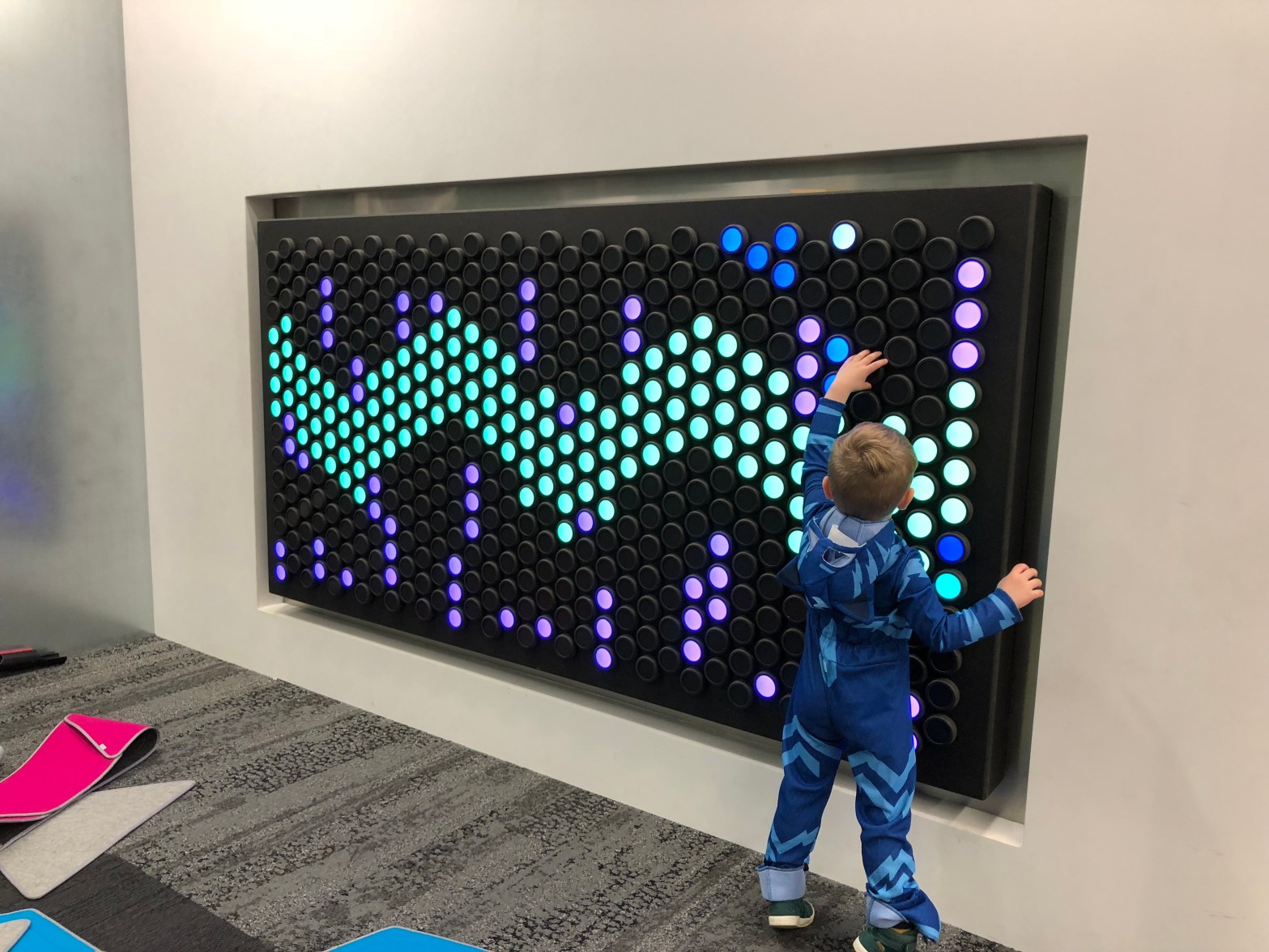
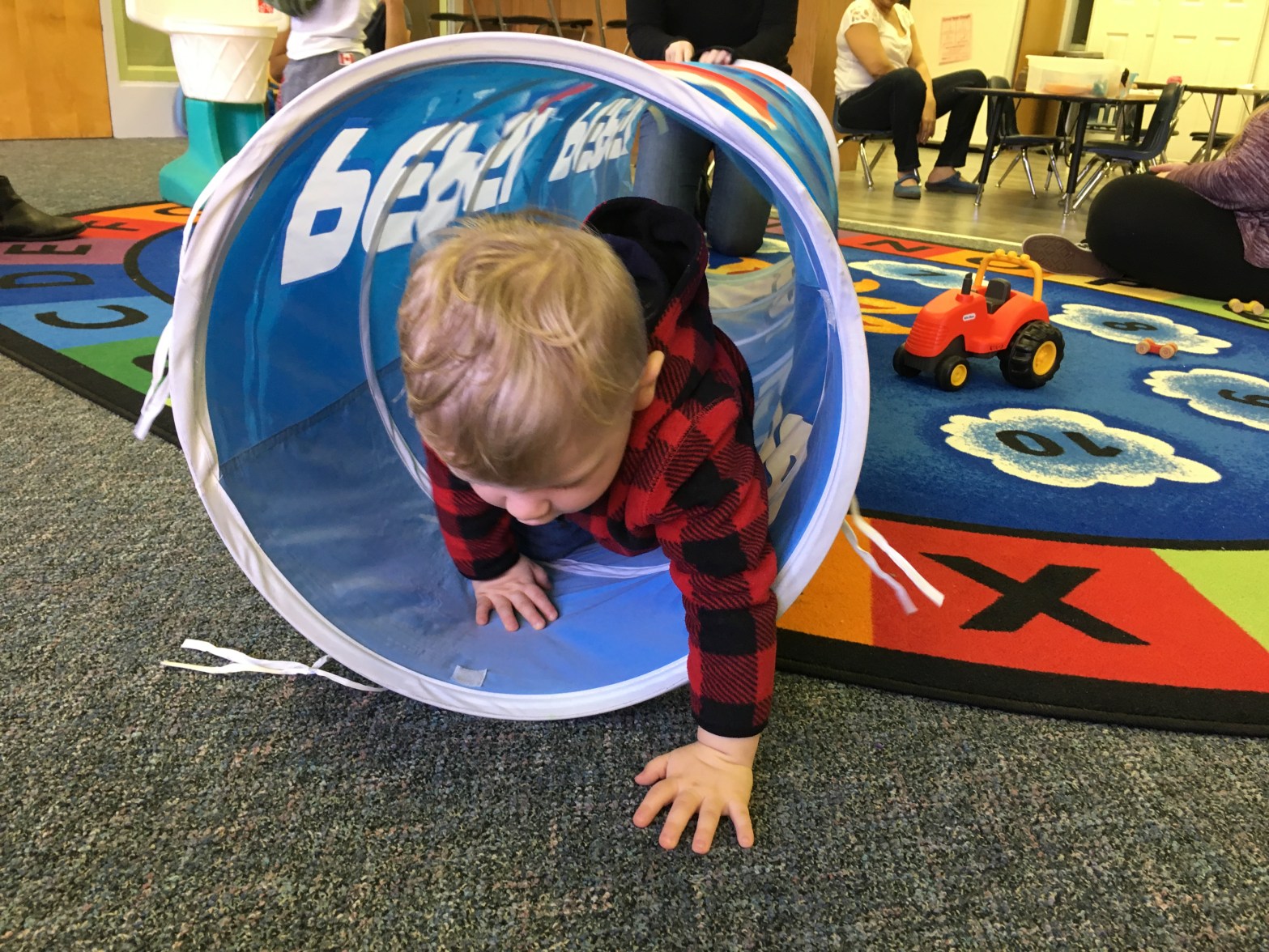
Some of my most treasured memories from my parental leave was taking T to attend toddler programs, which included family programs offered at our local library and early literacy programs offered at “Early Years Centres” (pictured above) through the municipal government.
Surrey Place offered a wonderful Musical Morning program on Thursdays that I attended in Fall 2016. There were a dozen parent and tot pairs who attended regularly. The other children had down syndrome. This drop-in program ran for two hours and we attended the last hour. It consisted of play time and 30 minutes of guitar songs played by a musical therapy student.
Although T had a hard time sitting still for anything, he enjoyed the music program a lot and would often go up to the student to touch and poke at her guitar.
I have a picture of T from one of the mornings. The group was playing with a rainbow parachute. T was sitting on the mat and looking up mesmerized at the parachute as it ballooned in the air above him. My feelings of gratitude for those mornings always come back to me when I look at that picture.
Read, Sing, and Laugh Often
Reading and singing became a ritual before bedtime and provided enjoyable opportunities to infuse language into T’s environment.
A and C bought T a series of wonderful baby board books, including the First 100 Words by Roger Piddy and Baby Genius word books. As I work for a library, I am surrounded by books. Our family and friends also regularly gift T with awesome books for his personal library.
One of my favourite memories from when T was younger was when we’d spend time every day going through his First 100 Word books. There were 9 images and words per page. I’d ask T to point at specific objects. I remember that jubilant feeling the very first time he pointed out correctly all the words on the page. And the first time when I pointed to an image and T would utter out what the object was – like “ball,” “cat” and “dog.” It was like he had won an Olympics medal.
My hubby introduced lullabies into T’s bedtime routine. After reading books one night, A picked T up and started singing to him as he cradled his then-so-tiny body. In the early days, we sang the same three songs in this order: “Frere Jacques,” “You Are My Sunshine,” “Rock A Bye Baby.” Eventually, we diversified our setlist. Favourite songs included, “Itsy Bitsy Spider,” “Row Row Row Your Boat,” Skinamarink,” and “Wheels on the Bus.” As we became more confident, we added dance movements.
We’ve now graduated from board books into longer picture books and T is not as interested in lullabies. And there are evenings when I’m exhausted and the thought of reading the lengthy Green Eggs and Ham by Dr Seuss make me want to poke my eyes out. I actually had to hide the Dr Seuss books at one point, because I found them so annoying to read. But books and songs at bedtime were so important to helping T build his vocabulary.
Celebrate Every Victory
I remember the early days of speech therapy, whether it was one of the bi-weekly home visits or half-year checkups at Surrey Place. We’d do an inventory of how many words T knew, whether it was reported by me or through an observation during the session.
I remember the early days when we celebrated his ability to point his finger as an intentional way to communicate and how that gradually transitioned into him uttering “Yat?” as a way to ask “What’s that?” to the day he actually uttered “What’s that?”
Or when he would make incoherent sounds and we’d still jot it down as a word in his vocabulary. Because those sounds eventually became coherent words.
Every sound, coherent or incoherent, was celebrated. I think, and would like to think, that he knew how happy and proud and excited we were at his growing vocabulary.
And soon, we stopped counting how many words he knew, or counted the number of words he was able to string into a sentence. It just became a natural part of T’s skills and abilities.
When I think about the daily struggles we have about other aspects of T’s development and this prognosis that looms over us like a dark stinking cloud, we try to shift our thinking to the gains he’s made in other areas of his life – such as speech – and it gives us renewed optimism to step forward with confidence and reassurance that things will be ok.
I can be changed by what happens to me. But I refuse to be reduced by it.
— Maya Angelou
It was just a little over three years ago when we received T’s prognosis. I remember foggy bits and pieces from that morning. But there are two moments that are still crystal clear in my mind – one that continues to haunt me and one that fuels me.
It was a late summer 2016 morning when we first visited Surrey Place to meet with a developmental pediatrician. I have never heard of this organization before, until we received a referral from our family doctor, who suggested that we get T looked at, because of what we know about his medical history after adopting him at 15 months.
I sat in the lobby and looked around at the other parents and children. There was an excited energy in the air. Dr. L arrived. He was accompanied by a colleague and I recall two medical students may have also been with them.
We were escorted into one of the many rooms in the building and I sat on a leather couch. T, then 18 months, had just become comfortable with walking. He explored the room and they then brought out toys for him to play with, while they observed him and simultaneously asked me questions.
I felt tremendously at ease with them. They were professional, friendly and so good with T. The conversation did not feel awkward and they asked me so many questions about what T was able to do and not do. I don’t remember a lot of the questions, but recall ones about his speech and how many words he could say and a question about how many blocks he could stack.
I had a copy of T’s file from the adoption agency and I disclosed as much detail as I could about his medical history. It was one specific detail that was of particular interest to them and why our family doctor referred us: T’s mother reported that she drank during the first three months of her pregnancy, as well as taking hard drugs, like crystal meth, throughout her pregnancy.
They also examined and scrutinized T’s face very closely, looking at his upper lip in particular. I would later learn this was because they were looking for specific facial features. They then measured his height, weight and head circumference and then plotted them onto a chart and quickly determined what percentile he measured at.
Then the prognosis arrived. Based on T’s medical history, what they observed, and the answers that I provided to their questionnaire, Dr. L. stated that T has a prognosis of at-risk fetal alcohol spectrum disorder (FASD, for short).
My husband and I did not know a whole lot about FASD at that time, other than that it was something we specifically said we’d avoid when we were going through the adoption process. My mind flashed back to a brief conversation I had with a former manager a few years earlier. She told me to avoid FASD, because she had friends who adopted children with FASD and it ruined their lives.
Those moments flashed through my head, while I stared at the two professionals looking at me. I smiled, because I wanted to stay strong. I nodded my head, because I wanted them to know that I was paying attention. But I did not understand what was going on. I had so many questions, but I did not know how to ask them. I felt like I was having an out-of-body experience and I just wanted to scoop T up and go back home.
I genuinely don’t remember a whole lot from that morning. I’m not sure if it’s because I blocked it out of my mind or if it’s because parenting T has worn down my memory. But I remember two specific moments from that discussion with Dr. L.
The first – A prognosis is just an outlook. He is too young to be properly assessed and diagnosed until he is older. At that moment, because T was still young, we would not notice a lot of difference between him and other children. But as he gets older, Dr. L cautioned that we may start to see a widening gap between his abilities and those of other children.
The second – Dr. L suggested that we enjoy T’s childhood, because it flies by very quickly.
The first words of caution have haunted me ever since that morning. The second words of wisdom have fueled me to focus on the positives.
My husband and I knew oh so little about what FASD was at that time. But from that morning on, we were going to learn a lot, experience highs and lows, and yes, we were going to enjoy T’s childhood.