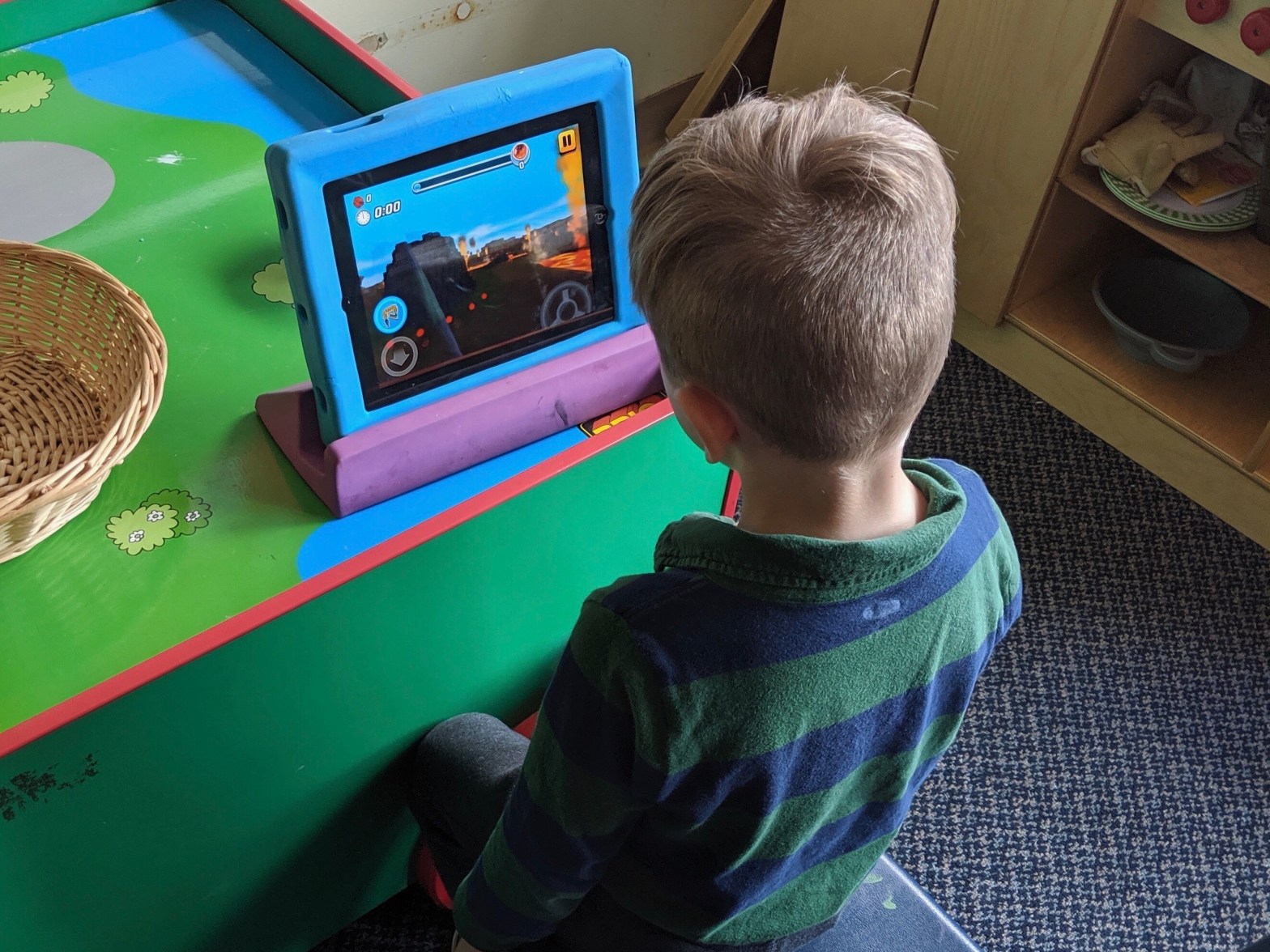
“Go for it. Step on all the puddles!”

“No man ever steps in the same river twice, for it’s not the same river and he’s not the same man.”

– Heraclitus

It’s been two weeks since we’ve started our self isolation, when everything came to a standstill.

I am thankful my family is safe and healthy and that we’ve only been lightly inconvenienced.

But I think about what this pandemic has taken away from our sweet T: his school, routine and structure, friends, daycare, community pool, McDonald’s Playspace, playground and sense of normalcy.

I think about how he broke down in tears when he saw the cautioned-off playground.

We are in this for the long haul. We need to pace ourselves for a marathon, not a sprint. And we need to change how we respond to things.

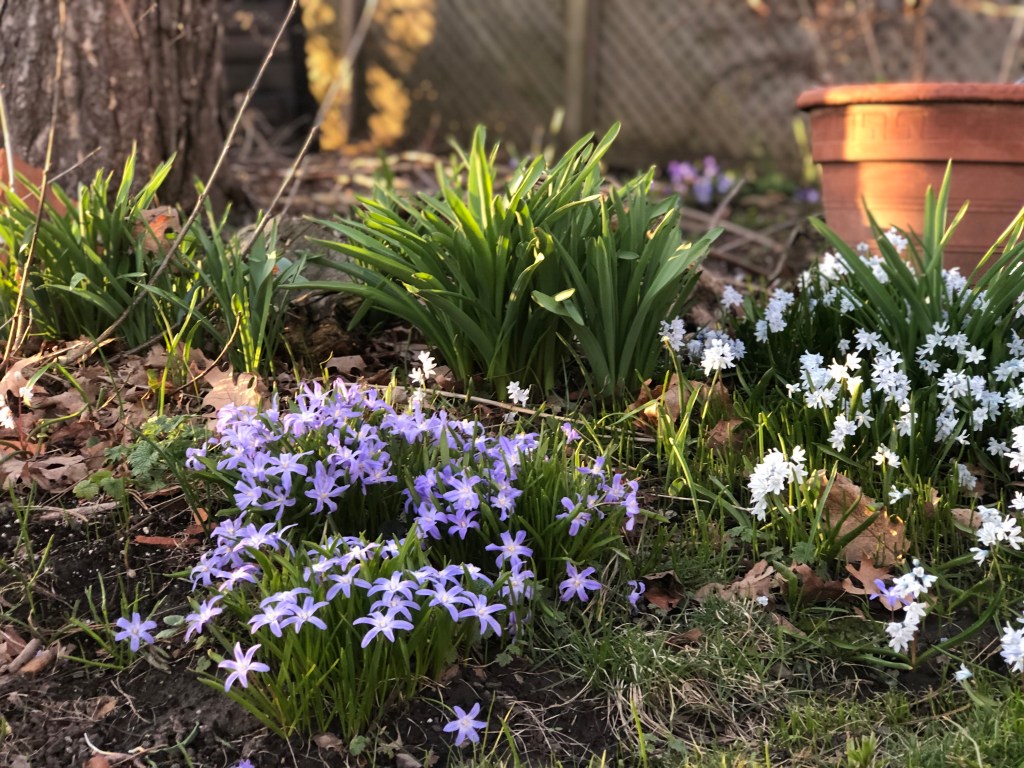
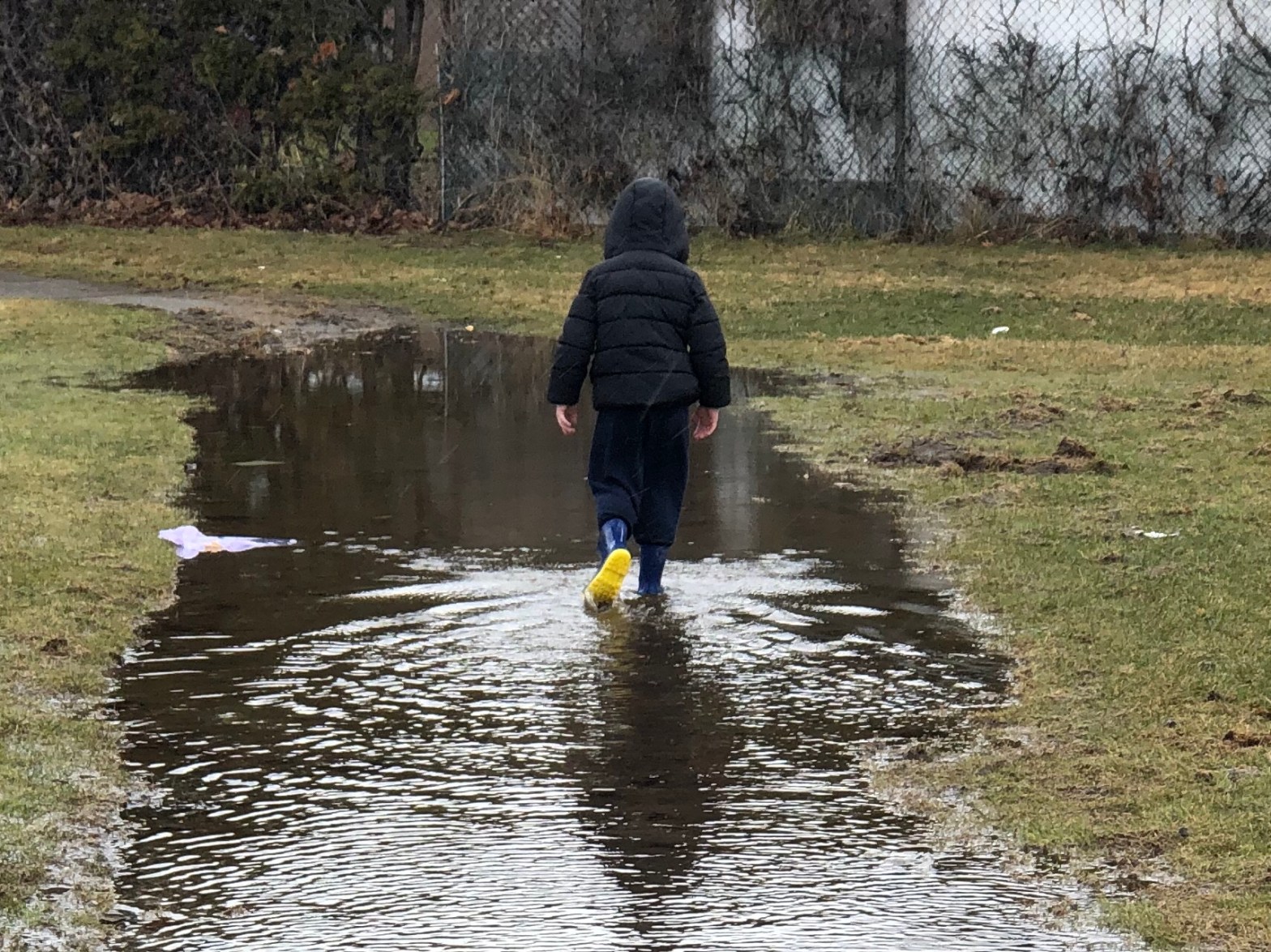
During our morning walk today, it was lightly drizzling. It had rained heavily for hours overnight. There were puddles everywhere.

T was in his favourite blue rain boots and I saw that glint of mischief in his eyes. He has high sensory seeking behaviour and there is not a puddle that he can’t resist. Mud? Cherry on top!

I normally get obsessive about keeping him off the puddles, but the last two weeks have already taken so much from him.

So I said, “Go for it. Step on all the puddles!”

He started running and stomped through an 8 foot wide puddle, laughing with full belly heartiness.

We continued our walk around the neighbourhood, the empty school yard and past the cautioned-off playground. He looked at me, “I’m not going to cry!” And I smiled at him and patted his head.

He found more puddles on the damp soaked empty soccer field. Stomp, stomp, stomp. And I ignored his increasingly wet pants and amassing flecks of mud on his boots and clothes.

By the end of our walk, when I had to return to my work, he yelled, “Water got in my boots!”

I could sense his irritation rising and I quickly asked him stomp his boots. I made duck noises as his boots squeaked loudly. “Quack quack.”

We laughed together as we walked home. I inhaled the fresh cool rainy Spring air as I listened to his laughter and squeaky boots.

Our Fixer Upper Renovation – One Year Later

“There’s no place like home.”

– Dorothy, The Wizard of Oz

A year ago this week, our family made the leap and moved into our house.

The hubby and I had previously lived in a small townhouse for over 10 years. T spent three wonderful years in that condo with us, but it was evident that we outgrew the space.

We bought an old fixer upper house built in the late 50s. We are only the second owners. The original owners were teachers and raised teachers too. So while the home was very old, I love the sense of family and history that I felt when I walked around during the open house.

We also bought this home, because it was within our budget in this insane urban real estate market, because it needed so much work.

The hubby and I knew this would be a long term fixer upper journey. He’s a huge fan of HGTV shows and we both saw it as a project that we would do while watching T grow up.

The first reno we did was to add a furnace, because the home was so outdated that it was being heated by electric baseboard heaters, which gets very pricy in Canadian winters.

We hired a contractor to reno our upstairs, which had three bedrooms and two baths.

When you are watching a reno show, everything gets wrapped up in 30 minutes. Our experience was not neat and short.

From the first day when our bedroom ceilings got ripped open, so that duct work could be added, I felt the stress.

We would come home from work and our entire house would be covered in dirt. I wasn’t even sure if it was safe to be in our house.

The hubby, T and I set up our sleeping space in our barren living room. We slept on mattresses and used boxes as our closet system.

But you know what, those five months living together in that tiny corner brought so many warm memories and moments of bonding.

I loved falling asleep with T next to me and waking up in the morning while the rising sun came in through our kitchen window and seeing the hubby and T still in their dreamy state.

T became a wonderful helper. Where it made sense and it was safe for him to help, we got T to do reno tasks like pulling old nails from the floor. T was so keen to help and did a great job.

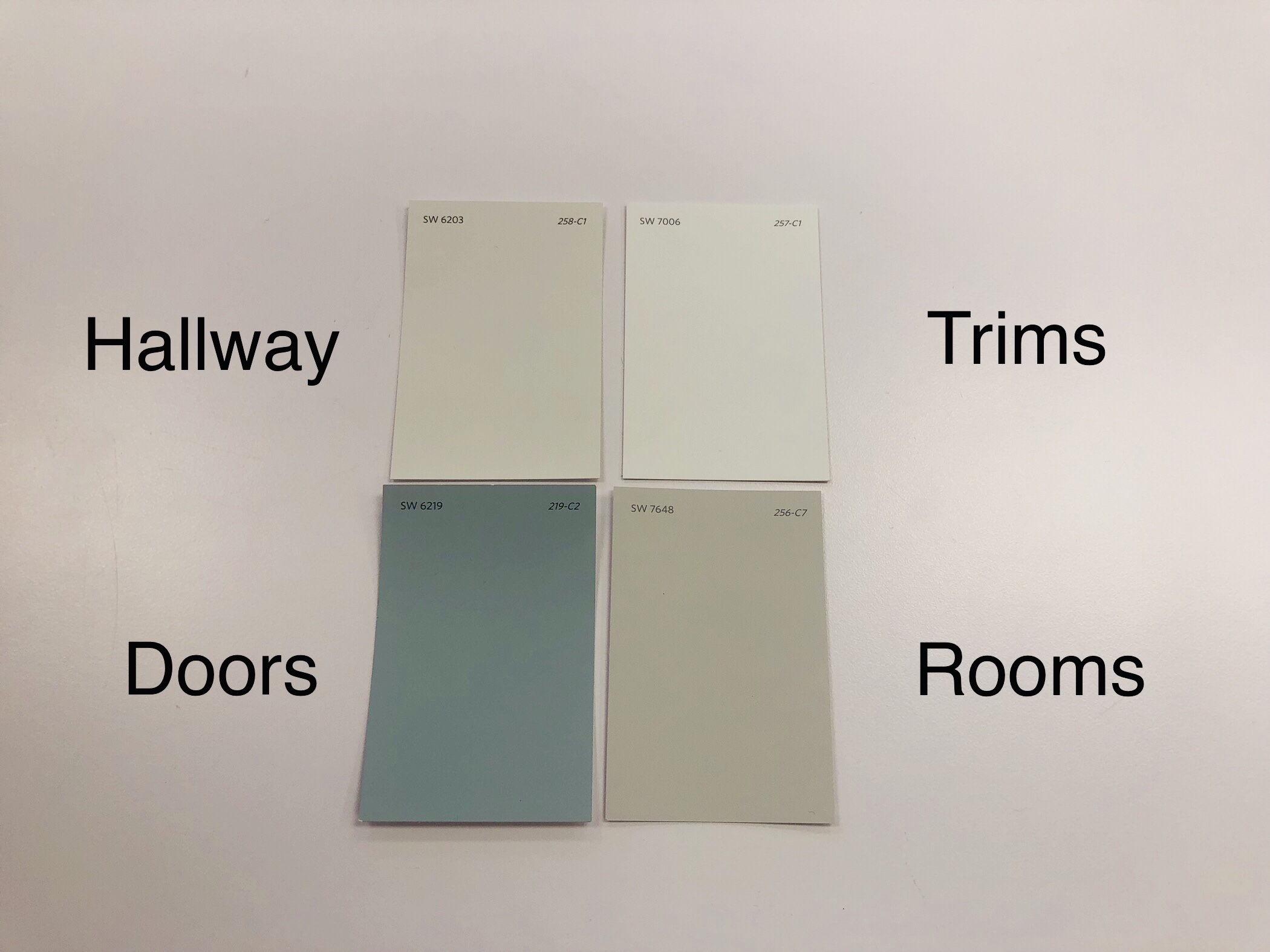
Our upstairs reno is now complete. Our hubby asked for a craftsman style look to our doors and trims. We chose neutral colours for walls and doors.

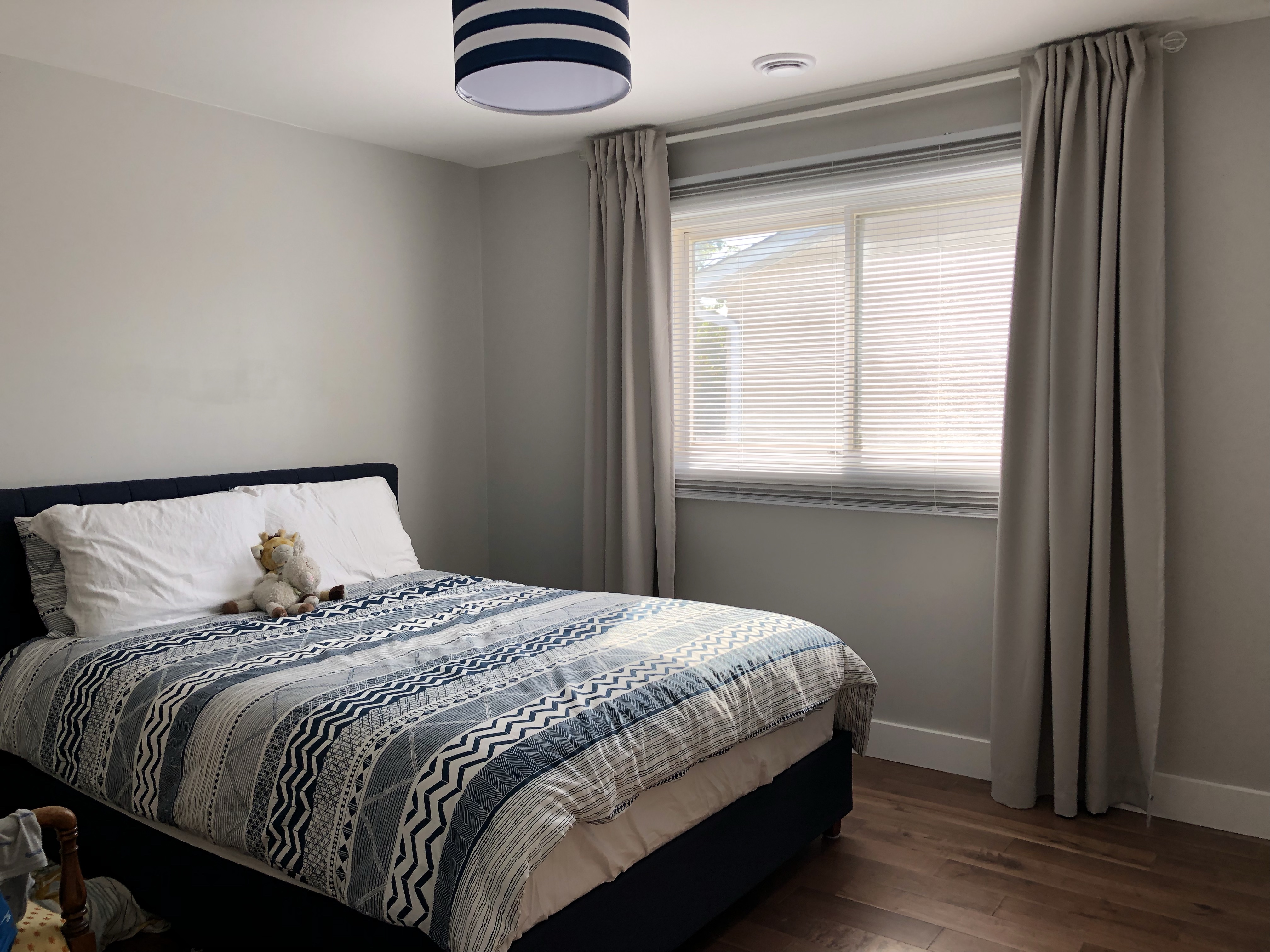
For T’s room, we went with a sedate and grown up look and feel for two reasons. First, this was a room he was going to grow into. Second, for kids with special needs, it’s best to keep the bedroom room simple and uncluttered to minimize sensory overload.

We are now taking a pause with renovations to save money for the next phases, which include updating the kitchen and main floor.

The hubby and I are in no rush, because this is the home we will grow old in and watch T grow into the wonderful young man that we know he will become.

Supporting My Little One During These Challenging Times

“Even a happy life has a sad day. We fail to provide a context which says it’s okay to cry, it’s okay to be sad.”

– Marianne Williamson

Against the backdrop of a beautiful warm Spring afternoon, our little T finally broke down in tears for the first time since our self isolation started.

The afternoon started off wonderfully. I took time off from working to focus on T.

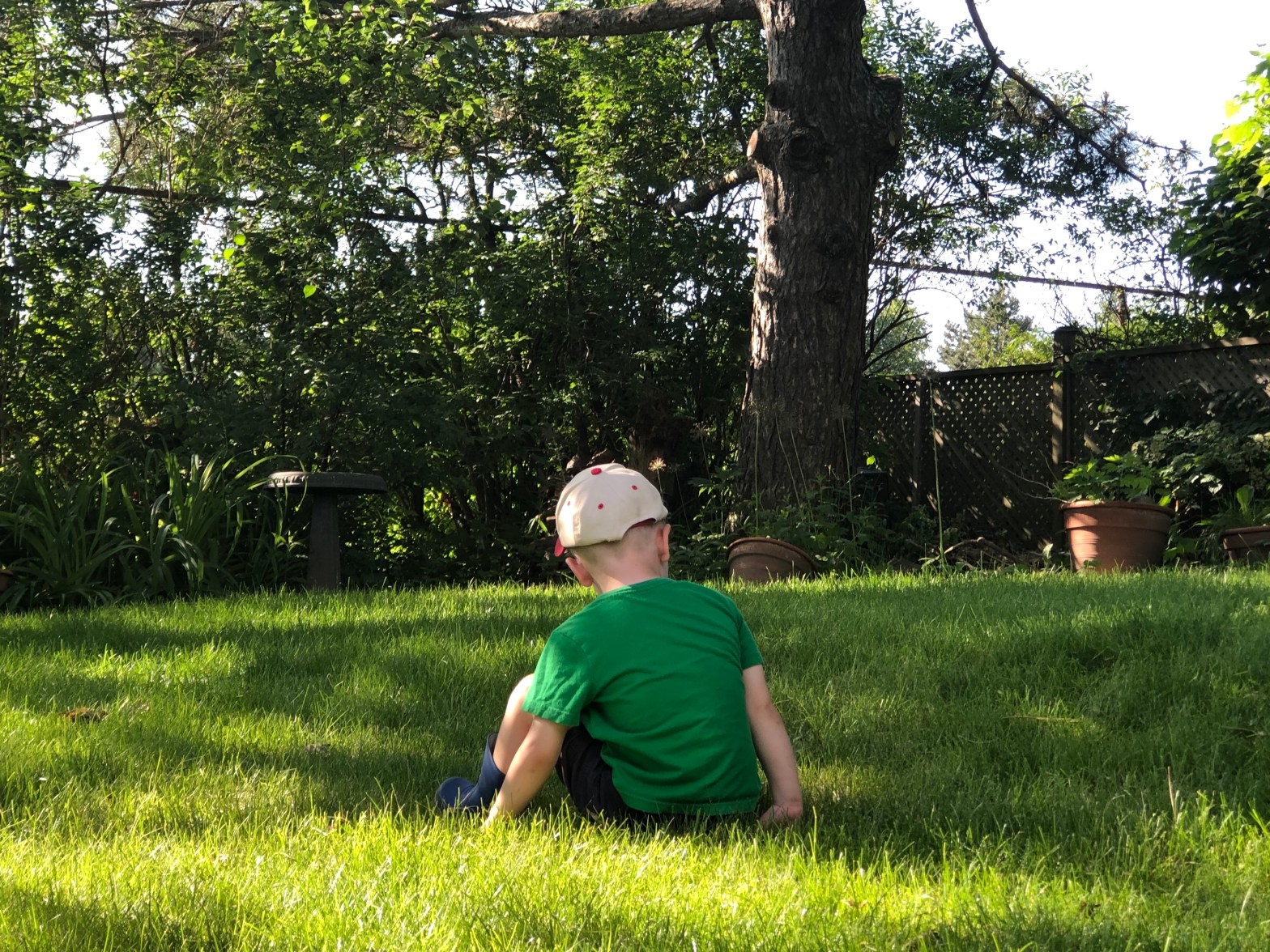
We played in the backyard. He recently discovered with the hubby the joy of climbing up trees. He also stepped on top of our compost bin in the back corner and rested his elbow on our fence and peered over to say hello to our neighbour as he raked his autumn leaves.

We started to spend more time in the backyard, because the City recently closed playgrounds as further measures to curb the spread of COVID-19.

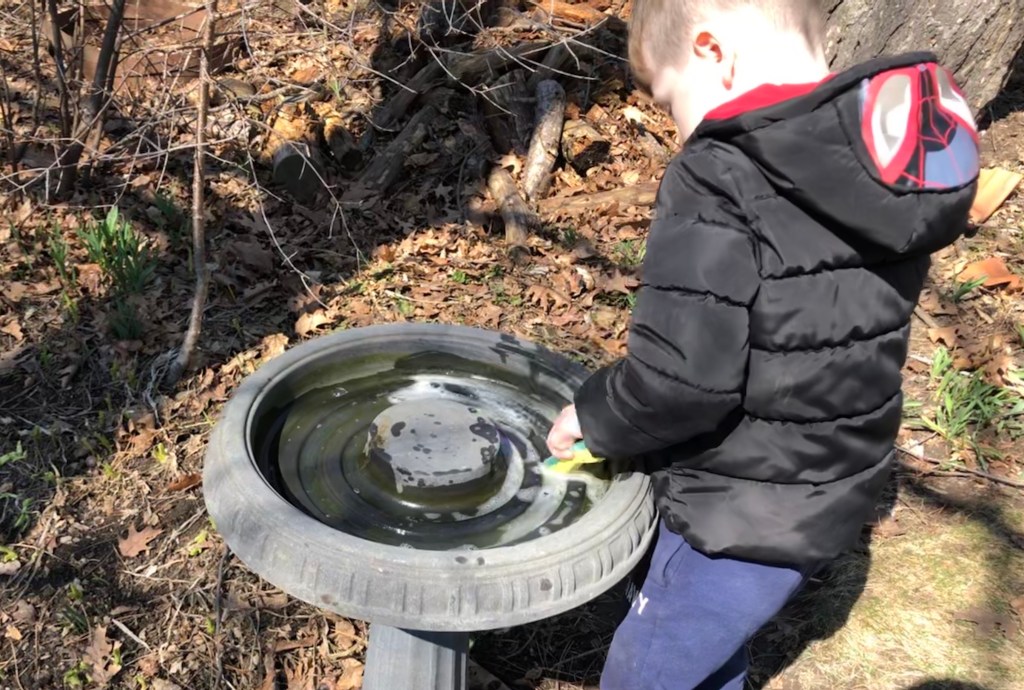
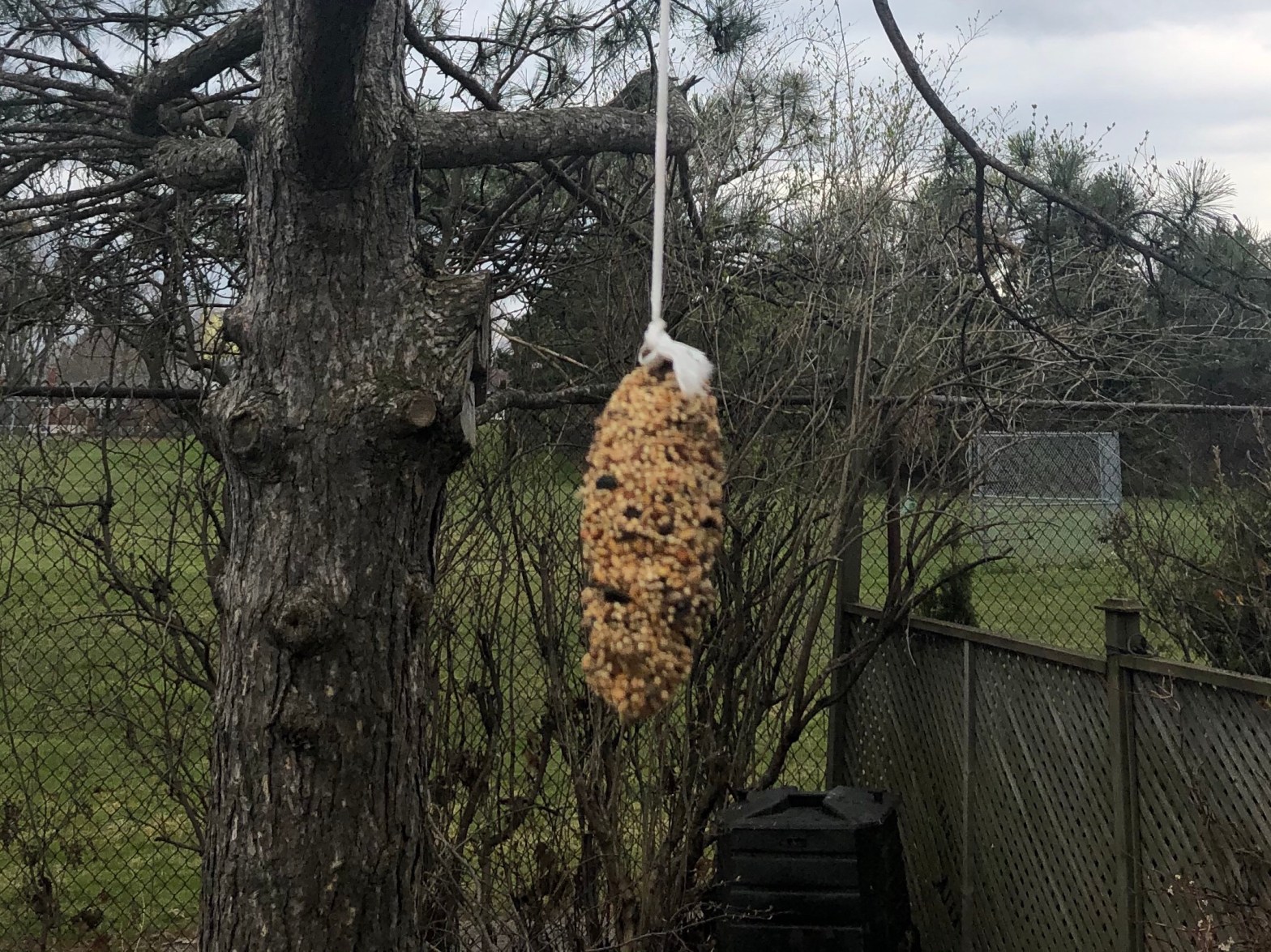
As I raked our endless pile of leaves, T amused himself. He also did a great job helping me scrub, clean and refill our bird bath.

Afterwards, we went for a walk in the park. I had warned him ahead of time the playground was now off limits. But he did not grasp what it meant.

The two of us noticed the yellow caution tape from afar. I reminded him again why they were closed. He said he wanted to see the yellow tape.

When we got to the playground, I reminded him that he couldn’t go on the swing. Then he walked to the ramp that he loved to climb to go up on his beloved slide. It was also cautioned off.

Then he saw that another favourite part of the playground was also sectioned off.

Then he burst into tears. “Why is everything closed?”

This was not his usual tantrum tears or meltdown that I’ve learned to just roll my eyes at and endure.

This was genuine heartbreak and grief.

My heart felt like it shattered into a million pieces. I felt warm tears well up in my eyes and I fought them back.

I knelt down on my knees and tried to hug him. He refused and we walked over to the long blue slide and he lied on top of it on his belly and sobbed.

I ignored the urge to lecture him about not touching his face on the slide and I just let him cry it out for several minutes.

Kids like T with special needs thrive and depend on routines. The past two weeks have seen our hard-earned routines go out the window.

My hubby and I are trying our best to roll with the punches. We are trying to carry on business as usual. But today was a good reminder that these times are not business as usual.

We are dealing and adapting to a new normal where routines and favourite structures have gone out the window or are off limits for the foreseeable future.

The good thing about T is that he is a resilient and generally a happy go lucky kid. But it was important for me not to minimize this moment, not try to dismiss it nor to try to downplay it.

It’s so important that kids learn that it’s ok to not be ok. And so I let the moment ride itself out.

On the way home, he was angry on his tricycle and peddled really fast. I ran after him and then he stopped his tricycle, got off and screamed at me. “Stop running after me!” He charged towards me and started beating me with his fists.

I did not take it personally. I knew it was his way of processing his anger at how everything in his life is not the way it used to be.

And he did calm down soon enough.

And he was fine by the time we got home. I told him to wash his hands. Gave him a bowl of ice cream with rainbow sprinkles and put the TV on.

A few minutes later, he was on his mini trampoline, happily bouncing up and down, while Snow White and the Seven Dwarves played on Disney+.

These are not normal or easy times. Please stay well and take good care of yourselves, everyone.

Celebrating My Birthday in Self Isolation

“There is still no cure for the common birthday.”

– John Glenn

Today is the first time – and hopefully only time in a hopefully long life to still unfold – that I will celebrate my birthday in self isolation during a global pandemic.

Schools are closed but supposed to be officially back in business after the March Break. So I split my day between homeschooling T and keeping up with my work from home.

Homeschooling is so hard! Teachers have such a hard important job. We are relying a lot on online resources. It was also a rainy day but I still took T for an hour-long walk for all our sanity.

For today’s home economics class, I asked the hubby to bake a birthday cake with T (pictured above). They did a wonderful job and I love it!

I never wish for much for my birthday and every year’s wish is the same: happiness and good health for my loved ones and myself.

This year, the particular wish is even more resonant and relevant and I extend and share that wish with all of you.

Please take care and stay well, everyone. As this sign that T and I created together (below) for today’s art class to post on our front window reads: We are in this together.

Ideas to Keep Our Little One Learning During Social Distancing

“Time is free, but it’s priceless. You can’t own it, but you can use it. You can’t keep it, but you can spend it. Once you’ve lost it, you can never get it back.”

– Harvey MacKay

I am thankful that T is oblivious to how serious the COVID-19 pandemic is. We’ve let him know there is a bad germ making a lot of people sick and this is why he is staying at home and has to wash his hands a lot. Beyond that, there’s no need to freak our five-year-old out with grim details.

This past week was March Break, so we’ve let structure and routines go straight to hell. Daily screen time limits have been far exceeded, bedtime is late and he’s been sleeping in past 10 a.m. Anything to keep the hubby and I sane as we adjust to this new normal of social distancing.

We are so thankful that our employers have allowed us to work for home. For me, this started on Wednesday. Taking transit to work on Monday and Tuesday was surreal. Rush hour was a ghosttown and I sensed the social distancing in the way people stood apart from each other.

We’ve mainly stayed inside with T, trying to fill each day with activities to keep him engaged. He told me on Wednesday that he missed his teacher and “Miss Kiki” at the daycare. It made my heart break but also fill up, because it reinforced to me just how amazing his school supports are.

While I’m expected to work from home, I have indicated to my manager that chunks of my days will need to be focused on T and ensuring that my hubby and I work together to maintain his academic momentum while schools are closed, which I could see lasting until September.

Routines and schedules are so important for kids with special needs like T, so we want to do whatever we can to sustain the progress and momentum he’s gained this school year.

I’ve started to create daily schedules for T. I’m focusing on the upcoming week and will undoubtedly need to tweak for future weeks. I have a fantasy ideal of what homeschooling will be like and I have no doubt that we will have this dream crushed by T’s reality checks!

It’s been so amazing and appreciated to see friends and strangers on social media share valuable online resources. These have helped me flesh out ideas for activities for homeschooling T.

Here are the different ways that the hubby and I plan to carve out each day with our T, who is now in junior kindergarten. This is gonna be a test of our will, patience, and sanity. Wish us luck!

  • Alphabets and Numbers – T’s interest and ability in counting and reading grows by the day. I want to keep this momentum up. I bought a series of activity books from Costco that have laminated pages. Activities, including tracing letters and numbers, can be done repeatedly with washable markers. You can also find free printable activity sheets online, such as from Education.com.
  • Books – Reading together is a great way to pass the time and helps build T’s vocabulary, knowledge and reading skills. Thanks to family and friends, T has a nice personal library. Public libraries around the world have also increased the availability of their eBooks, so check your local library to see what they have. You can also find online resources, such as OpenLibrary.org.
  • eLearning – Keeping screentime limits in mind, we will undoubtedly rely on educational TV shows such as Sesame Street and TVOKids, websites and apps to supplement T’s learning, while giving the hubby and I time to do our own work. Our family loves Khan Academy Kids, a fantastic app with wonderful short and relevant school-aligned activities.
  • Music and Dance – The librarian in me loves music and dance time. It supports learning, creativity and physical activity. YouTube is a fantastic resource for finding a plethora of child-appropriate song and dance inspiration. Here’s one of many examples of librarian-created story and rhyme videos that parents can use with their little ones.
  • Arts and Crafts – We stocked up on supplies at the dollar store to help T pass the time and to minimize his screen time. I actually dread arts and crafts, because it’s not something he particularly enjoys. So we will use this time to create things that he will enjoy, such as forts and pretend castles. Here are a few other ideas from Parents.com that we’ll be relying on.
  • Science Time Honestly, all I have on this list so far are baking soda and vinegar volcano, Coke and Mentos rocket launch, and home-made slime. I’m sure I’ll find lots of inspirations online as the days drag on and desperation sinks in.
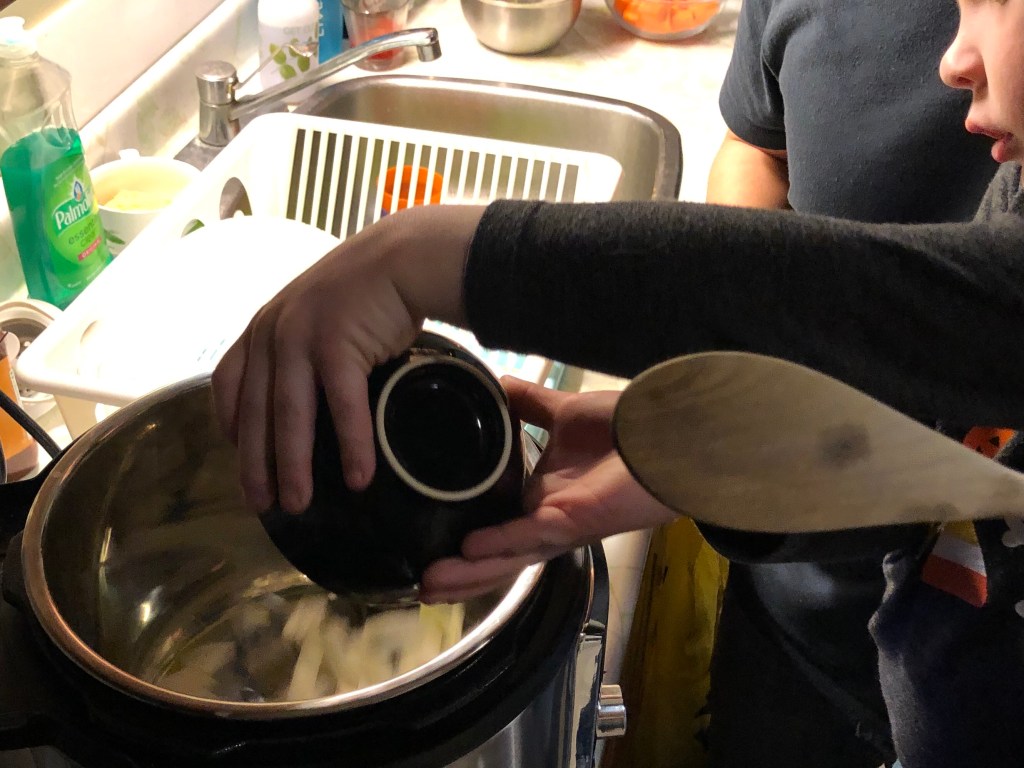
  • Cooking – Thank God for snacks, lunch and dinner time to help fill up the daily schedule! The hubby and I will use these moments to get T to help us make the meals and clean up. I also plan to carve out time each day for cooking activities, like making cookies, jello, popsicles and since it’s my birthday next week, I’m asking the hubby and T to bake me a cake!
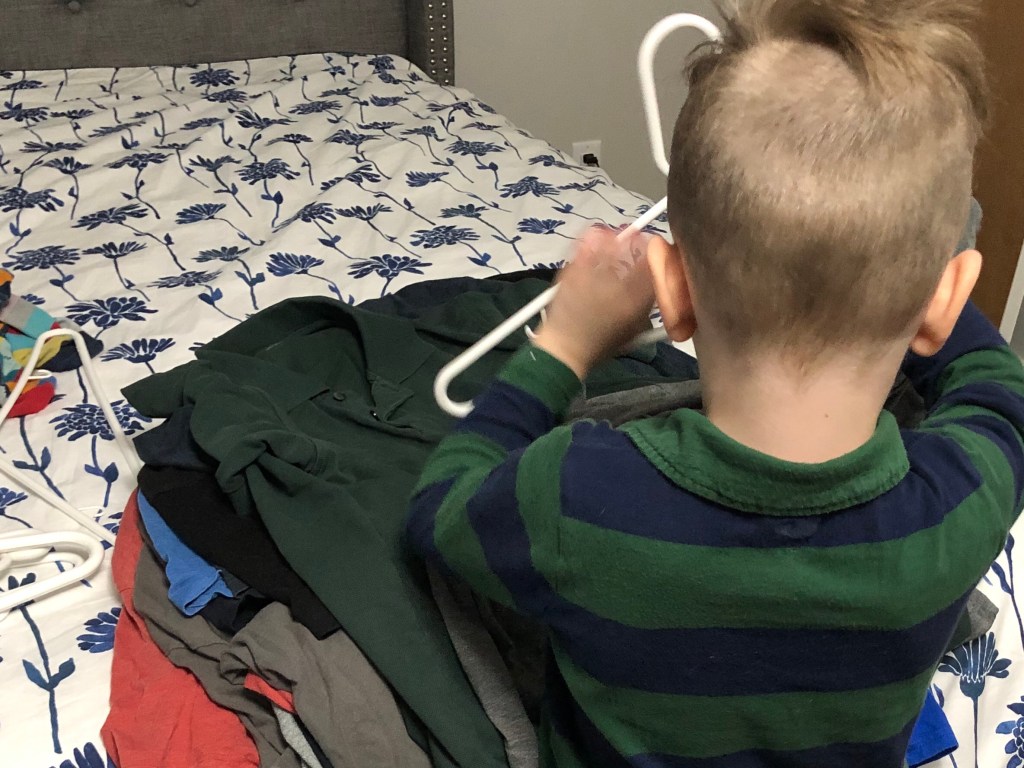
  • Chores – I believe it’s important for kids to build and learn independence from a young age, so I guess we have time to practice and build these skills in the coming weeks. Leaves from the fall need raking, laundry needs to be put away, rooms need cleaning, cats need to be fed, birdfeeders need to be refilled, and the list goes on.
  • Outdoor Play – We’re lucky to have two playgrounds and a school field in our backyard. We’re aware of the risks of playgrounds during these times, so we’re exercising precaution and social distancing. We’ll also vary up outdoor time with T’s tricycle, kite, soccer ball, pavement chalk, etc. And evening walks, we love our evening walks and nature hikes on the weekends.
  • Free Time – And thankfully, T’s at an age where he can also amuse himself. We’ll make sure we pace ourselves each day with ample free time for individual play and rest.

In the grand scheme, the next few weeks will be a minor inconvenience. We are so thankful we’re in good health – and hope to stay this way – and that we have the privilege to work from home, while essential workers are out there fighting this pandemic or filling crucial roles, such as keeping grocery stores open. We’ll share this message of gratitude with T.

Please stay well and safe. I wish you and your loved ones well during these unprecedented times.

COVID-19: Our Little One and His Wonderful Bubble of Oblivion

“It’s calm under the waves, in the blue of my oblivion.”

– Fiona Apple

When I was a boy growing up in the Philippines, I remember schools being closed because of typhoons. I would then spend the day or days playing, not a care or worry in the world.

I thought about this as I was lining up for two hours this Thursday evening at our grocery store, feeling like I was trapped in a zombie film, everyone stocking up on rice or toilet paper, while I wanted to make sure I had enough potato chips to last through social distancing.

Welcome to these surreal COVID-19 times.

The hubby and I had done emergency prep a few weeks back – stocking up on two weeks of items – because we like to be prepared and want to avoid panicked crowds. So this recent trip was a regular run to get items for the coming week. Still, this crowd felt ridiculous.

T is fairly oblivious to what’s going on – other than knowing the box of non perishables in the corner of our dining room is for “Emergencies” – and we are happy to keep it that way.

There is no sense freaking a child out who does not have the life experience to put it all into context. We’re sharing the bare minimum of what he needs to know, which is school is going to be out for the next three weeks and to wash his hands often.

When we learned the news of school and daycare closures, I felt disappointed – as well as panic of what to do about childcare.

On a very selfish note, T has made so much progress at school. We see the tremendous gains he’s made. So I worry that with three weeks off, he will lose that momentum.

But such is life. You roll with the punches!

In the grand scheme of things, we are lucky to be in good health, good spirit, living in a city and country that is prepared and measured in its response to this unprecedented situation.

We will make the most of T’s time off. The hubby will be spending quality Daddy and T time with him next week. I am so thankful for this moment for them to hang out.

The following two weeks are still a mystery but we will figure it out.

I also find it surreal being a parent during these strange times. Staying calm for T, when it felt just like yesterday my parents did that for me. Now, I also remember to check in on my Ma – like doing a grocery run for her today.

Alas, I simply try to bring myself back into T’s world, where it is business as usual. For our five year old, the world is still a safe and fun place full of play and wonder. As a parent, you want to hang on to and cherish that innocence for as long as possible.

My 5 Year Old‘s Surprising Connection to the Real Life Dennis the Menace

“Mischief just seems to follow wherever Dennis appears, but it is the product of good intentions, misdirected helpfulness, good-hearted generosity…”

– Hank Ketcham

Sixty nine years ago today, Dennis the Menace made his comic book debut and soon became a worldwide success. At its peak, the comic strip ran in over 1,000 newspapers, 50 countries and 20 languages and spawned TV and movie adaptations.

The story of a mischievous five-and-a-half year old boy, who can’t help but get into trouble, speak bluntly, and annoy those around him, especially his elderly neighbour Mr Wilson, certainly reminds me of our T.

T and Dennis are around the same age. Like Dennis, T has wavy blond hair, blue eyes, a good heart and self-determined nature, but also a mischievous streak. If you didn’t know about T’s condition, you’d think he is an intentionally wilful, non-compliant child, who likes to terrorize others with his mischief. And T looks adorable in overalls too.

But it turns out, they have a deeper connection.

As we learned a few years ago at an information session about FASD offered by the Children’s Aid Society, the real-life boy that inspired the character of Dennis had FASD, which T has an at-risk prognosis of.

Dennis the Menace was inspired by Dennis Ketcham, the son of series creator Hank Ketcham.

As told in a 2001 New York Times article, written at the time of Hank Ketcham’s death, he was working in his studio one day, trying to come up with a name for the character, when his wife stormed into his office, after their son had destroyed his bedroom, and screamed, “Your son is a menace!”

And the rest was pop culture history!

I found this connection very amusing and also enlightening. I mean, my mom even used to jokingly call T “Dennis the Menace.”

But there is also a sad side to this connection. It turns out the real life Dennis did not have as happy of a future as his ageless cartoon counterpart. His mother died of a drug overdose when he was 12. He struggled academically and was sent to a boarding school, where he dropped out. He enlisted and served in the military and suffered from PTSD afterwards. Perhaps the saddest part of the story was that he became estranged from his father, even up until his father’s death.

I found this part of the story very sad, because it is often tempting to project these same outcomes onto our little T. I have the same fears for him around his academic, social and overall future – all because of a four letter prognosis that has way more control over his and our lives than I would like.

But having this connection to an iconic character does have its advantages. It helps me better explain T’s prognosis and struggles to other people when I am able to draw a parallel to a well-known character.

And I am one to always try to look at the positive in every situation. And here’s where I ultimately focus on: Dennis the Menace, no matter how much trouble he lands in, he always finds a way to endear himself to others in the end with his good-hearted and charming nature. I see the same qualities in T.

Like a comic book strip, life gives us a new day, every day, that is a blank page filled with possibilities. We are ultimately the authors of our story. So my hubby, T and I will all do our best to make it the best one that we can for each other. And like a good comic book strip, find some laughs along the way.

Evening Walks with My Little One Are the Best Part of My Day

“Freedom: To walk free and own no superior.”

– Walt Whitman

Spring is not officially here till next weekend but you can feel it in the air.

We just had our first warm sunny weekend. Families and kids came out of winter hibernation to play in our park.

My evening walks with T, which we start when the weather gets nicer, are my favourite part of my day – other than bedtime, let’s keep it real here. I look forward to our walks, especially after a long work day.

I prioritize and make time for them, because they are important to me.

We try to wrap up dinner by 7:00 and then head out. Sometimes, it’s a walk around the block. Other times, we take his tricycle. Most times, it’s a long detour in the nearby school playground.

It’s almost a year since we moved to our house and we love our neighbourhood. It has a sense of history with its 1960s homes and tall strong trees. You feel the family values. Our neighbours on both sides grew up as kids in the area and are now near retirement.

Our home is near a school and so the playground and field are our little kingdom on evenings and weekends.

Although it’s an older community, more young families are moving into the area and it’s nice to become familiar with the kids in the area.

What I love most about our walks is that it’s quality time with T. I am disconnected from my phone, we talk to each other, we laugh, we play.

We enjoy each other’s company in silence, not saying much, but knowing what the other is thinking and feeling from the smile, laughter and exuberant play.

The time together helps us come down from our day. And the best part is that being outside in the fresh air helps T burn his endless energy so he often gets to bed earlier at night.

It truly is the simple things in life, like our evening walks, that mean the most to me and that matter the most in the long run.

On our first weeknight walk, just last night, there were still plenty of puddles in the playground from the melted snow. T wore his blue rain boots and the hubby and him dug little trenches, with their heels, so the puddles became canals.

They worked quietly but you felt their connection and enjoyment. I stood back and enjoyed watching them work together. The hubby is often busy with his work – working long shifts – so it’s a treat when he joins us for these walks.

As we walked home in the setting sun, T reached out for the hubby’s hand and extended his other hand to me. We walked, hand in hand, Daddy, Papa and T down the street towards home.

He had a content smile on his face. Not a care in the world.

Celebrating 17 Years with the Hubby

“It’s been a while.”

– Britney Spears, Break the Ice

Anniversaries are important to me. I celebrate these milestones to remind us where we’ve come from and of the journey still ahead.

March 8 is the day that the hubby and I started dating 17 years ago. It was around 3 in the morning, in an emptying nightclub, when we made it official, both drunk with giddiness.

Neither of us would’ve imagined the life that laid ahead of us, especially the possibility of even being married or adopting a child.

But life is full of surprises, if you just leave yourself open to receiving them.

T has changed our life for the better. Life is busier and hectic, but the hubby and I appreciate each other more. While we’ve never been tested like this, as individuals and as a couple, I feel we are stronger when it’s the three of us together.

It’s inspiring to watch the hubby be Daddy to T. T adores him. The hubby is a great father and he’s certainly more patient and chill than I am with T!

Today was a beautiful day. Bright, sunny and warm, the first sign of Spring.

The hubby let me sleep in a bit while he got T settled into the day. I woke up to them playing in the living room.

We then ran errands and had lunch at a ramen restaurant. Then lazed at home with a nice nap while the hubby and T watched Frozen 2. T adores the characters of Anna and Elsa and refers to them as his “Girl Puppy Team.”

We spent the late afternoon going for a walk in the neighbourhood, soaking up the warmth, inhaling the fresh air, and enjoying the extra daylight – yay, daylight savings time! There was noticeably more families in the park.

For dinner, I made Kare Kare with the Instant Pot. It is a Filipino style ox tail peanut stew, filled with eggplant, green beans and bok choy. Served with a steaming bowl of jasmine rice. I’ve been wanting to make this for a while. It was a bit of work but worth it for this special day!

I could not have asked for a more simple, relaxing and worthwhile way to celebrate 17 years together.

“I Love You, Alexa!” – Technology & the Child with Special Needs

“It’s not a faith in technology. It’s faith in people.”

– Steve Jobs

I was washing dishes one morning when I overheard T talking with our smart home assistant device, Alexa.

T: “Alexa… I love you.”

Alexa: “That’s nice of you to say.”

T: *Repeats over and over again* “Alexa…”

Alexa: “Sorry, I’m having trouble processing your request. If you continue to have issues, please contact support.”

Travis: “Alexa!”

Alexa: *shutting down noise*

It turns out that even an Artificial Intelligence being finds our little guy to be a handful!

When I look at the abundance of technology and the possibilities they present for T, I can’t help but compare it to what I had when I was his age. Personal computers were still a luxury. Nintendo was in its starting days. Betamax was on its way out. My family had a rotary phone.

Today’s technology opens up so many ways for children to learn, play, create, express themselves, and connect.

It also presents alternative options for children with special needs and their parents and educators.

T is a hands-on learner and we’ve started to incorporate different types of technology into his day-to-day life and they have benefited his growth:

Educational apps – Khan Academy Kids is a great free app that provides play-based learning activities that are short and range from alphabets and reading to numbers and counting. T and I do 2-3 activities in the morning and in the evening. ToDo Math and Interactive Telling Time are two other apps we’re playing with to build his interest and familiarity with math and telling time.

Creation apps – My hubby downloaded a bunch of free creation apps that T likes to play with that lets him pretend to be a baker by decorating cupcakes or to be a hair stylist by cutting pretend hair. T also likes digital drawing apps. It’s fun to see T’s imagination grow.

Communication apps – T’s Grammy and Grandad only see him once or twice a year, so they use FaceTime to keep in touch. When my Ma went overseas for four months recently, T chatted with her via Facebook Messenger.

Camera apps – T sneaks off with my phone from time to time and it’s fun to see the photos he takes. I often see them by surprise when I am on my commute to work. They bring big smiles to my face as I see the world through his eyes in snapshots of time.

Smart devices – T is comfortable and chatty with our Alexa smart home device, often asking her to play music, tell him the weather outside, and even to ask her to fart. It’s very amusing to see Alexa grow weary and tired of him.

It’s incredible how quickly kids figure out how tech works. As T gets older, I have no doubt he will dabble with video games (can’t wait to game with him), social media, and whatever comes after.

I look forward to introducing him to maker culture, such as robotics, that will allow him to build STEM skills. T loves to break things, tinker with them and to put things together. I am optimistic he will enjoy and do well in this area.

As with all technology, monitoring its use by little kids is important. I’m mindful but not overly obsessive about screen time recommendations.

I also expect the important conversations we’ll have one day about online safety, data privacy and how to navigate himself as a digital citizen.

But for now, I will enjoy the time we spend together playing, learning and having fun on Khan Academy Kids. We’re usually half sitting and half lying down on his bed, his head pressed against mine, my hand holding my phone away from his face, and his fingers tapping on the screen, following the instructions provided by the friendly digital teacher.

These moments illustrate that the human element in technology is so important, as we play, learn and grow together. As T’s profession of love to Alexa shows so well, the most impactful technology are those that enable meaningful human connection.

The Healing Therapy of Pets for Children

“An animal’s eyes have the power to speak a great language.”

– Martin Buber

When we lived in our former home, T and I would enjoy early Saturday morning walks in the park. At around 9, a group of regulars would gather with their dogs and T would never be shy or afraid about going up to pet them.

One time, he got so excited to be amongst the dogs that when one of the owners threw a ball and yelled, “Catch,” T screamed excitedly, “I got it!” He bolted out into the field, while the half dozen dogs stood and watched him chase the ball.

There is a lot written about the therapeutic powers of animals for children, including those with special needs, in helping them overcome challenges, regulate their emotions, stay safe, and to learn about friendship and social behaviour.

I see this on a regular basis when T and I go for our walks. Whenever a dog comes around, T gets very excited. But I also see a genuine kindness and care. His voice softens, he pets the dog gently and he even tries to kiss them.

Most of the time, I don’t get scared of the dogs harming T; in fact, it’s often the opposite. I worry that he’ll get over excited and aggravate the dog, like pull his tail.

My hubby and I have been together for 17 years – this Sunday! – and we’ve had a long history of pets. In 2005, we adopted a cat named Harley and six months later, his childhood cat kittyboi moved from the East Coast to live with us. They passed away long before T was born.

The summer before T entered our lives, when we had just about given up on adoption working out for us, we adopted two young cats, a bonded pair named Kyrie and Lanaya.

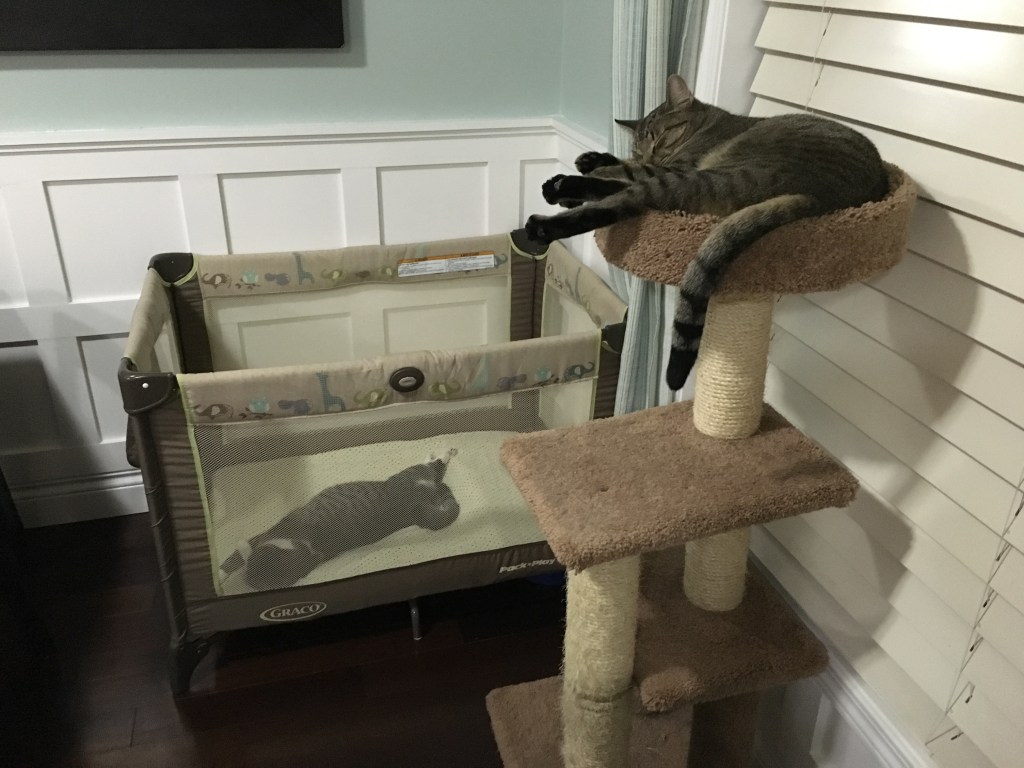
The two cats were the centre of our home life and then T came along and shook everything up. Little did the cats know during the early days – pictured below – that T would be a long-term tenant.

I often feel guilty that we don’t spend as much time with the cats these days. They are often hiding in the basement when T is awake, because his loud and hyperactive nature – stomping his feet, chasing after them – does not mesh well with their calm and subdued personality.

We always coach T to be gentle and calm around them and to tell him that although he means well and is just trying to be playful, his approach scares his fur siblings.

Truth be told, T would be really well suited for a therapy dog. If we didn’t have Kyrie and Lanaya already, we’d consider a therapy dog for T. But it wouldn’t be fair to our dear cats to add another member to the family.

But life is a journey and we all grow every day. And it’s such a pleasure to see T grow in his skills to relate to others, including his fur siblings.

One recent Sunday, as I was cooking in the kitchen, I heard T call out to sweet but skittish Kyrie. And I poked my head out to see what was going on.

Instead of his usual loud and hyperactive approach, T sat down on the stairs and called to Kyrie calmly. Kyrie reluctantly stayed at the top of the stairs, eyeing T apprehensively.

We’ve taught T the best approach is to stick your fist out and offer it to the cat to smell. So he did that.

I expected him to rev from 0 to 60. But I watched him slowly go to the top step and sit down.

“Hi Kyrie,” T said gently and Kyrie slowly came to sniff his hand and even allowed T to pet his head and arched back. At one point, the arch in his back – a sign cats are scared or threatened – relaxed.

It was a nice heartwarming moment to witness.

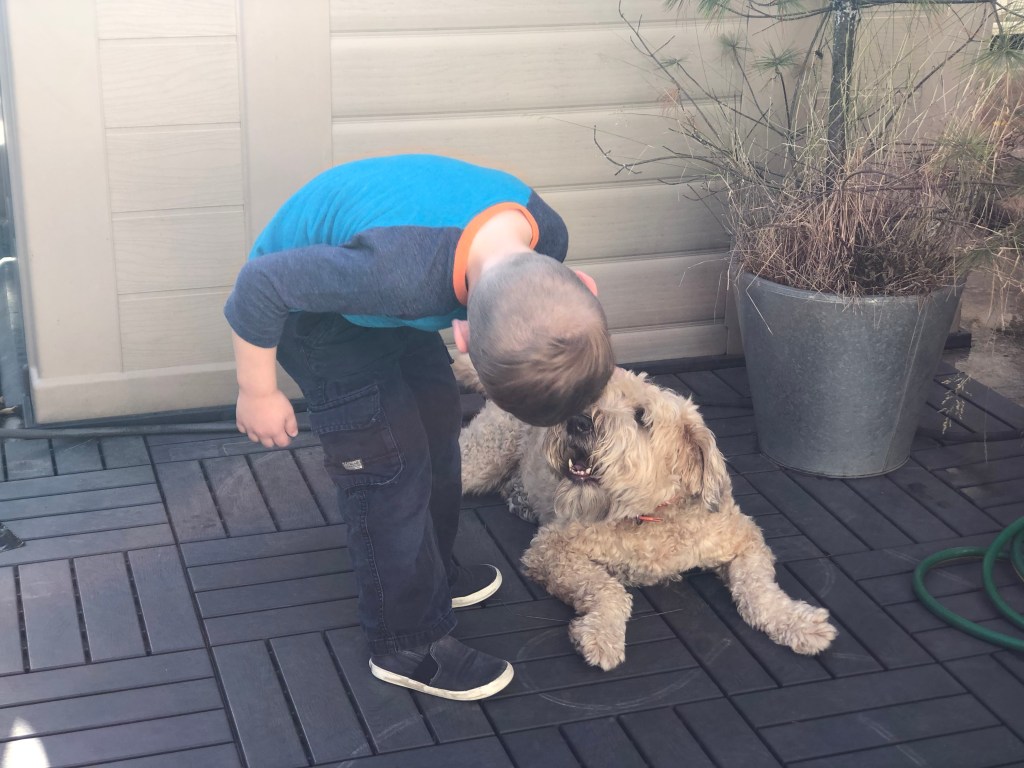
T with our friends’ dog at a bbq hosted at their home.

My 5 Year Old Takes Photos With My Phone Without My Knowing & For My Later Surprise

“There’s no greater joy than that seen through the eyes of a child, and there’s a little bit of a child in all of us.”

– “Walt Disney,” Saving Mr. Banks

One of the things I love most about being a parent is seeing the world, experiencing the joys of childhood, and living the firsts through the eyes of our little boy.

The world is filled with wonder, curiosity, innocence, newness, excitement and fun.

Seeing the world through a child’s eyes takes on a literal meaning when our 5-year-old takes my phone without my knowing and snaps photos. It’s a joy scrolling through my album on my commute to work and seeing little glimpses of T’s view of the world pop up unexpectedly for me to enjoy.

My favourite pic – which caught me by surprise on a subway ride to work – was the close up shot of his beloved stuffed giraffe (above). And I gotta say, the way he cropped the photo and focused on the giraffe’s happy smile had a flair of playful artfulness to it.

Here are a few others that offer a glimpse into what captures T’s attention and interest. Anything with my hubby, little T or myself visible in the shot – while treasured photos – are not included.

Cute Little Toes”

“Daddy’s Work”

T generally gets interested in trying to figure out how things work.

Thinking about the waterpark.

One of T’s countless cars. And yes, our dining table is filthy!

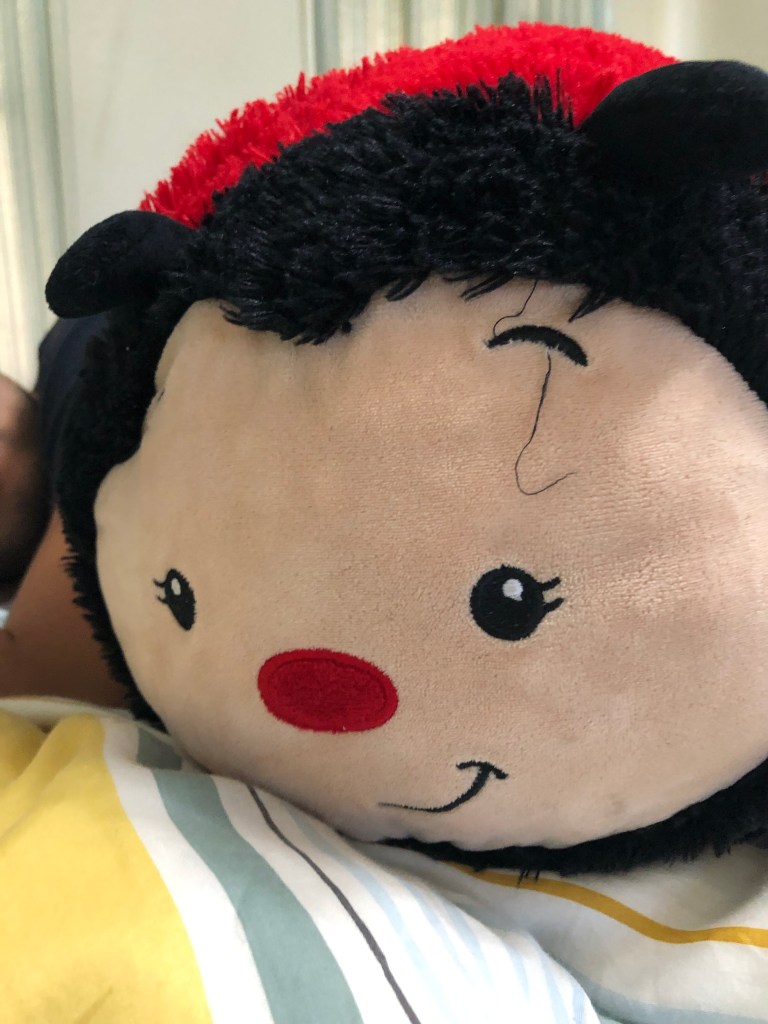
T’s beloved ladybug. He’s had this since he was a baby, living with his foster family. This face and smile kill me every time. It was a nice surprise to see this pic on my phone one day.

Watching Our Little One Learn About Friendship

“We didn’t realize we were making memories, we just knew we were having fun.”

– Winnie the Pooh

On a recent Friday evening, my hubby and I were watching T play at our local McDonald’s PlaySpace; it’s our weekly weekend ritual. T ran around in his usual excited way, making loud dinosaur roars. After a few minutes, he came out of the massive structure and said, “No one wants to play with me!”

I encouraged T to go back and ask the kids, who were older, to play with him. T tried to no avail, but then another girl started to play with him. They had a lot of fun running around, until the girl got very excited, which then irritated T and he ended up slapping her on the arm. We asked him to apologize, which then caused a tantrum, so we went home.

On the drive back home, we talked about what happened. I told T the girl was just trying to play with him and that next time, he should use his words to tell a kid to step back, instead of slapping them.

Friendship is something I think about often. Research and anecdotal data consistently shows that kids with FASD – of which T has a prognosis of – often have a hard time making and keeping friends. Common reasons include a lack of understanding of social cues and behaviour or dysmaturity, when one behaves at a less mature level than their peers.

I find it very sad when I read the stories on our online group of other parents who talk about how their children’s friends outgrow them or how they get bullied. Having had a few, thankfully not many, bullies as a student, I think about preparing T to respond to and to be resilient about potential bullying situations.

When I observe T and how he interacts with children, including his seven-year-old cousin, the common observation I make is that T has a challenge with regulating his emotions. I can see how social issues can arise and how his behaviour can alienate other children, despite good intentions.

One evening last summer, while we were playing in the park after dinner, a group of kids ages 9-10, asked T if he wanted to race with them. T got so excited and revved up from 0 to 60 within seconds. He ran to get his tricycle and charged past the starting line, while the kids were still gathered there on their bikes. He was so excited that he ended up just cycling on his own, moving ever so quickly, rather than playing together with the other kids.

In the grand scheme, no biggie. It was actually quite adorable to watch, but the kids ended up just playing without T, who couldn’t calm down from his excitement.

As a parent, the instinct is often to want to solve your child’s problems for them – as a parent should. In the case of friendship, my hubby and I think that the best thing we can do as T’s parents is to help guide and coach T and to help him foster the skills and intuition to navigate a social situation, without us holding his hand. For example, we were certainly not going to ask the other kids to play with him at the PlaySpace. That is something T has to learn to do on his own.

And he will learn.

As I’ve written many times, T has so many incredible strengths. Among them is his charming, funny and friendly personality. Once you get to know him, he will win you over. We are working with him – with thanks to amazing expert supports – to help him learn how to regulate his emotions, to control his response to situations when he is overwhelmed or over excited, and to vocalize his feelings.

It’s a work in progress, not just for T but for my hubby and I, as his parents.

And the wonderful thing about young children is that they often see the good in others and enjoy and live in the moment. They’ll generally make any situation into one of play.

One thing I am better at now is enjoying the moment. As a parent of a child with special needs, you are often on edge all the time when you are in a public setting – anticipating or responding to a social situation caused by your child’s behaviour.

I often read about parents who avoid going out in public to avoid unpleasant situations. This is not an option for us, because the only way T will learn about social behaviour is to be in social situations.

And this kid has come such a long way. Let me also say that when things go well, they go really well and it just fills my heart with unadulterated joy.

T has developed a great bond with a boy his age – let’s call him J – at our weekly McDonald’s PlaySpace outings. It is a treat watching them play together and I think to myself that T and J found kindred spirits in each other. Right before Christmas, J invited T to his 5th birthday party. Unfortunately, we were not able to attend, because we were out of town for Christmas. Sadly, we haven’t seen J since December and have a gift card we’re waiting to give him. If we see J again, I will ask his mom about having regular weekend play dates.

Late last summer, on one of our evening walks, T and I saw a little boy coming down the street on a big toy jeep that was being remote controlled by his grandmother, walking next to him. T’s eyes grew big real quick and he ran towards the jeep. This was the third time that week that we had seen them.

The grandmother offered me, in Mandarin, to let T go in the jeep with her grandson. The previous two times she offered, I had said no. I didn’t want T to get overly excited and end up either accidentally hitting the little boy, two years younger, or damaging the toy. But this time, I said yes.

I knelt down on one knee and asked T to look at me in the eyes as I succinctly explained – because you only ever have a few seconds of his attention, before his mind wanders elsewhere – that he is going to sit as the passenger and he is not going to take over the steering wheel from the little boy.

For the next hour, I watched T and the boy being driven around the pavement area near the park by the grandmother. It was so heart filling hearing the two boys’ loud hearty laughter and to see the uncontrollable wide smile on T’s face.

These are the moments that I bottle up in my mind and heart as a reminder that although every step of the journey forward will have social challenges, with focus, work and a determination to enjoy the moment, things will be ok.

Focusing on Potential and a Growth Mindset

“Everyone wants to live on top of the mountain, but all the happiness and growth occurs while you’re climbing it.”

– Andy Rooney

At the last parent-teacher interview at the Montessori, the last year before T got booted out, I went into the conversation expecting how it would transpire and I was right. The teacher told us all of T’s challenges: not sitting still, running around the classroom, still needs to work on his pencil grip, not socializing well with classmates. Halfway through the 20 minutes, I asked the teacher, “What would you say his strengths are?”

As a parent, it’s very easy to focus on the things that don’t go well or that need improvement. I can ramble off T’s challenges in my sleep. On the flip side, it’s easy to take for granted the things that are going well and to neglect finding the time to recognize, celebrate, and amplify the positives.

I started this blog to provide an honest portrait of raising a child with great potential and challenging needs. One of my goals is to help reduce the stigma of the label “special needs.” In T’s case, an invisible disability makes many things hard for him, but with the right supports, I truly believe that he can accomplish great things.

With a special needs child, the day-to-day challenges and the long-term worries consume so much of your finite mental, physical and emotional energy. You are constantly reacting to their behaviour or to the issues that are created due to their behaviour or you are proactively trying to mitigate unpleasant and negative situations. There’s often little time to reflect on the good things.

But it is so important to recognize the many strengths in a child with special needs. As the Edmonton Fetal Alcohol Network noted in a recent blog post, the vast majority of FASD research is focused on the challenges and impairments associated with the disability and the simultaneous lack of strengths-based studies can perpetuate a sense of shame, suffering and victimization and contribute to the stigma already associated with FASD – of which T has an at-risk prognosis of – and thus fail to recognize the immense potential and unique contributions that those living with FASD has to offer.

I first saw this video at a work training session. While the context was about how to manage change, this video resonated with me as a parent. The premise of this “How to Find Bright Spots” video is simple. As parents, we obsess over the things that are not going well. Imagine what happens if we obsess over the things that are going well and to find a way to amplify these areas of strengths.

T indeed has many strengths. He is bright, caring, funny as hell, very athletic, confident, charming, resilient, tenacious, determined, very helpful, very savy with technology and loves to tinker and build things. Recently, we’ve noticed what a great imagination he has and how he is a good storyteller.

We want to continue to build on his strengths. He enjoys our Saturday afternoon family swim time and I look forward to having him start swimming lessons. We get him involved at home with chores. We want to get him to try out a SportBall class this summer to build his athletic and teamwork skills.

Focusing on strengths and potential – while being realistic and pragmatic about the challenges – requires a big shift in mindset. It is not easy and there are many days when I struggle with this.

One thought exercise that always helps is a gratitude reflection at the start of each day. It includes a daily reminder to myself to focus on T’s personal journey and to remind myself the only metric that matters is who he and I are today in comparison to who we were yesterday, and the potential of who T can and will be tomorrow.

Love You Forever

“Love is patient, love is kind. It does not envy, it does not boast, it is not proud… It always protects, always trusts, always hopes, always perseveres.”

– 1 Corinthians, 13:4-7

Among the many wonderful books we’ve been gifted by family and friends for T’s personal library are those written by Canadian author Robert Munsch. He enjoys them and finds them silly and fun.

One beloved Munsch story we’ve had for a while but only started to read recently, because T is able to sit through it now, is Love You Forever, a book that is seemingly simple on the surface but profoundly rich in meaning once you dig deeper.

The picture book chronicles the life of a mother and son through his birth, adolescence, young adulthood and when he becomes a dad himself. Every night, the mother would wait until her son is asleep and then picks him up and cradles him in her arms to sing to him the following phrases: “I love you forever. I like you for always. As long as I’m living. My baby you’ll be.”

The first time I read this book, I had no idea what I was in for and I was in tears by the end. The story is so moving and the theme of the unconditional love a parent has for their child resonates with me now that I read it through the eyes of being a parent myself.

When I was in my early 20s, I was still living with my parents. On weekends, I often stayed out late, coming home at 3 or 4 a.m. At around 10 p.m., Pa would start calling asking me where I was and when I would come home. When I’d get home, he’d be sleeping on the couch waiting for me.

Pa was a worry wart. I would get so annoyed and explain that I was an adult, graduated from university and there was no need to worry. Often times, his response would be, “You will understand one day, when you are a parent.”

I moved out in 2006 at 25. Pa passed away 2 years later at 86. He never got to meet our T, who came into our lives almost a decade later in 2016. If Pa was still alive, he would’ve found his grandson very amusing and I would’ve been able to tell him that yes, I now understand what he meant.

My hubby and I are hands-on parents. I wouldn’t say we’re helicopter parents, but I now understand where Pa was coming from when he said that a parent will always worry about their child.

When we learned T’s at-risk FASD prognosis, it changed our view about parenting. It continues to consume a lot of our energy and thoughts. While we celebrate T’s many successes, we are always anticipating and planning a few steps ahead, whether it is the next day, week or far into the future – like identifying a plan for his care, in the event something happens to my hubby and I.

Being a parent makes me look back into how my parents raised us. It puts a different lens into their actions. I now understand the sacrifice they made, in their middle age, to immigrate to Canada so their children could have opportunities that we would never have had if we stayed in the Philippines.

I’m always learning and being continually humbled every day about how to be a parent. For me, it’s really about loving your child unconditionally and with abandon. Keep it simple and don’t overthink it (like I often do): spend time with your child; play together; listen to them; be patient, kind and forgiving; protect them; empower them to explore their world safely and with incremental independence; support and push them to be the best version of themselves.

For my hubby and I, loving T unconditionally means to celebrate and to build on his strengths and to accept and support his challenging needs. More importantly, to be patient, thick skinned, resilient and to be his greatest champion when the world reacts to or does not understand his challenges.

Did I ever imagine I’d be the parent of a child who some think of as the “trouble child” in school or the child who learns differently and needs supports to learn? Did I ever imagine I’d be the parent of a child that other parents complain about? Did I ever imagine I’d be the parent of a child who sometimes has embarrassing meltdowns in public and who sometimes tells us in public to “Shut up?” Not at all. Do I care? I’m learning to care less about what others think. Does all this matter? No, because our love for T overrides everything.
I bet that my Pa never imagined that at nearly 70, he’d uproot his life to immigrate to Canada, a foreign land where he would have very few friends, have to speak in a language foreign to him, give up a personal and professional network – all so his two kids could have a better life.

It’s funny and wonderful how life works in truly unexpected ways. In a way, I’d never have met my hubby or adopted a child, if it wasn’t for my parents.

It is an accepted fact that love will not heal the damage that prenatal alcohol exposure has wrought on T’s brain – the extent of which we are unsure of. But I have faith that unconditional love will help him – and us – through the speed bumps ahead. I believe it will help T to push through the things that will be harder for him than for other kids.

We’re certainly not always patient or kind with him or with ourselves. But we’re getting better at it. We remind ourselves to try to start and end each day by telling T positive things, like the fact that we love him. Most days, we’re good at this; some days are a disaster, especially those days when he’s pushed and worn down all our buttons. But I truly believe it goes a long way.

I also believe it is no coincidence that we finalized our adoption in court, three years ago, the day after Valentine’s and before Family Day long weekend – and that this is how this special anniversary will be celebrated every year.

What’s so profound about Robert Munsch’s Love You Forever is that it shows the circle of life, that everything comes full circle. The child becomes the parent at the end and it all starts anew, with the grown up boy now sharing the bedtime tradition with his daughter.

Earlier this month, I was finishing up bedtime stories and getting T ready for bed. He leaned over and hugged me and said without any prompting, “Papa, I love you forever. I like you for always. As long as I’m looking (unintentional wrong word), my baby you’ll be.”

Sharing A Love of the Outdoors with Our Son

“The ghostly winter silence had given way to the great spring murmur of awakening life.”

– Jack London, The Call of the Wild.

This Canadian winter feels forever. It’s now the time when registration for summer camp sites opens and it makes me long for hiking through forests, swimming in lakes, and eating campfire food.

Camping is an annual tradition that my hubby and I started nearly 20 years ago with another couple. Aside from missing two summers, we’ve gone every year and discovered many beautiful Ontario provincial parks, including Algonquin, Awenda, Bon Echo, Killbear, Pinery and Sandbanks.

Camping was something we were so excited to experience through a child’s eyes; that sense of adventure, snuggling together in a tent, and jumping off rocks into refreshing lakes.

We took T camping right away, 3 months after we adopted him when he was 17 months old.

We took him first to beautiful Killbear in scenic Georgian Bay (pictured above). We bought a large new tent and brought a portable crib and plopped it inside. T slept with his pacifier at that time and was such a trooper and loved roasted marshmallows.

We tried swimming that weekend but the water was too cold and he started to cry.

Later that summer, we went camping over Labour Day weekend at beautiful Algonquin. The weather dropped to 8 degrees at night. We all thought we were going to freeze to death but it sure made us bond as a family, as we huddled close together under layers of blankets.

What I love most about the outdoors is the healing and calming quality of fresh country air, being surrounded by greenery, hearing the soothing sound of the lake and animals, being away from the frenetic pace of the city life, not being connected to technology (although that’s less true today!), and having vast amounts of space to run wild in. 

It is these therapeutic qualities that I hope will bring periodic calm to the whirlwind frenzy inside T’s head.

I love when we used to be able to carry him on our backs with a toddler backpack when we’d go hiking. Now he can walk on his own, although whines about it when he gets tired and begs to be carried. Nope, sorry, you got legs!

Now that he’s old enough, I can’t wait to go back to Killbear and take him jumping off its well-known rock ledges into the cool lake – with a lifejacket on, of course!

Camping has not been without challenges. We have to watch T like a hawk, especially around the campfire or when cars drive through the campgrounds. When he had night terrors, it was anxiety inducing, because everyone would hear it in the quiet woods. He has high sensory seeking behaviors, so he’s usually covered in sand and dirt by the end of the day.

But it is during these moments that I remind myself that he is only going to be a kid for a short while and to just let him be. We are, after all, out in the wild.

The Story We Tell Our Son About His Adoption

“Don’t judge each day by the harvest you reap, but by the seeds that you plant.”

– Robert Louis Stevenson

February marks the 3rd anniversary that our adoption was finalized and when our sweet little boy turns 5. Where did the time go?!

There was a time when T enjoyed hearing stories after our bedtime books. I’d tell the same three stories in the same order: Snow White, Three Little Pigs and the T story.

The T story, whether he realizes it or not, is a simplified story about his adoption.

It goes something like this:

“Once upon a time, there was a little baby named T. He had blond hair, blue eyes and a beautiful smile and laugh that made everyone happy.

Elsewhere in the same city, Papa and Daddy had no children. One magical day, T came into their lives. It was the happiest day of their life.

Every day, they played together, sang songs and danced, went to the playground and park, and ate snacks. They loved to go swimming, camping, flying on an airplane to the beach. And in winter, they went sledding and visited Santa.

Papa and Daddy loved T very much and T loved them too. Papa, Daddy and T were a family and now that they found each other, their lives are complete.”

I have zero doubt in my heart that T thinks of us as his family. Thanks to a great start with a fantastic foster family, we never experienced some of the trauma or attachment issues that adopted children often experience.

I often wonder when he’ll ask or wonder about his birth family. We are ready to share that story honestly with him when he’s ready and in an age appropriate way.

The great thing about kids and their innocence is that they just don’t care and love and accept others as they are.

I remember when both my hubby and I picked him up together from daycare a year ago. One of the kids looked at the hubby and then at me and said, “Another daddy? Two daddies?!” And T said loudly and proudly, “Yah!”

A few years ago, when T first came into our lives, a colleague told me to enjoy it, because it just flies. And it’s so true!

T is the best thing that’s ever happened to my hubby and I. We may have some challenging days and moments, but the joy, love, fun, rewards and gratitude in our hearts far outweigh the hardships.

Happy birthday and adoption anniversary to our lovable little pest!

It’s Ok To Not Be Ok: Grief, Acceptance & Self Care for the Special Needs Parent

“Learn from yesterday, live for today, look to tomorrow, rest this afternoon.”

– Charles Schulz

After the first two weeks that T arrived into our home at 15 months old, I told my hubby, “This is a piece of cake.” By the third week, I told my hubby I wanted to give him back.

Parenting, as I’ve since been greatly humbled to learn, is a lifelong marathon, not a sprint. My hubby and I never expected it to be easy, but we never planned for the mental, emotional and physical challenges of raising a child with special needs.

I was halfway through my 30-week adoption leave when we received T’s prognosis of at-risk FASD. The news hit us very hard and it impacted me on a heavy emotional level in the beginning.

I read up as much as I could about FASD. On the positive side, I became super informed very quickly. On the bad side, I started to obsess about every detail. T had a big meltdown… oh no, he’s going to end up in prison like many FASD kids do. T hit a child in the park… oh no, he’s never going to make friends, because FASD kids have difficulty making and maintaining friendships.

My mind played these endless games and I had a hard time containing or escaping my thoughts, worries, anxieties and fears.

They say that when you receive a prognosis – or diagnosis – you go through stages of denial, grief, and eventually acceptance.

I remember a few afternoons during my leave when I’d prepare dinner and T would be playing in the living room and I‘d randomly burst into tears. I felt so helpless for our sweet, beautiful little boy.

It’s enlightening to look back at our four-year and counting journey and to chart my hubby and my through those cycles. I’d say we were lucky to get through the denial stage quickly, because of what we knew about T’s history and we tend to be pragmatic in nature.

The grief I felt in the first year was very hard. I started to look for positive success stories and found very little through online videos and groups. Then on these groups, I’d read about the hardships these children encounter in life, as they enter adolescence and adults, and that it never really goes away. And that part was so hard to process.

And then, we’d have a regular check in with our developmental pediatrician and T would do so well at these check ins. So we’d be injected with renewed hope. And then something shitty would happen to bring us crashing back down.

The lowest emotional low I’ve experienced so far was dealing with T being booted out of the Montessori last year and then his specialized kindergarten program being cancelled a few months later. I truly felt like the world was against our little boy and that his future was cemented towards a dark and futile path. But somehow my hubby and I got through it.

I don’t remember exactly when or what allowed us to move from grief to acceptance, but it was around the time I went back to work. It felt a heaviness had lifted. We stopped talking about the “what if” and started talking and acting in terms of “what now” when shit, big or small, happened. Although T has yet to receive a formal diagnosis, we know we are facing – and he is facing – a lifetime of challenges. It’s not a matter of if, it’s a matter of what.

It’s this acceptance that allows us to persevere each day to be focused, driven, positive and optimistic in dealing with whatever is thrown our way. Most days are good; others, not so much. And when hard things come our way, we eventually get through them and that’s what I remind myself of when I’m having a trying moment.

I wish I had a magic formula to offer other parents going through their grief cycle and who are struggling with day to day challenges. One thing that has helped me move forward in a positive way is to acknowledge that it’s ok to not be ok and to realize the hard truth that I am of zero value and no help to T if I also don’t take care of myself.

Self care is so important. Here are a few strategies that have been helpful for me.

  • Talking and writing about things. Thank you for listening and for reading along, whoever and wherever you are!
  • Work life balance and compartmentalizing. When I’m at work, I am laser focused on my work. When I’m at home, my focus is T and I rarely do work on evenings and weekends. This is one of the biggest philosophical changes I’ve made for T.
  • I say “No”. No to invitations for volunteer or extra-curricular activities. No often times to special events. And yes to more unstructured and free time on evenings and weekends.
  • I take “mental health” days off once a quarter as alone time to recharge. And because T loves to torture me, he usually gets sick during these exact moments!!!
  • I tune out noise. I don’t look at parenting articles or listen to unsolicited parenting advice or feedback from people who think they know better. Sorry, I don’t have time!
  • I ask for help. My hubby and I are so blessed to have many amazing services for T. Surrey Place offers family counseling services and I gladly added myself to the waitlist. For the past 2 years, I’ve had super helpful monthly chats with a fantastic child psychologist. She helps me articulate my thoughts – positive and not – and helps me focus on pragmatic and positive ways forward.
  • I exercise. I go during my lunch break to the gym next to my work. Gotta love endorphin rushes!
  • I laugh and try to have a perspective about things. Yes, we have challenges. But in our case – and I know it’s not the same for other parents in similar situations – they really are 20% of the big picture. They just seem to suck all the attention, focus and energy away from the good 80%!
  • I celebrate the victories. Practicing gratitude helps a lot. When I’m able to take a moment to itemize the incremental gains and successes from the past 24 hours, it really puts into perspective that the hard and annoying stuff are not that bad in the grand scheme.
  • My hubby and I are part of an online support group. This group provides a great way to connect with other families and help us feel less alone when we see others going through similar experiences.
  • It really helps to pay it forward. Just as others have paved the way for my hubby, T and I, we want to do our part to raise awareness and to advocate. Part of that includes helping reduce stigma about special needs and to normalize the experiences that these families go through, whether it’s denial, grief, or just trying to get through the day-to-day grind.

My hubby and I are fortunate and blessed. T continues to make many positive gains. Hard stuff don’t feel less painful but they feel easier to process and to recover from – and I hope it stays that way! We do our best to focus on that. But we are also better now at cutting ourselves some slack when things go awry. At the end of the day, it’s ok to not be ok and acknowledging that is part of the process of finding your way through it.

Bedtime Stories Our Son & Us Loved to Read Together

“The more that you read, the more things you’ll know. The more that you learn, the more places you’ll go.”

– Dr. Seuss

On a recent Friday evening, we got home late from McDonald’s PlaySpace. After a long day at work, I was just done. We put T straight to bed and skipped our routine of reading books. I laid on my bed and started to catch up on brainless entertainment sites, when he shouted from his room, “Papa, you forgot to read me stories!” As tired as I was, I begrudgingly yet happily obliged.

Research consistently shows the importance of early literacy and for caregivers to read to children at home. As noted by the American Library Association, a study of 3 to 5 year olds who had been read to at least three times per week found the children were two times more likely to recognize all letters, have word-sight recognition, and understand words in context.

Bedtime stories was a routine my hubby and I felt was important to introduce to T, especially when he learned he was behind in his speech and language development.

Reading to T is now one of my favourite parts of the day. I have fond memories of the early days when he’d sit on my lap, my arms wrapped around his tiny frame and book in hand. These days, he sits next to me on his bed, sometimes with rapt attention; other times, restless and fidgety.

It’s been such a joy watching his speech and language, vocabulary, print recognition, and imagination grow through books. I love when he now asks questions or makes connections about the stories or to watch in silent amusement as he incorporates the characters into his pretend play, like a recent time when he wrapped himself in a blanket pretending he’s a caterpillar spinning into a cocoon.

We’re lucky to have lots of book-loving family and friends – and I’m also a librarian, so I’m surrounded by books. We’ve been gifted or have borrowed many books over the years and here are a few books that T has particularly loved reading over and over again or that hold a sentimental value for me.

First 100 Words (Bright Baby) by Roger Priddy

This board book, gifted to us by the Surrey Place, holds a special place in my heart, because T and I spent time every day in his toddler years going through every word on each page, trying to build his vocabulary. It was such a joy the first time he correctly pointed to every word on the page and when the finger pointing became vocalized words, such as “ball,” “cat,” and “dog.”

Daddy, Papa and Me by Lesléa Newman

Good children’s books help drive inclusion by showing the diverse realities of today’s families. Two friends separately gifted us a copy each of this wonderful board book about a day in the busy life of a toddler and his two fathers. Amusingly, the two illustrated dads could kinda pass for my hubby and I.

Tickle by Leslie Patricelli

A short but fun board book about a baby that loved to be tickled by his parents. My hubby and I had a lot of fun reading this and we made it very interactive with lots of tickles. T has long outgrown this book but he is still always in the mood and desire to be tickled by his two tickle monster daddies.

The Very Hungry Caterpillar by Eric Carle

This lovely board book was one of the first stories that had a real beginning, middle and end that T and I read, telling the story of an egg that hatched into a caterpillar that ate, ate and ate until he spun into a cocoon and emerged as a beautiful butterfly. T loved the tactile elements, such as putting his finger on the holes of the hard pages that represented the hungry caterpillars’ ravenous path.

Grumpy Cat by Britta Teckentrup

Not to be confused with the now deceased Internet sensation, this board book tells the story of a curmudgeonly cat who meets an orange kitten one night that would not leave him alone. A wonderful story about friendship and it was nice for T to draw the parallels between the two fictional cats with his two real-life feline siblings at home.

Toronto ABC by Paul Covello

This board book was one of the first ABC books that T and I read and helped him to start learning about his alphabets. Major bonus points that it incorporated the landmarks of our city. It’s been fun over the years for our family to take T to these landmarks, such as Toronto Island (I), Niagara Falls (N), and CN Tower (T) and for him to make those connections from early reading memories.

Chicka Chicka Boom Boom by Bill Martin, Jr. and John Archambault

This bestselling classic also helped introduce T to his alphabets – upper and lower case. It’s a silly book, written so you can read it with a lyrical and upbeat rhythm and rhyme. I remember laughing out loud one night when T said, “I want Chicka Chicka Boom Boom!” The combination of those four words and his bratty demanding voice still makes me chuckle when I think about it.

Five Little Monkeys Jumping on the Bed by Eileen Christelow

This nursery rhyme classic was a favourite, because of its silly nature and it was also one of the first picture books that introduced T to the idea of a predictive and repetitive narrative structure, as the story repeated itself until five monkeys were whittled down to one monkey. I remember fondly when I’d let him scream out the last time the doctor said, “NO MORE MONKEYS JUMPING ON THE BED!”

Zoomberry by Dennis Lee

Dennis Lee’s poetry has a lyrical whimsy to them. This story of a boy who drifts off into a magical land during bedtime is also beautifully illustrated by Dusan Petricic, whose work I love. It was one of the first books that made T aware of rhyming structures. I miss his sweet toddler voice reciting along with me, “Zoomberry, zoomberry, zoomberry pie.”

Even Firefighters Go to the Potty by Naomi Wax and Wendy Wax

This silly flap book was recommended to us by the special needs resource consultant from Community Living Toronto that was working with T in the Montessori. Potty training was excruciatingly painful for my hubby and I and this book provided a humorous encouragement to drive the point home to T. It didn’t quite do the trick, but this was still quite fun to read together. I’m glad to say that potty training is now a distant memory!

The Darkest Dark by Chris Hadfield

A young Chris dreams of being an astronaut but is afraid of monsters in the dark. He is inspired to overcome his fear the evening he watches the first landing on the moon. Life was imitating art for us, because we started to read this story when we were having difficulties with sleep training and T not being able to fall asleep without one of us sitting with him. Thankfully, those days are behind us!

And Tango Makes Three by Justin Richardson and Peter Parnell

I bought this picture book for my hubby in 2005, when it was first published. It tells the real-life story of two male penguins who helped hatch an egg and raise the penguin. It was a nice full circle moment to share this story with T; friends unknowingly bought T his second copy. During a recent reading, T pointed to the penguins and said, “That’s daddy, papa and (T).” Heart-melting, I tell ya!

The Very Impatient Caterpillar by Ross Burach

This hilarious book is one of the many many gems we borrowed from the library and tells the story of an impatient caterpillar who learns self control and impulse control through a journey to becoming a butterfly. It was also the first book that T and I read that uses a comic book – word bubbles – format. I’m a huge comic book and graphic novel reader, so it makes me happy to see him enjoy this format.

Where’s Waldo? by Martin Handford

It’s hard for me to articulate what a big deal it is for a hyperactive child like T to sit down and want to look through a dizzying page to find Waldo. He hasn’t found him on his own yet, but I chuckle when I think about the time I found and pointed out Waldo to T and he asked to try it. He didn’t find Waldo and asked me to point him out again. Then he asked to try again. As he skimmed the page, I said quite sarcastically that Waldo has not moved. Then he screams loudly, “FOUND HIM!”

Green Eggs and Ham by Dr. Seuss

Getting T to sit for a prolonged period is always a challenge, so it speaks to the enduring and special magic of Dr. Seuss when a lengthy, silly and non-sensical poem could capture T’s attention from start to end. There were nights when I’d be so tired that I would rather poke my eyes out than read a Dr. Seuss book, so I had to hide these books at one point. But I have to admit that when I’m in the mood, this book – with its insane, silly, staccato, rhyming rhythm – is a lot of fun to read out loud. When I have my act together one day, I want to actually make green eggs for T’s breakfast just for fun.

Why Early Intervention Matters for Children with Special Needs and How to Advocate for It

“I believe, I believe, I believe in you.”

– Kylie Minogue

When we first received T’s prognosis of at-risk FASD, one of the things I obsessed over was how many blocks he could stack, because it was a question asked during his assessment. We practiced every day as if his life depended on creating a tower with a minimum of three blocks. In hindsight, it was so silly to worry about this, but when you’re processing hard news in real time, like your child’s potential outlook, emotions often overcome logic.

But the great thing about getting T’s prognosis was that it connected us with early intervention services that were – and continue to be – so valuable for his development. Much like the blocks T learned to stack, I think of a child’s development like stacking building blocks. You try to create a solid foundation and then stack new skills, knowledge and experiences on top.

But for kids with special needs, obstacles get in the way that are comparable to the child having missing or broken stacking blocks, a damaged or deficient foundation to stack on, or the child requiring additional temporary or permanent scaffolding to support their building.

One of the most valuable lessons we’ve learned in our parenting journey is that early intervention is incredibly important in a child’s development.

Research from The Center on the Developing Child at Harvard University has shown that the brain and the foundation for a child’s learning, behaviour and health are most flexible and malleable during the first three years of life and they form the foundation upon which cognitive and language skills develop. High quality early intervention supports can alter and influence a child’s trajectory and improve their outcome. The early years are crucial and intervention is less effective in adolescence.

A short video about Surrey Place, an amazing organization that has made a huge impact on T.

Here’s an overview of early intervention supports T received and how they made an impact:

Speech and Language Therapy

The American Speech-Language-Hearing Association defines speech-language pathology as work that includes the prevention, assessment, diagnosis and treatment of speech, language, social communication, cognition-communication and swallowing disorders in children and adults.

Immediately after we received T’s prognosis, we were connected with speech and language therapy services from Surrey Place. A speech pathologist worked with my hubby and I to develop the skills and knowledge to work with T to develop, encourage and grow his speech and language skills. They also recommended additional resources – such as books, toys, or online resources – to supplement our learning and a set of tools, such as The Hanen Centre’s It Takes Two to Talk program.

T received a review assessment every few months from the speech pathologist to monitor his progress and to then provide recommendations to continue his growth.

Some of my favourite memories on our parenting journey include taking T to Surrey Place on Friday afternoons when he did an eight-week intensive intervention block. They had a huge indoor playground and because it was a Friday afternoon, we had the playground to ourselves. The speech pathologist used the space as an incentive for T to finish his “work.” Those were such fun times.

T is a chatterbox these days. Although we are currently dealing with some challenges around a potty mouth – picked up from older kids on the school bus – we are so thankful for the progress he’s made, largely thanks to the early intervention support.

Occupational Therapy

The Canadian Association of Occupational Therapists defines occupational therapy as a type of health care that helps to solve problems that interfere with a person’s ability to do everyday things like self-care (e.g. getting dressed, eating), being productive participants at school or in the community, or leisure activities (e.g. sports, social activities).

We’ve been pretty fortunate that T’s gross motor (e.g. walking, running) and fine motor skills (e.g. feeding himself) have been developing well and that needs in this area are minimal. Thus, OT services we’ve received have been infrequent – and include check ins at home or school.

Children, especially those with special needs, are visual learners. This was one of the best lessons my hubby and I were taught by our supports. They created and provided tools for us that have included visual aids for self help skills that have included washing hands and getting dressed.

Through OT services, we learned that T seeks proprioceptive inputs, such as chewing objects, running around, walking on tiptoes (which he continues to do), and throwing himself onto the ground, as a way of self soothing and calming himself in an over stimulating environment. This insight has helped us provide recommendations to his school and daycare – to varying degrees of efficacy – on how to respond to his behaviours.

Behavioural Therapy

Healthline describes behavioural therapy as an umbrella term of types of therapy that seek to identify and help change potentially self-destructive or unhealthy behaviours. It functions on the idea that all behaviors are learned and that unhealthy behaviours can be changed and focuses on treating and changing current problems.

Of all the things that my hubby and I have read about FASD, it is the behavioural challenges that give us the most pause. In worst case scenarios, we’ve read about adolescent children having run ins with the justice system or whom manifest secondary challenges, such as mental health issues. We anticipate that behaviour – or responses by others to how they perceive T’s behaviours – will be one of the biggest challenges T will face in life.

So when we learned Surrey Place had behavioural therapy services, we inquired about them, even though we knew the wait list to access services often spanned years.

After two years, we were taken off the waitlist and received a behavioural assessment. The timing was perfect, because we were having some challenges around compliance, defiant behaviour, and hair-raising tantrums and meltdowns. The behavioural therapist was incredible and provided pragmatic recommendations on how to deal with our pressing concerns around T’s behaviour.

The behavioural therapist has also pointed us towards fantastic positive parenting resources, including registering us for a three-part positive parenting course – for free! – which I found incredibly helpful and eye-opening.

We were put on a further waitlist for another year and have just started ongoing behavioural therapy consultations with Surrey Place – and she’s also observed T in his school and daycare environments and have provided some great suggestions.

This is still a new and ongoing process for our family and one we have ongoing struggles with. But we are seeing positive results and are hopeful we are curbing T’s trajectory towards the right direction.

Educational Supports

T started junior kindergarten last Fall and we are still learning about the different types of educational supports and programs available in the public school system. And the lessons learned and challenges faced will be shared on a separate post.

In T’s preschool/daycare days, we placed him in a Montessori environment, starting with the toddler program. We learned early on about Community Living Toronto, an organization that provides Special Needs Resource Consultants to work one-on-one with children in a daycare environment on a regular basis. We requested and received these services, on the basis that T needed supports around speech and language. We had not disclosed his prognosis with the Montessori – but did with the resource consultant – in the beginning.

T worked with two resource consultants in the Montessori and they were both so wonderful. They visited him once every two weeks, observed him, gave us detailed reports and provided recommendations to T’s teachers and to us to address issues such as turn taking/sharing, sitting still, and potty training. We were very diligent about following them, as they made a difference.

Two of our favourite resources in T’s toolkit came through our resource consultants: a book called “Even Firefighters Go to the Potty” to help encourage and motivate him to use the potty and a game called “Don’t Break the Ice” to help teach him about turn taking in a fun play-based way.

A video about Community Living Toronto, an amazing organization that has provide impactful supports for T.

How to Find Supports

Prior to adopting T, the only thing I associated the word “intervention” with was the television show about substance addiction. The past three and a half years have been an eye-opening, humbling and rewarding journey for my hubby and I to learn, in a hands-on way, about early intervention.

We have the following individuals and organizations below to thank for educating us and connecting us with the supports that have made a hugely positive impact on T’s trajectory.

For parents and caregivers starting on their special needs journey, these are the individuals you want to speak to. There are no stupid questions. Take advantage of every service that they provide:

Family Doctor

Our family doctor connected us to Surrey Place based on what we knew about T’s medical history – prenatal exposure to alcohol and drugs. Through Surrey Place, we also receive support from a developmental pediatrician who specializes in children with special needs. Both have been wonderful pools of knowledge and conduits to additional resources for T.

School Administrator

The Montessori School’s administrator let us know about Community Living Toronto when we disclosed that T was receiving speech and language services from Surrey Place. When we were starting to plan for T’s transition into public school for kindergarten, we were forthcoming about his prognosis and a principal helped connect us with a specialized kindergarten intervention program. We are now working with T’s principal to advocate for educational supports as he transitions into senior kindergarten. In short, principals and teachers – in general – can be great allies to connect your child with the educational supports they need to thrive in the classroom.

Work Benefits

I am fortunate to receive health benefits through my employer – and I realize this is a privilege and not a reality for everyone – and was able to get a few private speech therapy sessions covered before we were referred to Surrey Place. Other types of services that employment benefits plan may cover include wellness programs, such as family counselling, that may be of great help for parents and caregivers in their special needs journey.

Online Groups

My hubby and I are a part of a few private online groups. While we are mostly lurkers rather than active posters, it has been so helpful to be immersed in an environment with people who are facing the same challenges as you. You feel less alone, helpless, and crazy and in many cases, it’s been helpful to read about other people’s shared experiences and to then know about other types of services and supports to advocate for on T’s behalf.

It’s a Big Team Effort!

If it’s one thing that my hubby and I have learned about parenting, it’s that it is one big team effort.

We have so many incredible individuals on “Team T” – family, friends, school and daycare staff, medical professionals, social services staff – who are working hard and rooting for him to succeed.

Thanks to early intervention supports, T has made tremendous gains. I remember during our Age 3 check in with the developmental pediatrician at Surrey Place, T was on top form. Among the many tasks he was asked to complete was to stack blocks. I watched with anticipation to see how high he could stack his tower. 12 blocks high! Everyone in the room, including the speech pathologist and family psychologist, cheered him on.

I realize that T will need to learn a lot more than just stacking blocks to thrive in life and that there will always be a new curve ball waiting around the corner for T. But knowing that we live in a community that has such amazing services for the most vulnerable members of our society makes me feel optimistic, confident and less apprehensive about what lies ahead.