We spent March Break in Mexico, explored an adventure park then celebrated my 45th birthday.
For the fourth year, we stayed at the same resort in Cancun. I prefer to try new places, but T loves it there.
In February, the resort made national news for an outbreak that made many travellers sick. Coupled with escalating gang violence, it was an antsy month leading up to our getaway.
We chose informed optimism over worry. The violence was 20 hours away. Norovirus could happen anywhere; and it might’ve been what I needed to lose my last 10 pound goal.
So with barf bags, adult diapers, probiotics and electrolytes packed – in case we got sick – we headed for 8 days of fun in the sun.
We were blessed with a wonderful time together.
We slept in, swam in the lazy river and pool, went down water slides and ate ice cream. T visited the trampoline park and I got alone time at the gym.
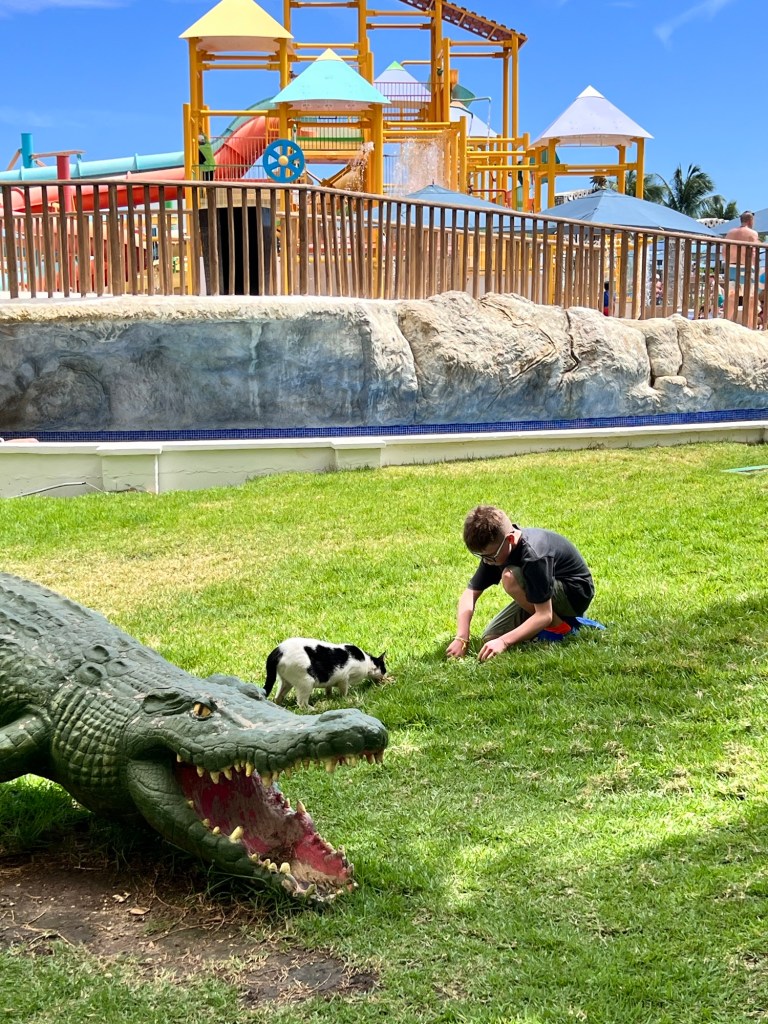
T remembered the three feral cats who lived on the resort and spent time with them every day – naming them Oreo, Cookie, Brownie.
The hubby and I enjoyed dinners by ourselves and were able to leave T in the room with his tablet; he ate beforehand.
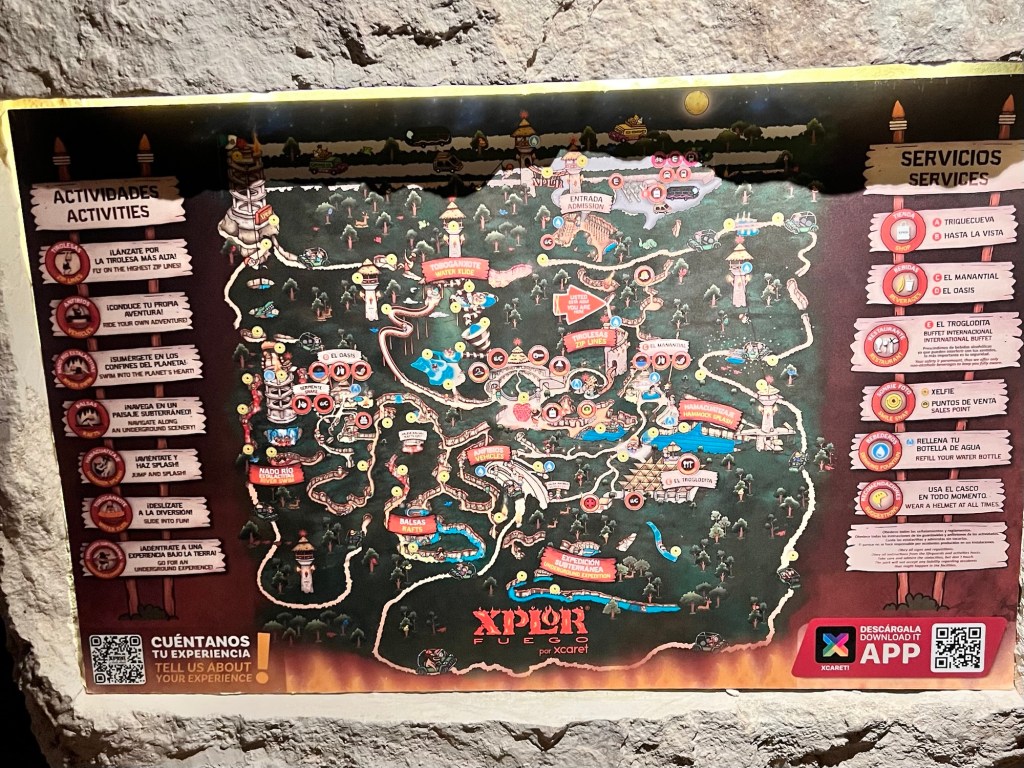
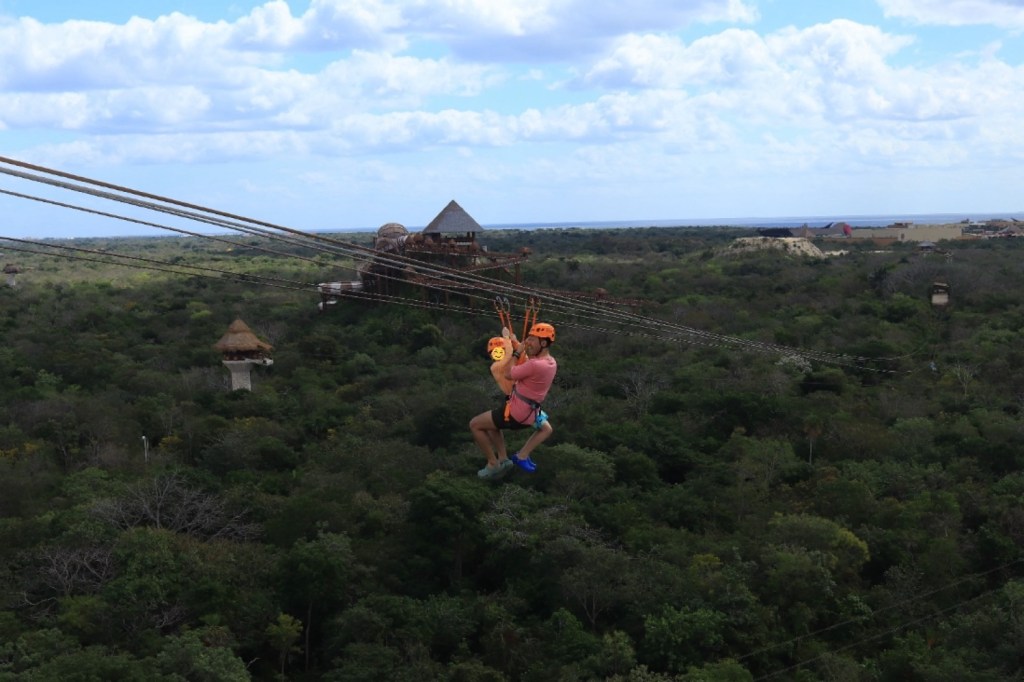
We also did a full-day excursion at XPlor Adventure Park in Playa Del Carmen.
I wanted to visit Chichen Itza, one of the 7 Wonders of the World, but I knew T would not enjoy it.
I had also booked us for T’s first scuba dive, but it was cancelled the morning of, because of high winds. So we went to XPlor instead.
T had a great time!
The park had many activities and you choose your own adventure.
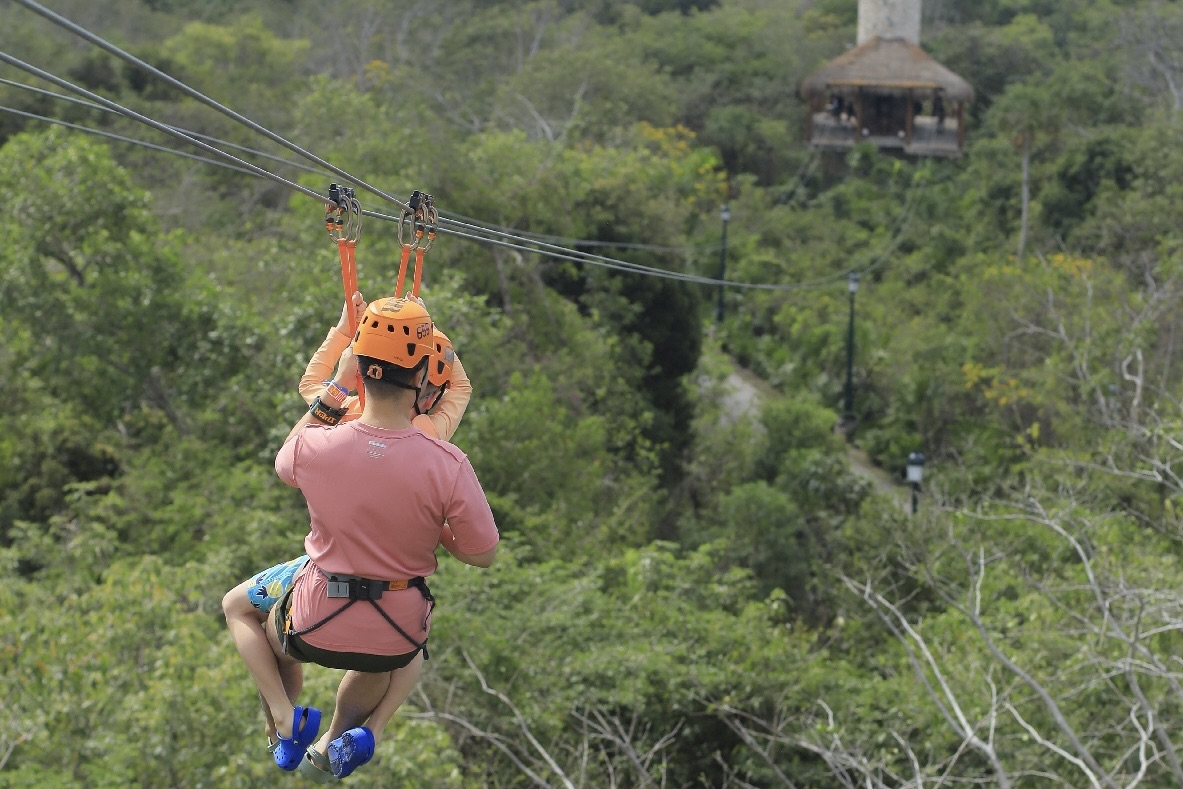
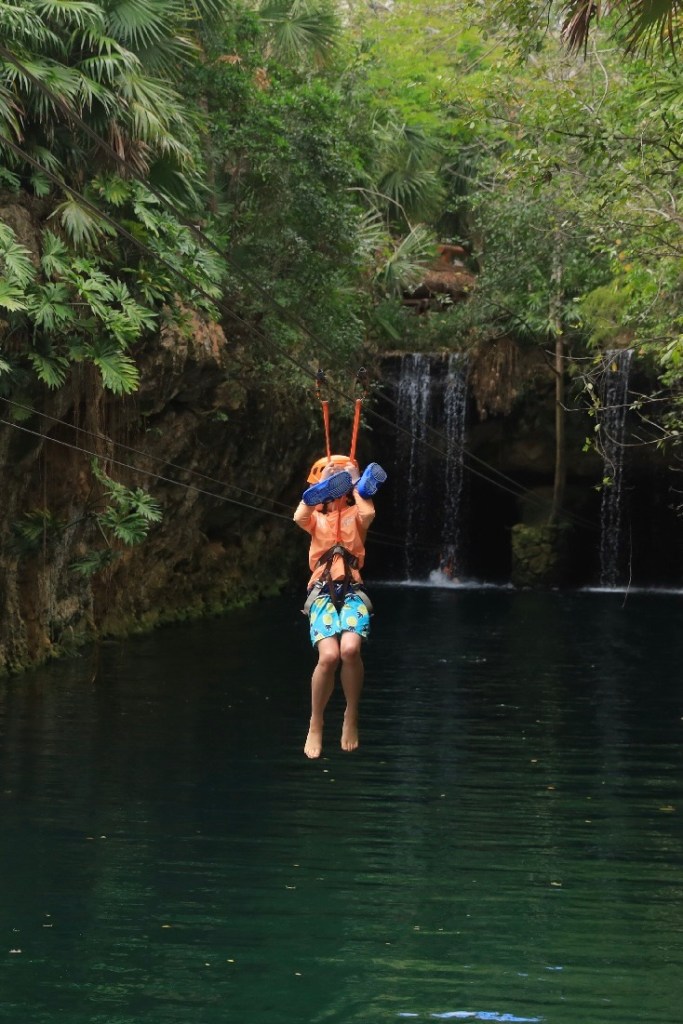
T tried and braved his first zipline: 5 with me and the last one on his own – into a waterfall!
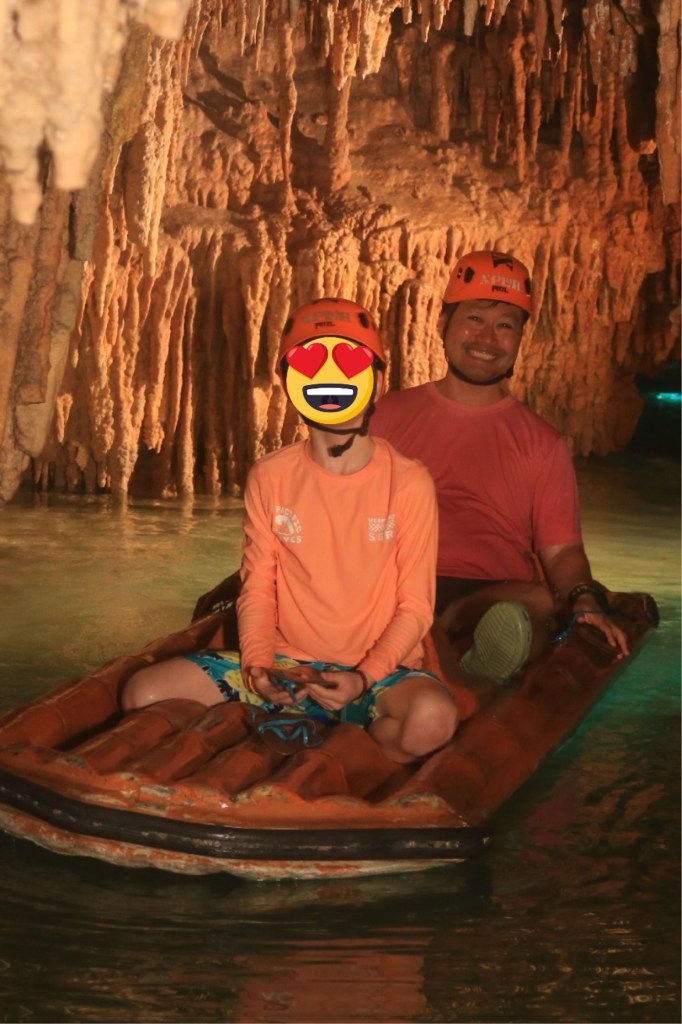
We then explored an underground river by foot and by raft.
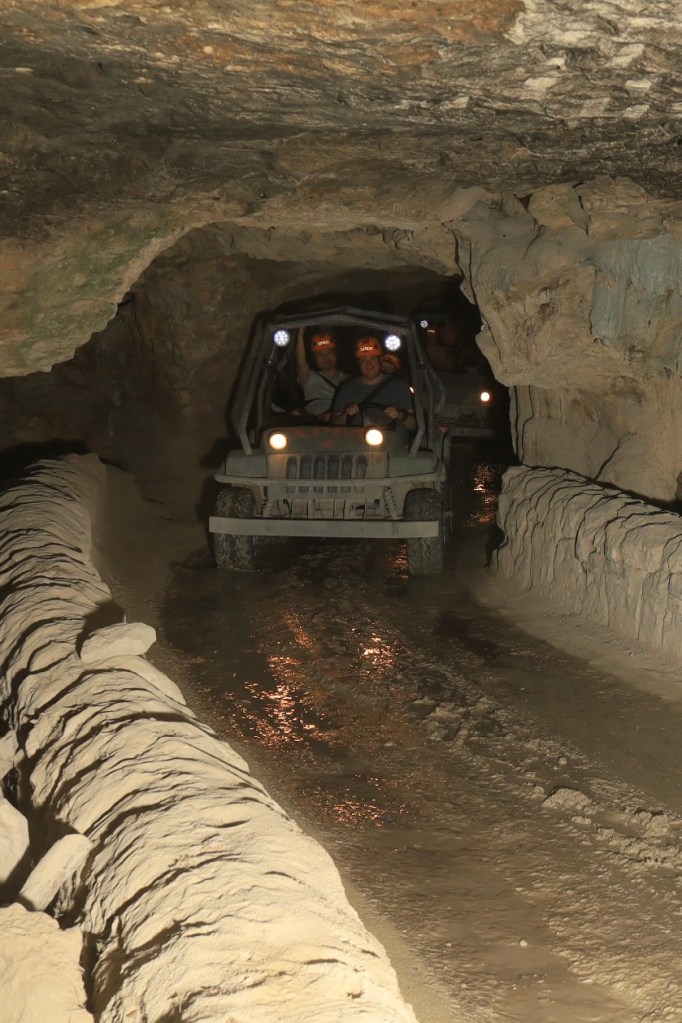
After a delicious Mexican lunch, we drove around on an ATV through woods and caves.
I will remember this trip as the one where I saw many signs of maturity in T.
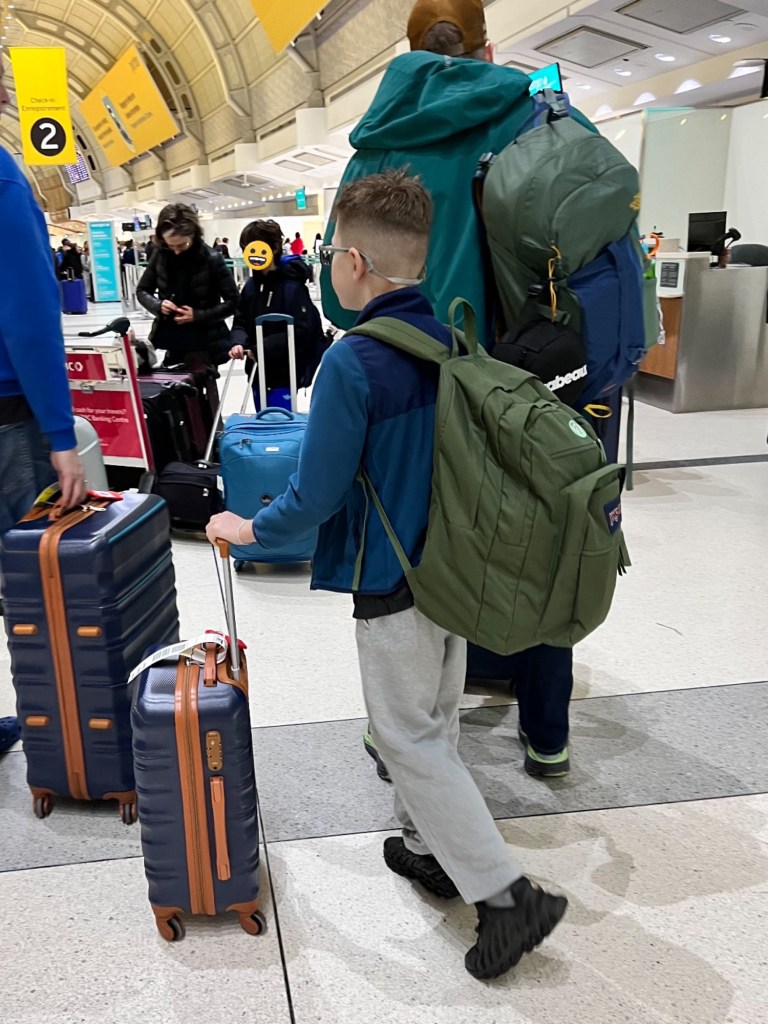
He looked after his own luggage and himself. Sure, he had outbursts and disregulated moments, but we generally had an amazing time together.
These are wins that seem small to others – but moments of pride and gratitude for us.
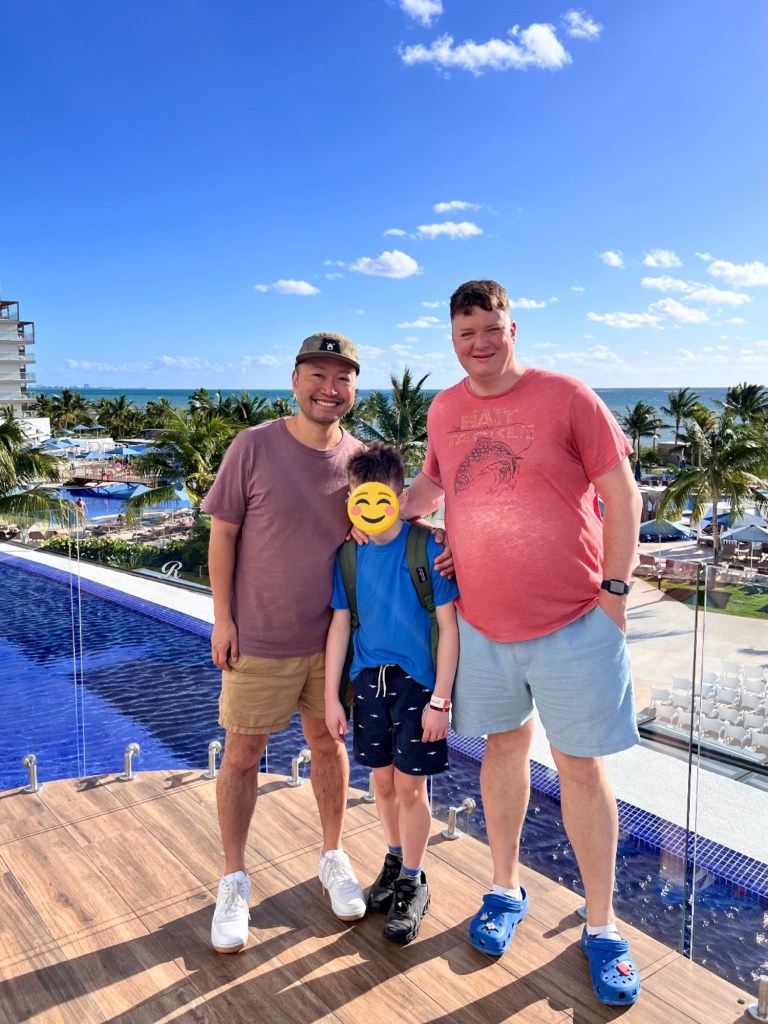
On our last morning, while we waited for the airport bus, we took a final view of the resort.
As we stepped off the platform, a younger boy on a motorized wheelchair made his way up the ramp.
T watched him to make sure he was ok.
“I like to keep an eye out for other kids with special needs,” he said in his earnest matter-of-fact way.
I smiled and told him he has a good heart.
Two days after we returned home, we celebrated my 45th birthday.
It was a Monday and my first day back to work. I was assigned an urgent deadline right off the bat, so I was feeling a bit harried that evening.
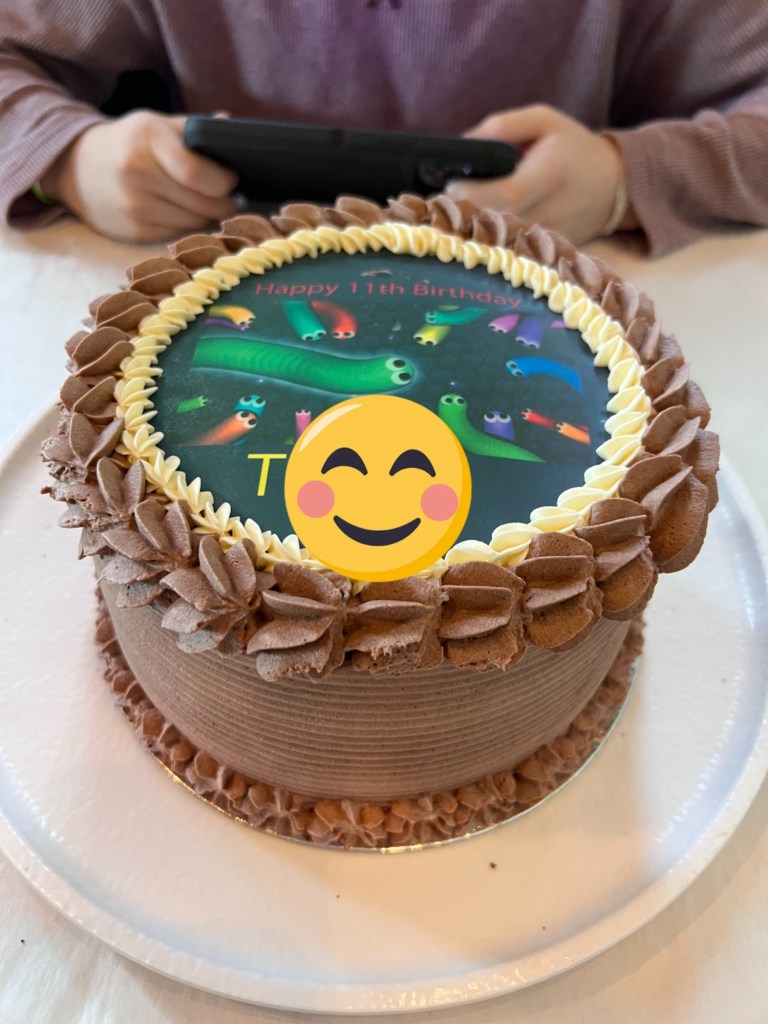
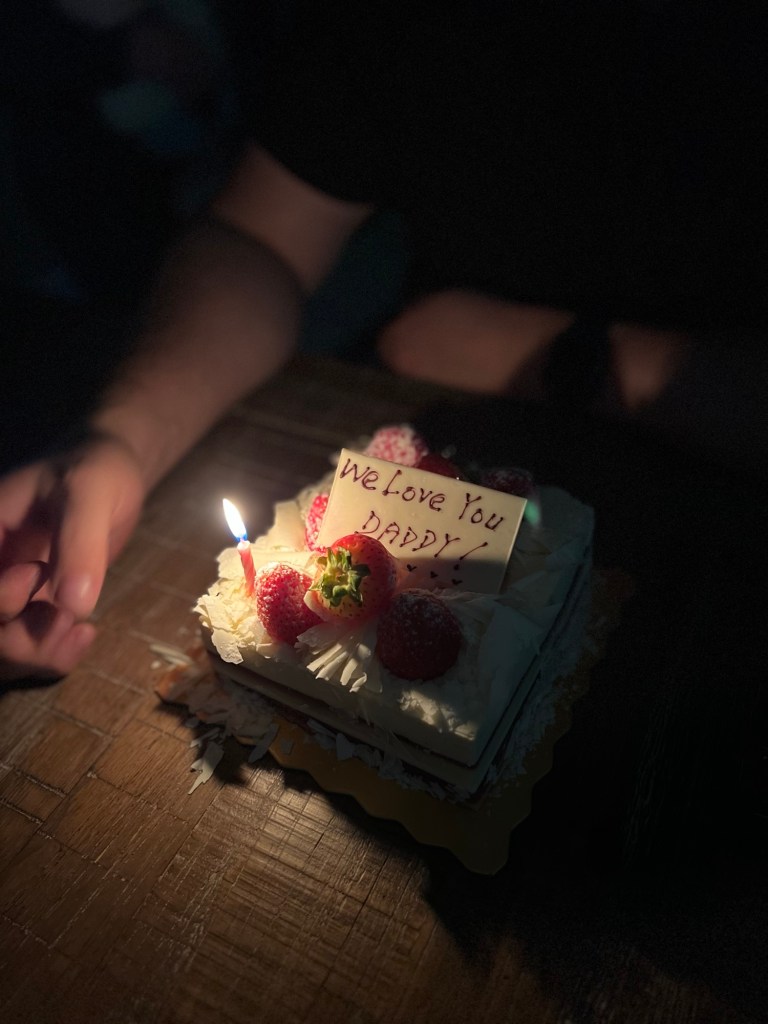
But I still enjoyed the hubby’s homemade cake – which had an amusing T moment (see below).
During bedtime, my thoughts were on my work. But I took the moment of silence before sleep to give thanks for the time I enjoyed with my family, for another year of life, and for the privilege and blessing to choose my own adventure.
To choose light over darkness, love over hate, hope over fear, laughter over worry, trying over fear of failure, gratitude over regret.
To choose things that nourish my mind, body and soul – especially family and loved ones.
To choose to fully embrace life with T, knowing it’s not always smooth sailing. But the journey is filled with love, laughter, joy and adventure.








 My Life With T