An Ontario teen lived in this shed while under the watch of Children’s Aid. ‘Everybody knew, nobody cared’. The article beyond this headline was grim.
A 15-year-old boy with FASD, whose aggression and behaviour became a safety risk to his parents, is now living in a garden shed.
I read this article on Friday evening, after a challenging week with T, our 11-year-old son with FASD, and it was hard not to project my fears onto this family’s difficult situation.
FASD describes a lifelong brain-based disability affecting those who are exposed to alcohol in the womb.
When I read articles such as this recent one – published in our city’s most-read newspaper – it dismays me, because this is often the narrative that is portrayed about FASD to the masses.
I am not minimizing this family’s situation nor downplaying the very hard realities that families face in supporting an individual with FASD.
I absolutely get it.
The challenges we’re facing with T, as he transitions into middle school, relate to regulation, executive functioning, and oppositional behaviour.
At home, in his safe space, it includes verbal aggression and disregulation on an almost daily basis – and sometimes, in his most explosive disregulated state, physical aggression.
While he has not punched a hole through a wall – let’s hope it stays that way – we have dings and dents on walls and floors following his outbursts.
In a way, the hubby and I are fortunate we’re men, because I empathize with the mother in the article and her fear and guilt.
But I also want to shout from the rooftops – with enthusiasm and rage – that there are more layers to FASD than the one often portrayed in the media.
People with FASD have incredible strengths. T is bright, funny, very caring and empathetic (when he’s not being an asshole 🤣), articulate, and gifted with hands-on STEM activities.
Why are these stories – such as this inspiring lived experience speech by Irish youth Jacob Casson-Rennie (see below) – limited to niche social media, online communities and advocacy groups?
Why have the same newspapers ignored my email pitches to write a balanced story about FASD – and continue to push a specific type of story?
This deflates me during my low moments and makes me feel like the odds are stacked against caregivers and our loved ones.
But as I learn from T, every day is a new chance to try again.
Odds are just statistical data. Focus on things that we can control and tilt the odds in our favour, no matter how small.
I acknowledge that multiple truths can exist:
Caring for an individual with FASD is hard and on hard days, I detest T’s behaviour. But I also love who T is at his core and believe in his potential.
I can acknowledge that hard moments are real and deflating but also choose to focus on the big picture: we have more joyful, fun and positive moments than we do the difficult ones.
None of us truly know how our stories will unfold. But we can take the actions that are within are control to tip the odds in our favour.
And that’s the hope that keeps me going.
This Sunday morning, I got up and focused on completing three tasks: editing an article for work, meal prep for the week, and clearing the leaves off our back and front yards.
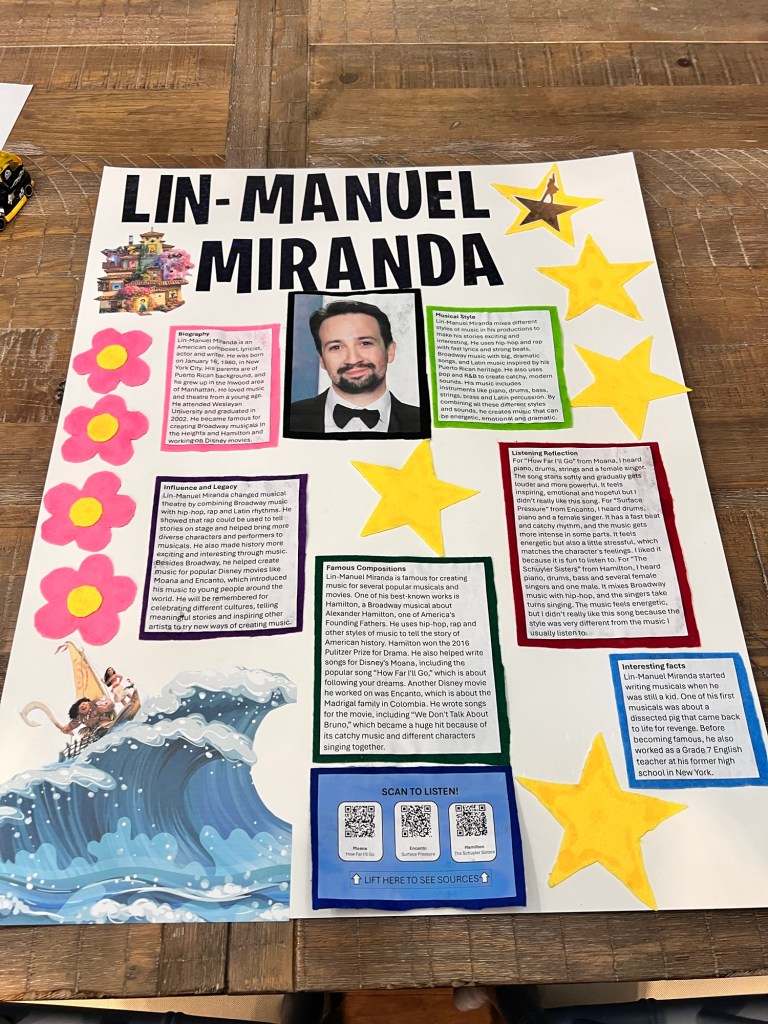
The hubby was in charge of helping T with his music assignment: to create a poster about a famous composer. T chose Lin Manuel Miranda, because he likes the movies Moana and Encanto – they were once on daily repeat for a while.
Five hours, seven bags of leaves and four dinners prepped later, I was drenched in sweat and satisfaction and T created a lovely poster with the hubby’s help👇🏻.
And that’s the hope that keeps me going.
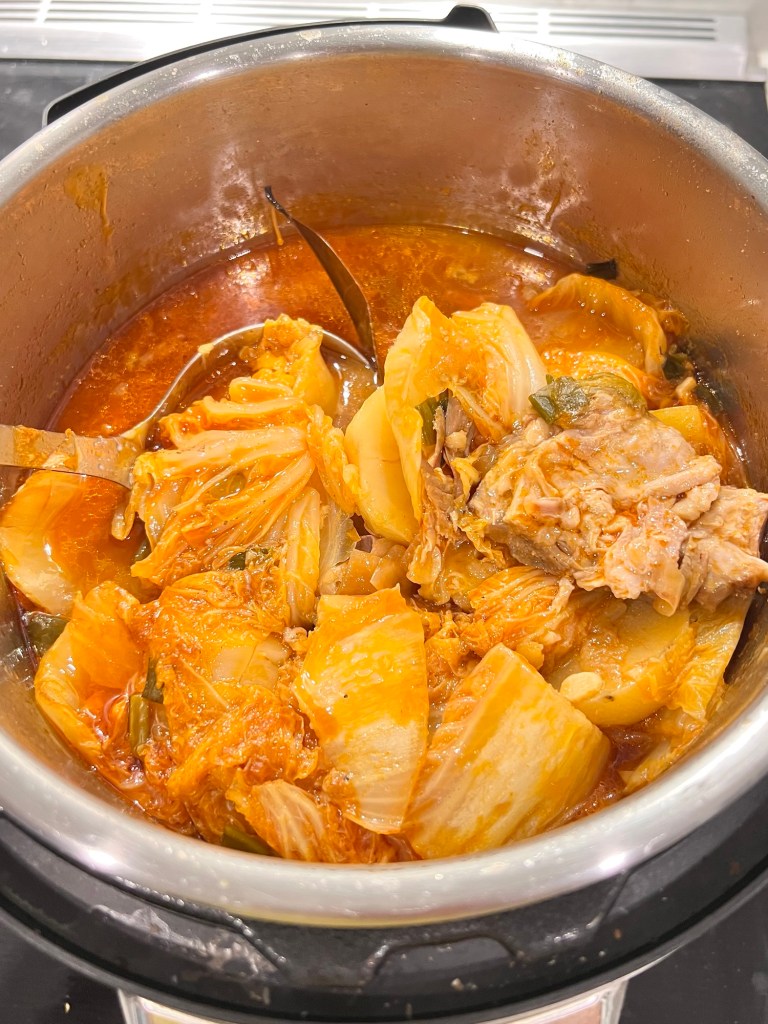
And I can’t wait to enjoy this gamjatang (Korean pork bone soup) tomorrow. It’s the hope that’ll get me through Monday! 🤣


…More layers than what sensationalistic (and destructive) social media might share about FASD…Amen to that point, Ab. Thank you for bringing the layers and complexity forward. Insightful, educational, as always. Hugs to all! ❤️
LikeLiked by 1 person
Thanks Vicki. We’re all layered and complex and nuanced individuals – more than what a sensationalist headline might infer. 😊🙏
LikeLiked by 1 person
Love your advocacy heart, Ab…I do, I do! 💝💝💝
LikeLiked by 1 person
T is so fortunate to have two loving and supportive Dads, Ab. I love your ability to find positives no matter how challenging things get. T will learn a lot from your approach.
It is frustrating that the mainstream media insists on painting a negative picture of so many issues. Have you thought of reaching out to independent news sources like Canadian Affairs instead?
LikeLiked by 1 person
Thanks Michelle. Oh I do hope T can learn to rise above these stereotypes and stigma, because it’ll get more challenging as he gets older. 🙏
Good idea to reach out to indie news sources. I’ll keep that in mind when I try again for the future. 😊
LikeLiked by 1 person
I too have seen that article… shared by so many. I haven’t decided yet if I will share … because it deserves context as you’ve done so well here. And I’m just tired.
We’ve experienced a lot over the years … just last week I finally patched some dents that were remnants from many, many years ago. The bigger ones were done right away, but the small ones were left. But it was time. I too struggle with how stories are shared. But these stories are the ones readers read. And really most things don’t change until crisis or tipping point.
We all know how much better prevention is over reaction. Sadly it’s a message I’ve been sharing for twenty years and many people before me. Right now I’m trying to share a balance – the glimmers, the good and what is possible. We still aren’t supported and it is taking a toll… we no longer have violence … but there is still a great need for community, support, understanding and funding.
LikeLiked by 1 person
I can only imagine how it triggered you – and those in the community – as it made its rounded online. It is as frustrating for the community as it is heartbreaking for the family in the story.
I love how you said prevention is better than reaction – and sadly, it is often overlooked. I’m glad and thankful there are advocates such as yourself, Yvonne – and I’m sorry for the toll that our flawed and broken system has taken on you and your family.
LikeLike
What you share with us makes me think of the reality parents with kids who have FASD face every day. Other people may see T’s aggression only occasionally, and they can judge him solely based on those brief moments. But you and your husband have to deal with that more often than anyone else, yet you persevere. And this is what we should remind ourselves more of: behind the less-than-desirable actions a child with FASD can show, there are parents who are trying to keep up with the daily challenge while trying to stay sane and function normally in their other roles (especially at work). I guess for you life with T has been and will always be like sailing the sea.
“See the line where the sky meets the sea? It calls me
And no one knows, how far it goes
If the wind in my sail on the sea stays behind me
One day I’ll know
If I go, there’s just no telling how far I’ll go”
LikeLiked by 1 person
Oh that’s a beautiful comment, Bama. 😊 I think the lyrics from the song just captures it so beautifully – we really don’t know where and how far we’ll go. Sometimes, we just have to set sail and let the wind take us. Thank you – what a great way to start my work week and day! 😊
LikeLiked by 1 person
it seems that the media tends to publish stories that are more the sensationalistic side of things. it gets ‘better numbers’ of readers, watchers. i love when i read a news story about the realities, for good and bad of life challenges, not just an emphasis on the heartbreaking or negatives. that opening story was absolutely tragic, but without understanding what this child/mother have gone through in the big picture, it is slanted a certain way and brings judgement upon them. i’ve really enjoyed reading about your family and how you’ve grown with T as he has grown. for all of the challenges and exhaustion, you have real love and connection, and that has made such a positive difference in all of your lives. you are truly a family.
LikeLiked by 1 person
Thanks Beth for the kind encouragement. 😊 I do agree that negative or sad or rage bait stories and headlines get the click through and eyeballs – but it shouldn’t be that way. I’d love for more balance, nuance and yes, the good stuff in the news too. Life isn’t all good or all bad – and news stories should try to portray that when it comes to FASD. 🙏
LikeLiked by 1 person
yes, i so agree with all of this
LikeLiked by 1 person
This is not the only topic current media is failing us these days and it seems as if nuance and balance don’t sell news. But let’s talk about the fabulous poster and this amazing soup. Recipe?
LikeLiked by 1 person
Nuance and balance are slowly being eroded away in this age that doesn’t encourage deep reading is the sad sense I’m getting. 😞
But yes, T did do a fab job with the poster – with the hubby’s help. Here’s the recipe for the soup. It’s so easy to make. I substituted pork neck bone with pork back bone this time around. Enjoy if you make it. Can’t wait for dinner tonight! 🤣
https://www.pressurecookrecipes.com/instant-pot-gamjatang/
LikeLiked by 1 person
Thank you! I only have beef bones in the freezer, so I will try with that. Looks delicious ❤️
LikeLiked by 1 person
Enjoy, Margie! Bones are such amazing ingredients. The hubby likes his meat skinless and boneless – and I’m like, but that’s where the deep flavours come from! 🤣
LikeLiked by 1 person
I’m with you! Skin and bones 🦴💕
LikeLiked by 1 person
Thanks for sharing this Ab! I first learned of FASD from you and from there began my own research. Reading articles, talking with professionals and so on. However, my main take away has been from you sharing from lived experiences. I’ve been baffled by the contradictions I often come across. Please keep educating us my friend.
LikeLiked by 1 person
Thanks Tammy. It’s always nice to hear from you and your encouragement and kindness are always so appreciated. 😊 So many things are out of my control but I can, as you rightfully said, do my part to help educate others. 🙏
LikeLiked by 1 person
Great poster and awesome looking soup. You and your husband and T are obviously doing everything you can do relative to FASD. It is unfortunate that the ‘experts’ cannot or will not do the same.
LikeLiked by 1 person
Thanks AnneMarie. I think every bit of advocacy and awareness raising, no matter how small, helps with the larger picture. 😊
LikeLiked by 1 person
Only He who knows how our days or life unfolds and you’re doing great as a parent or caregiver, Ab. I have a heart for all mentally ill people and I wish that everyone struggling of it is treated or medicated well, but it’s not the case. It’s heartbreaking how other people having this are just walking around without a family who take care of them.
T has made a great poster and congratulations to him.
Stay amazing all of you. Take care and my hugs across miles.
LikeLiked by 1 person
Thanks Hazel. I agree that He does know what lies ahead and that brings me great comfort in knowing that!
T did do a great job with the poster with the hubby’s help. 😊
LikeLike
Humans are often lazy with their stereotypes and love to put everyone in the same box. Besides the points that you have eloquently described about people falling prey to defining all FASD individuals the same way, I see the same thing with some who like to label the homeless as lazy or unwilling to work. While this is true of some, it ignores the many people dealing with mental health issues or underlying dysfunction and trauma.
I love this perspective: “Every day is a new chance to try again.”
LikeLiked by 1 person
Thanks Pete. I always appreciate your encouragement and advice – as a parent, grandparent and educator. I agree that it’s easier to put people into neat boxes but people and life is not always so tidy! This is so true for people who are precariously housed or who struggle with mental health issues too, as you said. Every day is indeed a new chance to try again. 😊
LikeLiked by 1 person